(TheBRHM.com) Few stretches expose the widening fault line inside heavy metal as sharply as the middle of the eighties, when the genre put forward two rival answers to a single question: what is all this noise actually for? One arrived drenched in blood and speed, Slayer’s Reign in Blood compressing pure dread into under half an hour. Another sauntered in wearing lipstick and enough hairspray to thin the ozone, four faces on the cover of Poison‘s debut, Look What the Cat Dragged In, staring out like a challenge. Same calendar year, opposite planets.
Most histories treat that split as a joke with an obvious punchline. Thrash was serious. Glam was fluff. Real fans, so the story goes, worshiped darkness while the mall crowd bought the pretty stuff. That version flatters the gatekeepers and misses what actually made Poison combustible. Menace comes in more shades than midnight. These Pennsylvania transplants proved a colorful, grinning, party first sound could rattle parents and preachers every bit as hard as any pentagram.
Consider what the doom merchants were selling. Sabbath had mapped the territory back in the previous decade, tritones and tolling bells and Ozzy howling about paranoia. Venom pushed the darkness into a name of its own, giving black metal its name with Black Metal splashed across a 1982 sleeve. From there the mid eighties heirs dug deeper still. Slayer sang of concentration camps and the devil. Metallica went sprawling and symphonic on Master of Puppets, eight minutes at a stretch about addiction, war, control, and a mind coming apart at the seams. Megadeth had Dave Mustaine spitting about politics, war, and a government he plainly distrusted. King Diamond took the theater route, corpse paint and falsetto and a full operatic Satanism nobody else dared stage with a straight face. Fear was the product across all of it. The bands wanted you leaning over the edge of something awful, half hoping it looked back.
So flip the record.
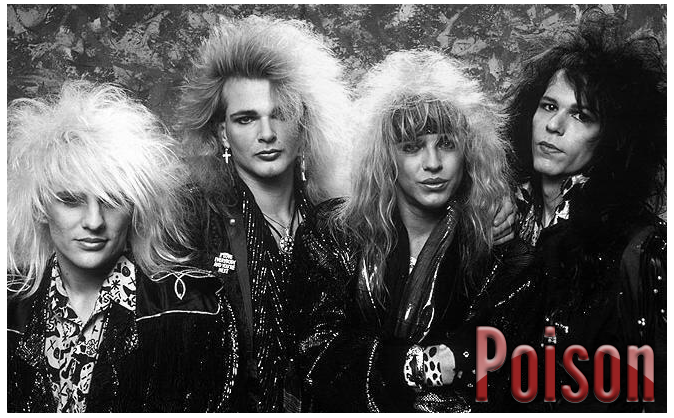
None of that gloom interested Bret Michaels, C.C. DeVille, Bobby Dall, or Rikki Rockett. Their whole pitch was escape of an entirely different flavor. Nothin’ but a Good Time, the title says it flat out, is a working stiff kicking off the boots after a lousy shift and chasing pleasure with zero apology. Talk Dirty to Me runs horny, cheap, and gloriously dumb in the best possible way. I Want Action barely bothers with metaphor at all. Where the thrash kids offered the void, this crew, forged on the same Sunset Strip club circuit that spat out Mötley Crüe and Ratt, offered a Friday night that never had to end.
Underneath the hooks sat a genuinely seductive lie aimed straight at bored suburban and blue collar kids. Quit the factory. Skip the pew. Point the car west and chase neon until the money runs out. Institutions built on discipline and deferred reward have every reason to fear a message that pretty, because a teenager who believes it stops showing up for the life planned out for him.
Here is where the easy dismissal falls apart. Selling sex and freedom in Reagan’s America was not safe. It was radioactive. The mid eighties ran thick with a conservative revival, the AIDS crisis was busy reframing hedonism as a potential death sentence, and Tipper Gore’s PMRC had already dragged the whole industry into a 1985 Senate hearing over dirty lyrics. When that committee published its roster of offenders, the so called Filthy Fifteen, sexual content dominated the complaints, although violence, drugs, alcohol, and occult themes were targeted too. Sex scared the establishment as much as any inverted cross. Maybe more, since desire is a lot harder to laugh off as cartoon nonsense.
Then there was the paint.
Look again at that debut sleeve. Four young men done up in blush, mascara, and pouts, so femme that plenty of people initially mistook the group for women. That picture went off like a grenade in a decade that policed manhood down to the haircut. Sure, the door had been unlocked already. Bowie walked through it, so did the New York Dolls, Alice Cooper made a career of the shock, and Kiss turned greasepaint into a licensing goldmine. What almost nobody had done was push the feminine this far out front while the amps were still cranked to distortion. Kids in nothing towns picked up eyeliner because four guys on an album cover made it look like the most rebellious thing going. Some fathers probably hated that image more fiercely than any Slayer sleeve, and the reaction tells you plenty. A devil on an album jacket only confirms what a nervous parent already suspects about rock and roll. Meanwhile a son who suddenly looks prettier than his prom date detonates something far closer to home.
Poison‘s follow up, Open Up and Say Ahh! from 1988, made the case almost too neatly. Its original artwork featured a demonic woman with a grotesquely long tongue, and the image quickly drew enough objections that later versions cropped the design down largely to her eyes. Notice what became controversial, though. The horns were part of the spectacle, but the tongue carried the real provocation. Even when this group toyed with the diabolical, the true offense stayed rooted in the mouth, the appetite, the promise of something wet and forbidden rather than anything infernal.
Musically the outfit knew exactly what it was up to, whatever the snobs insisted. The choice for Poison’s new guitarist eventually came down to C.C. DeVille and a young Slash, and no, you would never mistake what DeVille played for Randy Rhoads. But the man could find a hook the way certain pop writers just seem born knowing how. By the second album, producer Tom Werman polished Poison’s sound for radio and MTV without completely sanding away the sleaze. It worked to a degree that almost embarrasses. Michaels apparently wrote Every Rose Has Its Thorn in a laundromat, gutted over trouble with a girlfriend while the band was out on the road, and that little heartbreak ballad reached #1 on the Billboard Hot 100 at Christmas 1988. A crying song beat nearly every apocalypse the heavy acts could dream up.
The purists have never stopped sneering, though what the sneer really exposes is their own insecurity. There is this ancient bloodsport in rock over who qualifies as genuinely heavy and who is faking it for the girls and the record deal. By such logic joy disqualifies you and only suffering earns respect. Nonsense. Escapism is not the absence of edge. Michaels and company weaponized abandon, and abandon carries a tab, as anyone who staggered through the wreckage of that era can confirm. Something to Believe In, their aching 1990 hit inspired in part by the death of Michaels’ friend and security guard James “Kimo” Maano while also touching on neglected veterans, poverty, and disillusionment, showed the party crew could stare down real grief too. Then came the reckoning. DeVille melted down on live television at the 1991 VMAs while apparently impaired, the performance unraveling as the band stumbled through the song choice, followed by a backstage brawl with Michaels. That was the same appetite the band had been peddling all along, finally sending the bill.
Grunge rolled in soon after and buried much of the glam ecosystem under flannel and self loathing, and for a good long stretch it stayed fashionable to pretend the makeup years never happened. History reads fairer now. Scrape away the poodle hair and you uncover a genuinely radical proposition tucked inside the bubblegum. Loud, brash, unapologetically pleasurable music can threaten the settled order without once whispering about Lucifer. You do not need doom to be dangerous. Sometimes a wink and a smear of lipstick does more damage than a graveyard’s worth of gloom, and the sharpest thing about that grinning quartet from Pennsylvania is that every last one of them understood the difference.
Staff Writer; Terry Poole
This brother brings sharp ears, deep respect, and real passion to every heavy metal riff, rock record, and overlooked gem he covers for TheBRHM… He writes for fans who still believe loud music should have soul, history, and meaning…
One may contact him at TerryP@TheBRHM.com.