
(TheBRHM.com) Back around 1980, a Danish teenager named Lars Ulrich was living in California, digging through British heavy metal magazines and ordering records from overseas. He’d spotted the name Diamond Head in Sounds, then heard “It’s Electric” on an MCA compilation called Brute Force. That song got its hooks into him. He soon got hold of the band’s debut, a slab of vinyl tucked into a plain white sleeve with no proper title or track list staring back at him. The outfit behind it came out of Stourbridge, hardly a household name in the States. But those riffs stuck with the kid and would help reshape an entire genre.
Diamond Head got going in 1976, a few lads from a working-class pocket near Birmingham. That was before the press started slapping the New Wave of British Heavy Metal label on everything loud coming off the island. Maiden and Def Leppard grabbed the big waves. Saxon rode shotgun. Tatler and company had something harder to pin down, though: a swagger and a nastiness nobody else over there quite carried.
Brian Tatler ran the whole machine on guitar. What came off those strings sounded chiseled, big thick things leaning on tension and a slow burn more than flat out speed, with a crook to them you’d swear got lifted off some old blues 45. Sean Harris handled the singing, and that voice had a Robert Plant streak for sure, only spookier, with a shine all its own. Between the two of them sat songs that should’ve made everybody involved rich.
“Am I Evil?” is the one everybody knows. That creepy intro borrows its mood from Gustav Holst’s “Mars, the Bringer of War,” then the bottom drops out and in comes a guitar part flat out nastier than it has any right to be. “Helpless,” “The Prince,” “It’s Electric,” “Sucking My Love,” every last cut shows you how to make a tune hit mean without just cranking the volume. The 1980 debut, Lightning to the Nations, became known among fans as the White Album. Released through the small Happy Face label without major label backing, it started with a thousand copies, plain sleeves, mail orders and a lot of nerve. Nobody handed these fellas a golden ticket.
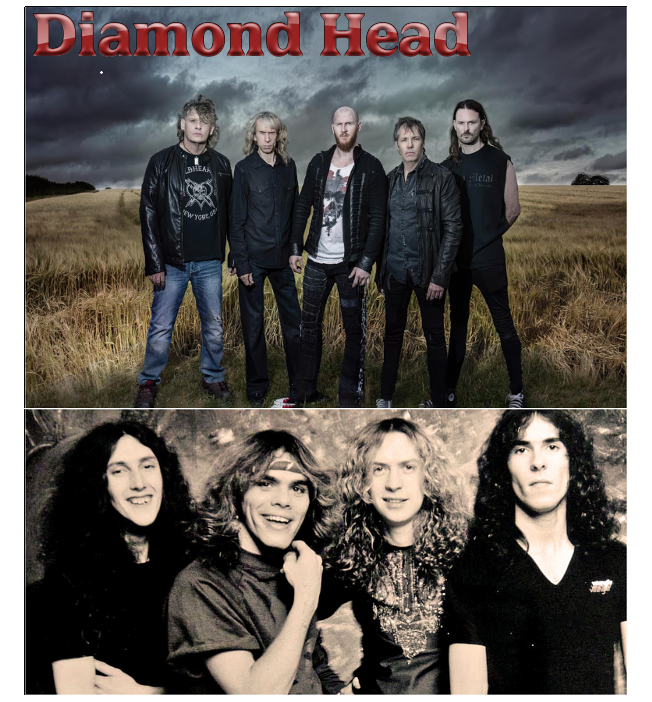
So why aren’t these guys household names? Short answer, the business side was a disaster. Whoever steered the career made calls that ranged from head scratching to flat ruinous. A deal with MCA finally gave the group a proper shot, and Borrowed Time reached number twenty four on the UK albums chart in 1982. That was real progress, but the momentum never held. The music grew slicker and more progressive, particularly on Canterbury, reaching for a wider crowd while losing some of the diehards who signed up for the grit. Faulty early pressings of that album didn’t help. Good breaks came and went without turning into lasting success. By the mid eighties the engine had sputtered dead, a name passed around on cassettes between collectors while the big rooms belonged to somebody else.
California’s where the other half of this plays out.
Ulrich flat out idolized the band. Before Metallica officially came together, the kid hopped a plane to England in the summer of 1981 and caught Diamond Head at London’s Woolwich Odeon. He made his way backstage, met his heroes and wound up sleeping on the floor at Tatler’s family home before staying with Sean Harris. He followed the band, soaked up their music and carried that experience back across the Atlantic. A few months later, he and James Hetfield had Metallica rolling. Those Diamond Head riffs were already part of the foundation. When the young California outfit started playing shows, songs from Tatler’s crew were right there in the set. They weren’t simply records Ulrich admired anymore. They were part of the music he wanted to make.
“Am I Evil?” turned up on the B-side of Metallica’s “Creeping Death” single in 1984 and eventually became a concert favorite, with whole crowds bellowing a chorus some listeners probably figured Hetfield dreamed up. More covers followed. “Helpless” hit the Garage Days Re-Revisited EP in 1987. “The Prince” slipped out on the B-side of “Harvester of Sorrow” in 1988 and appeared again with “One” the following year. “It’s Electric” found a home on Garage Inc. in 1998. Four official studio covers in all, each one carrying another piece of Diamond Head’s songbook into places the original band never reached. Tatler’s been gracious as can be about the whole thing, happy to acknowledge that Metallica’s versions often came out a touch quicker and a shade meaner than the source. No sour grapes in sight. The man just tips his head at the kids who ran his ideas clear to the top.
Here’s the part that stings. Whole generations picked up “Am I Evil?” through Metallica without knowing where it really came from. The fellas who drew it up stayed out of the mainstream spotlight while their music helped build something enormous. Thrash had plenty of fathers, from Motörhead and Judas Priest to the hardcore punk bands that pushed speed and aggression into new territory. Still, the connection between Diamond Head and Metallica runs too deep to treat as a footnote. Those Stourbridge riffs helped give one of thrash metal’s founding bands its early vocabulary. And once Metallica took that sound worldwide, the influence traveled farther than Tatler and Harris could’ve imagined. Diamond Head never owned the entire thrash blueprint, but a mighty important piece of it came straight out of the Midlands.
Give the founder this much, the flowers finally came. Sonisphere, July 2011, there’s Tatler onstage at Knebworth, surrounded by members of Metallica, Megadeth, Slayer and Anthrax. The Big Four had gathered for a run through “Am I Evil?” with the man who helped write it standing among them. Ulrich took a mic and told the crowd there was a pretty good chance none of them would be there that night without Brian Tatler. Goosebumps. Way overdue, the originator getting his props from the very players who’d gone and swallowed the world whole.
So where do things sit now?
Diamond Head’s history never ran in a straight line. Breakups came, reunions flickered on and off, and the lineup changed more than once. Sean Harris eventually moved on, leaving Tatler to carry the name into another chapter. A Danish singer, Rasmus Bom Andersen, grabbed the mic in 2014 and jolted the whole operation back upright, bringing a fresh voice to the old material. The band delivered a sturdy self-titled set in 2016 and the darker The Coffin Train three years later. Nobody was pretending the calendar had rolled backward. These were older musicians finding reasons to keep making noise, and there was still plenty of life in those guitars.
Tatler landed about the sweetest late career plot twist you could script. Saxon, old mates of his from the NWOBHM days, needed a touring guitarist after founding member Paul Quinn stepped away from the road in 2023. They dialed up a man whose own career had run alongside theirs for decades. Tatler settled into the lineup and contributed songwriting ideas to the 2024 record Hell, Fire and Damnation. The riff boss has been circling the globe alongside Biff Byford ever since, playing the sort of rooms Diamond Head once dreamed about filling. The next Saxon album, Gods of Thunder, is scheduled for January 22, 2027, with Tatler contributing material again. Imagine that. Nearly fifty years after starting a band in Stourbridge, the man is still helping write the next chapter of British heavy metal.
Back in the Diamond Head camp, another gift arrived before the quiet set in. Live and Electric dropped in July 2025, a live record proving those old bones still kick. Then came July 2026, when Tatler confirmed Diamond Head would need to take a break while the bigger Saxon commitment kept moving. He didn’t declare the band finished, just on hold until the schedules and circumstances make another round possible. At least the music finally started paying him back. Royalty money from the back catalog, with Metallica’s recordings absolutely in the mix, has become his biggest source of income. Tatler has spoken openly about how those payments helped him avoid having to find another line of work. Ulrich even helped him navigate the royalty business years ago when the money wasn’t reaching him properly. Took time for that cash to roll home, but roll home it did. The young fan who slept on his floor helped make sure the man who inspired him could keep playing guitar for a living.
Everybody remembers who crossed the line first. Fewer folks bother asking who sketched the route out, and that credit usually goes to somebody who never got the parade. Stourbridge drew up a gorgeous, doom soaked path and handed the keys to the ones who’d take it worldwide. Put the White Album on tonight, loud as the neighbors will stand, and you can hear the bloodline running through more than four decades of this racket. It’s sitting in there still, patient, strong as ever, humming under all the thunder it quietly helped start.
Staff Writer; Terry Poole
This brother brings sharp ears, deep respect, and real passion to every heavy metal riff, rock record, and overlooked gem he covers for TheBRHM… He writes for fans who still believe loud music should have soul, history, and meaning…
One may contact him at TerryP@TheBRHM.com.