
(TheBRHM.com) Picture a basement somewhere in the East Bay around 1982, tape decks humming, kids dubbing demos onto cassettes and mailing them across the country like contraband. That was the cradle. Thrash grew up poor, loud, and proud of having nothing, built as a fist swung at the hairspray crowd on the Sunset Strip and the arena dinosaurs who had gone soft. Nobody involved expected riches. Half the appeal was that few labels wanted this noise.
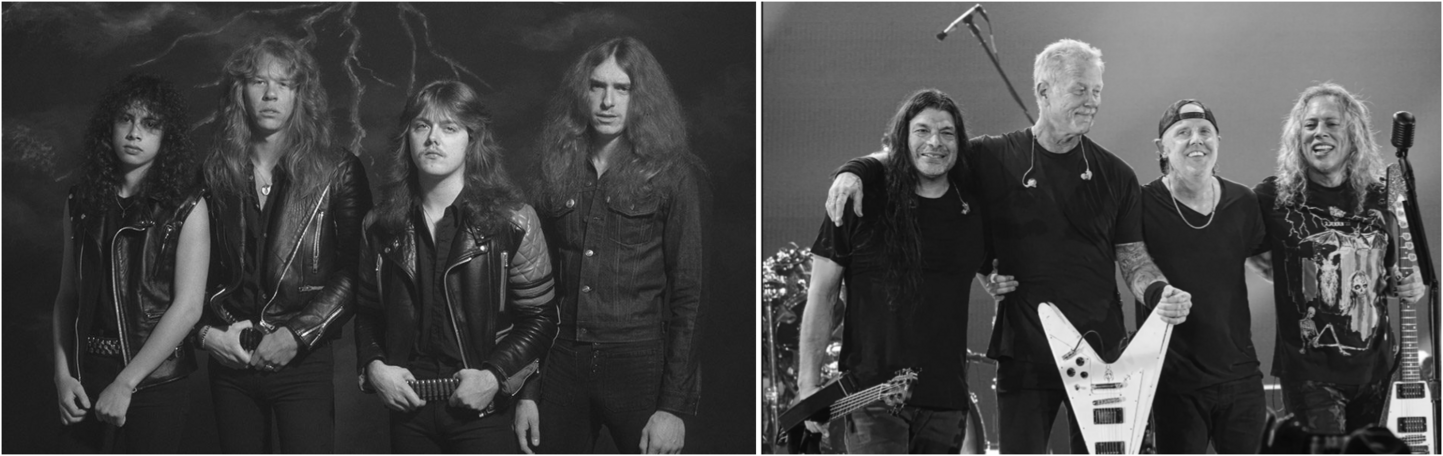
Then four guys who had formed Metallica in Los Angeles in 1981 and relocated to the Bay Area in 1983 went and conquered the planet.
A question that still starts bar fights among the faithful goes like this: when Metallica blew up beyond anybody’s wildest math, did the climb wreck the very scene that raised it? I have chewed on this for decades, and the answer sits somewhere more interesting than a flat yes or no.
Let me walk you back to the turn the whole argument hinges on.
…And Justice for All landed in 1988 as a monument. Nine-minute songs, tempo changes stacked on tempo changes, lyrics about courtrooms and censorship and the machinery of power. Jason Newsted joined the band in 1986 after Cliff Burton died in that tragic bus wreck in Sweden. Famously, you could barely hear Newsted’s bass in the mix, buried on purpose or by accident, depending on who you ask. Flaws aside, that record was the subgenre reaching for the sky without cutting its hair. “One” earned a real video and heavy rotation on MTV, while the album picked up a Grammy nomination in 1989, only to lose to Jethro Tull in one of heavy metal’s most infamous award-show snubs. Metallica got the last laugh a year later when “One” won the Grammy for Best Metal Performance. Ambition met audience. Nothing had been watered down to get there.
Three years later, everything flipped.
Metallica’s 1991 self-titled release, the one everybody calls the Black Album, arrived with Bob Rock behind the production console and a completely different philosophy. Gone were the labyrinth structures. In came the groove, the slow burn, the hooks you could hum after a single spin. “Enter Sandman,” “The Unforgiven,” “Nothing Else Matters.” The album eventually earned certification for twenty million units in the United States alone, a staggering achievement that cemented its place among the biggest-selling albums in American music history. Suddenly heavy music had a crossover smash sitting right next to pop on the charts.
Here is where the damage theory gets its teeth.
Once the flagship stopped sailing fast waters, the map changed for everybody downstream. Record executives who had tolerated the speed freaks now smelled platinum, and what many of the suits wanted was accessibility, not the next Reign in Blood. For some rising thrash bands that kept things ugly and breakneck, the changing commercial climate meant fewer opportunities and a harder fight for industry attention. The yardstick increasingly appeared to favor accessibility over underground credibility, and that shift made the economics of staying pure considerably tougher.
Timing made the wound deeper. Mere weeks after the Black Album hit shelves, a little record called Nevermind came out of Seattle and torched the hard rock establishment whole. Flannel replaced leather in the culture’s imagination practically overnight. So the fastest, hungriest corner of the music got squeezed from two sides at once: its biggest act drifted toward radio comfort, while the broader tide pulled the guitar-driven mainstream toward grunge. Brutal pincer, that.
Watch what happened to the neighbors. Megadeth answered in 1992 with Countdown to Extinction, slicker and more measured, chasing chart real estate of its own. Anthrax swapped vocalists in 1992, parting ways with Joey Belladonna and bringing John Bush into the fold, bending toward a groovier register. Slayer stayed vicious, bless those maniacs, yet the commercial space around such acts became increasingly difficult to navigate. Testament, Exodus, Overkill, every one of them weathered challenges through the middle of that decade as the underground struggled with changing tastes and industry priorities. Many groups embraced groove metal, experimented with other sounds, or stepped away for a while. Even the conquerors drifted further, with Load and Reload trading much of their earlier thrash aggression for hard rock and alternative influences, accompanied by haircuts that made the old guard clutch their denim vests.
Now let me argue the other side, because fairness demands it.
Blaming one quartet for an entire movement’s commercial winter is lazy history. Consider that the form was already bumping against certain creative and commercial limits by 1991. How many marathon epics about nuclear dread could the style produce before the well ran a touch dry? Extremity itself had moved on. Florida death metal and the Norwegian black metal movement were challenging thrash for the “most dangerous sound alive” crown, dragging the real cutting edge down into catacombs where it always thrived best. Underground music did not die. Mutating is more like it.
And the gateway effect is undeniable. Millions of listeners who bought that juggernaut as a first heavy purchase had an opportunity to go digging backward, discovering Master of Puppets, then Exodus, then Kreator, then the whole bloodline. Metallica’s crossover also expanded the possibilities for heavy music in mainstream venues, on radio, and at major festivals. It would be impossible to calculate exactly how much smaller acts benefited, but the band’s success helped introduce a broader audience to sounds that had once seemed destined to remain underground. Success cut both ways.
My verdict, for what one lifelong headbanger’s opinion is worth: the triumph did not kill the genre so much as end its innocence. Speed metal lost its monopoly on the frontier, lost the comfortable fiction that poverty equaled virtue, and watched its champion sail somewhere nobody could follow. The scene fractured. Fractured things regrow, though, and by the 2000s a fresh wave, including Municipal Waste, Warbringer, Havok and company, proved the old ferocity never actually flatlined.
Which brings us to the present day, where the old guard of thrash metal is still making plenty of noise and showing no signs of fading quietly into history.
Metallica remains one of the biggest draws in heavy music, carrying the momentum of its M72 World Tour into a sprawling Las Vegas Sphere residency that kicked off earlier this month. The band has brought its no-repeat weekend tradition to the futuristic venue, delivering different setlists across paired performances while continuing to celebrate the music that made it famous. Fresh off 2023’s 72 Seasons and its appearance at Ozzy Osbourne’s Back to the Beginning farewell concert in July 2025, Metallica has reached a level of longevity and commercial power that those early cassette-trading kids could scarcely have imagined. Meanwhile, Dave Mustaine’s crew is riding into the sunset on purpose. Megadeth released its self-titled final studio album in January 2026, complete with a cover of “Ride the Lightning” that winks hard at old history, followed by a global farewell tour that Mustaine has suggested could stretch three to five years.
Slayer officially retired from touring in 2019 but has resurfaced for select reunion performances, including 2026 concerts marking the fortieth anniversary of Reign in Blood. Those occasional appearances have not amounted to a permanent return to full-time touring, but they have reminded fans just how much fury the band can still unleash. Anthrax continues rolling through its fifth decade, performing for audiences who remember the glory days and younger fans who discovered the band long after thrash’s original explosion. Exodus, Testament, Overkill, the lifers who never reached Metallica’s commercial heights, still crank it out for the believers. These bands have survived changing trends, record-label upheavals, personnel changes, and decades of predictions that their kind of heavy metal would eventually disappear.
So did Metallica’s rise hurt the movement? It changed the terms, shrank the commercial middle ground, and broke a few hearts along the way. Kill it? Not even close. The noise those basement kids mailed around on cassettes is still ringing loud, and the faithful are still answering the call. Long may it roar.
Staff Writer; Kirk Robinson
This man is a Rockhead with a deep appreciation for rock, country, folk, blues, heavy metal and the musical traditions that connect them. He writes about artists, albums, music history and the sounds that continue to shape generations. Feel free to contact him at KirkR@TheBRHM.com.