
(TheBRHM.com) There’s a band out of Florida that half the metal faithful will swear got robbed by history. Savatage. A pair of brothers from the Tampa Bay area cooked up a sound few American metal bands had the nerve to chase, part Sabbath doom and part Broadway theater. Yet the big arenas never cracked open the way all that talent deserved. Luck ran cold. Fate ran colder. One autumn morning in 1993 would steal a guitarist whose sound helped make the whole machine sing.
Rewind to the start. Jon and Criss Oliva got rolling around Tarpon Springs back in 1979, first billed as Avatar. When the brothers learned another group was already using that name, they eventually settled on Savatage, combining elements of “savage” and “Avatar.” Their 1983 debut, Sirens, holds an odd little footnote: it was among the earliest heavy metal albums recorded at Tampa’s Morrisound Studios, a room soon to become sacred ground for death metal pioneers. Primitive stuff, those opening releases. Still, the younger Oliva already played like a hurricane with fingers, a guitarist raised on the early Ozzy Osbourne records who admired Randy Rhoads and somehow folded Eric Clapton’s emotion and Eddie Van Halen’s agility into a tone all his own.
Here the tale bends toward glory, and toward sorrow too. A New Yorker named Paul O’Neill entered the picture in the mid-1980s and recognized something extraordinary in what these siblings were creating. O’Neill climbed aboard and helped rewire the entire ambition of the project. Gone went the exclusive reliance on the straight-ahead velocity of the early days. In its place arrived keyboards, choirs, orchestration, and elaborate storytelling. Hall of the Mountain King in 1987 flexed the muscle. Gutter Ballet, two years later, unveiled the art, piano and heartbreak colliding with riffs. After that landed Streets, a full-blown rock opera from 1991 tracing a troubled musician struggling to escape his past, exactly the kind of swing for the fences that most record labels would hesitate to fund.
So why did none of this ambition translate into stadiums and platinum plaques?
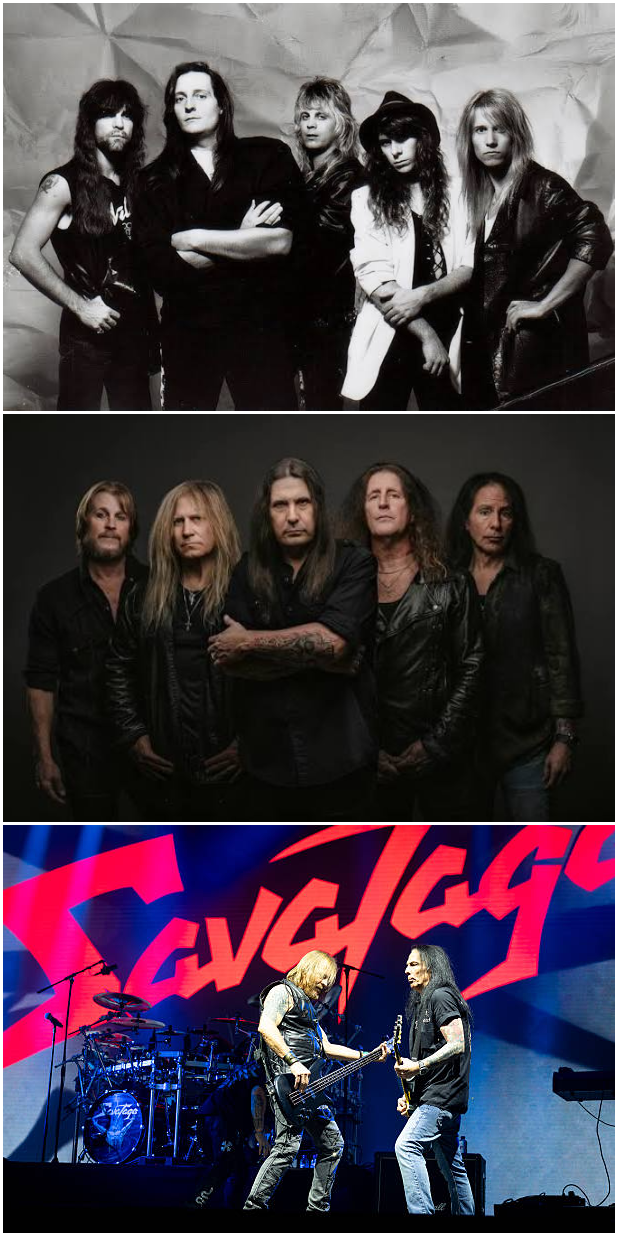
One culprit was a record industry that never seemed to know how to market the treasure in its hands. Atlantic pushed the group toward a glossier, more commercially accessible direction on 1986’s Fight for the Rock, a detour widely regarded as a misfire that baffled longtime followers without attracting enough new ones. Rock radio presented another obstacle. Savatage could deliver a powerful melody, but programmers often seemed more comfortable with music that fit neatly into an established format. Grunge then rolled in and damaged traditional metal’s commercial footing just as these Floridians were reaching another artistic peak. Pile on a sound too operatic for some metal purists yet too crushing for mainstream pop audiences, and a devoted cult following becomes the ceiling rather than a coronation.
Cruelest of all arrived on October 17, 1993. Criss and his wife Dawn were traveling along Highway 301 toward a livestock festival near Zephyrhills in the early morning hours. A drunk driver with seven previous DUI convictions and a blood alcohol level nearly three times the legal limit crossed into their path and struck their car head-on. Criss died at the scene, just 30 years old. Dawn survived with severe injuries. The driver also survived, suffering multiple fractures and other injuries. Convicted in connection with the fatal collision, he ultimately served approximately 18 months in prison. The punishment seemed painfully small beside the life that had been taken and the devastation left behind.
Timing twisted the knife deeper. Edge of Thorns had surfaced only months prior, delivering the group’s first U.S. rock-radio hit and a fresh voice in Zak Stevens, recruited after Jon Oliva stepped away from lead vocal duties amid personal exhaustion and a desire to pursue other creative projects. Jon continued writing and working with the band, but Criss remained its unmistakable guitar voice. Real momentum, at last. Then it vanished in a heartbeat. When bassist Johnny Lee Middleton later entered the studio and spotted Criss’s signature white guitar standing in the corner, the grief became unbearable. Middleton turned around and walked out, unable to face recording without his friend. He would not play on the next studio album, although he eventually returned to the band.
What unfolded next is the stretch that raises goosebumps. Grief refused to bury the enterprise. Instead, loss poured straight into the work. Jon Oliva and Paul O’Neill chose to continue Savatage as a tribute to Criss, believing that keeping the music alive was the proper way to honor his memory. The albums that followed rank among the most emotionally charged recordings in the group’s catalog. Handful of Rain, from 1994, became almost a Jon Oliva solo project in disguise, with Testament guitarist Alex Skolnick stepping into the difficult lead guitar position. Dead Winter Dead followed in 1995, a concept album set against the Bosnian War. The arrangements grew even more ambitious, with haunting melodies, orchestral passages, and the kind of dramatic storytelling that had become the band’s calling card.
Tucked away on that record sat an instrumental that quietly rewrote the future. “Christmas Eve (Sarajevo 12/24)” welded familiar Christmas melodies to grinding guitars and sweeping strings, and the reaction surprised nearly everybody involved. Radio stations that might otherwise have overlooked Savatage began embracing the recording, particularly during the holiday season. Paul O’Neill recognized an opportunity to expand an idea he had been developing for years. Working with Jon Oliva, keyboardist Robert Kinkel, guitarist Al Pitrelli, and other musicians, the producer helped launch Trans-Siberian Orchestra in 1996. You can guess the rest. Those elaborate holiday spectacles eventually packed arenas across America, sold millions of albums, and became a December tradition that commercially dwarfed Savatage many times over.
Back under the Savatage banner, the creative run reached another high point with 1997’s The Wake of Magellan, an album many devoted listeners consider among the band’s finest achievements. Now sit with the irony. A grand theatrical vision that had struggled to find a place on American metal radio became a commercial powerhouse when wrapped in Christmas storytelling. Many of the same musicians, the same appetite for orchestration, and much of the same creative imagination suddenly reached an enormous audience. Devotees of the heavier catalog have mostly made peace with the twist, yet plenty still ache wondering what an uninterrupted Savatage career, with Criss alive and shredding, might have produced. Perhaps the group would have found its own path toward greater commercial success. Perhaps the music would have grown even more adventurous. Nobody can answer that question, and the uncertainty remains part of the heartbreak.
Even now the Savatage flame refuses to die, stubborn as ever. Following Poets and Madmen in 2001 and the end of regular touring in 2002, the band entered a lengthy period of inactivity. Then came Wacken Open Air in 2015, where Savatage and Trans-Siberian Orchestra delivered an extraordinary joint performance before a massive German festival crowd. The spectacle reminded longtime followers of what these musicians could accomplish together, but a sustained touring comeback remained years away. That finally changed in 2025, when Savatage returned to European stages for its first headline performances in more than two decades. The momentum continued with the 2026 “Prelude to Madness” tour, bringing Zak Stevens back to the microphone alongside guitarists Al Pitrelli and Chris Caffery, bassist Johnny Lee Middleton, and drummer Jeff Plate. European festivals and concert venues once again heard the music that American radio had never fully embraced.
One towering absence shadows the reunion, though. Jon Oliva, now 66, has been unable to join his bandmates onstage because of serious health problems. A spinal fracture suffered in 2023 left him dealing with persistent pain, and additional diagnoses of multiple sclerosis and Ménière’s disease have complicated his recovery. Back surgery has remained a possibility, while difficulties with flying and performing have further limited his ability to travel. None of that has extinguished his creative ambitions. Oliva continues developing material for a new Savatage studio album, long discussed under the working title Curtain Call, with the possibility of including previously written material connected to his late brother. Meanwhile, another piece of that history has finally emerged. Madness Reigns From the Gutter (1990), an archival live recording featuring Criss during the Gutter Ballet era, received its long-awaited release in 2026. The band has also discussed possible American performances in 2027, although those plans remain unconfirmed. Paul O’Neill, tragically, died in 2017, leaving Jon and the surviving musicians to carry forward a remarkable musical legacy.
So the throne stayed vacant. The platinum plaques, mainstream recognition, and award-show nights largely went to other outfits, some with far less musical imagination. What the Oliva brothers created outlasts any shelf of trophies. Guitar players immersed in progressive, power, and symphonic metal still treat that catalog like scripture. A whole holiday empire grew from the musical ideas Savatage spent years developing. And somewhere beneath the triumph, the commercial disappointments, and the decades of unfinished possibilities sits the memory of a young guitarist whose life ended far too soon. Criss Oliva never got to witness the full reach of the music he helped create. His brother has spent more than three decades ensuring that those songs are never forgotten. Mainstream domination never came. For anyone who actually listened, though, the brothers from Florida wore the crown all along.
Staff Writer; Kirk Robinson
This man is a Rockhead with a deep appreciation for rock, country, folk, blues, heavy metal and the musical traditions that connect them. He writes about artists, albums, music history and the sounds that continue to shape generations. Feel free to contact him at KirkR@TheBRHM.com.