(TheBRHM.com) They kept showing up. That’s the whole story once you strip it down. The obituaries kept coming. Radio moved on to whatever felt safer that season. And the people who built this music just kept plugging in anyway. There was no parade. Not one apology offered. Just another van, another club, another set played at full volume for whoever bothered to walk through the door.
You have to go back to understand why it never went in the ground. Birmingham, England, the tail end of the sixties. Four working class kids from the factory end of town wanted to make something as ugly as the world around them, and somehow it came out beautiful too. Iommi had lost the tips of two fingers in a sheet metal plant. Instead of quitting he adapted, using homemade fingertips and lighter strings, eventually tuning lower and bending the notes until they groaned. Black Sabbath dropped their self titled debut in February of 1970 and gave the whole thing its spine. Doom in the chords, dread in Ozzy’s wail, and a sludgy weight nobody had committed to tape before. That first record cracked something open.
By the middle of the seventies the seeds were everywhere. Judas Priest showed up in leather and studs, twin guitars cutting clean where Sabbath had wallowed in mud. Rocka Rolla, their first, dropped in 1974. Motörhead came a few years behind, Lemmy growling over a rhythm section that hit like a truck with no brakes, debut out in 1977. Then Britain coughed up a whole army of them. New wave, people called it. Fast, hungry, broke. Iron Maiden built galloping epics about war and horror and stuck a rotting mascot on every sleeve, first record landing in 1980. What Sabbath dug up raw, this lot filed into a blade.
America answered. Out in Los Angeles and up in the Bay Area, kids who wore out their imported British records started their own outfits, and they wanted it faster and meaner. Metallica tore out of that scene with Kill ‘Em All in 1983. A decade of aggression crammed into songs that played like a nervous breakdown you could headbang to. Slayer went darker still. Anthrax brought a New York snarl and, eventually, a handshake with hip hop that seemed impossible until it happened. Megadeth turned technical fury into an art form. Thrash was born from restless young musicians who found the radio version too polite.
The music refused to stay in one country. Down in Brazil, Sepultura clawed their way up from nothing and proved this thing belonged to the whole planet, not just England and California. Beneath the Remains in 1989 hit like a bulletin from a part of the world the metal press had ignored, and by the time Roots arrived in 1996 they had folded tribal percussion into the aggression and rewritten what heavy could even mean. Kids in favelas and kids in Ohio suddenly shared a language.
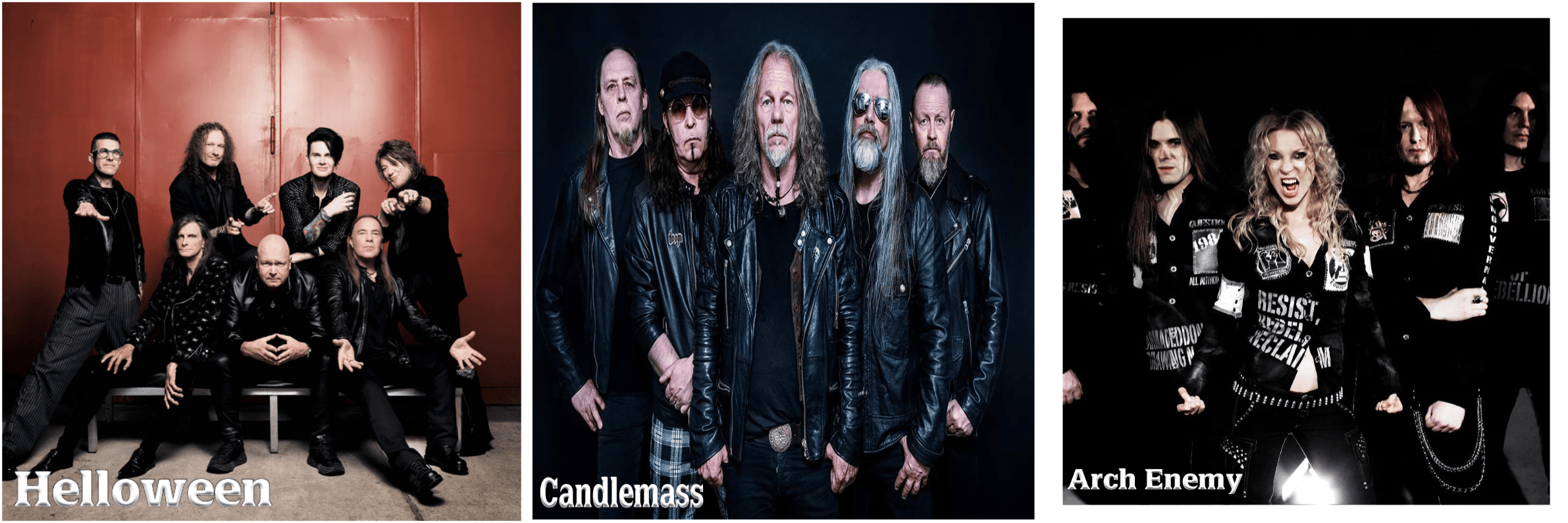
While the loud stuff sold, another lineage kept faith with the slow and the crushing. Doom never chased tempo or trends. Candlemass went slow and enormous on Epicus Doomicus Metallicus in 1986. Trouble found something close to the sacred down in all that murk. Out in the California desert, Kyuss and Sleep made a religion out of the low end. Trace any of it and the line runs straight back to Sabbath, and none of these bands ever gave a damn what the radio wanted.
The rest of the eighties belonged to loud guitars in a way that gets flattened now into hairspray jokes. Sure, there was excess. There were videos with too much fog and pants too tight for reason. Underneath the gloss, though, sat Ronnie James Dio. Small guy, enormous voice, singing about dragons and dignity like both were worth dying over. Scorpions wrote hooks big enough to swallow a stadium whole. You had Accept and their working man hymns, Riot flying under the radar with real teeth, Exodus tearing up basements. Over in Germany a band called Helloween basically codified European power metal, the Keeper of the Seven Keys records in 1987 and 1988 handing a blueprint to Blind Guardian, Gamma Ray, and half of Scandinavia. The best of it still meant something, even when it moved units.
Then came the reckoning everyone remembers. Seattle. Flannel. A sound built on shame and volume that the press decided would bury everything that came before it. The early nineties felt like a door slamming. Labels dropped bands that had filled arenas two years earlier. MTV stopped calling. Magazines that had put big hair on every cover pivoted overnight and pretended they never loved it. If you were a fan then, you felt the ground shift under your boots.
Here is what the story usually leaves out. The bands did not stop. Not the real ones.
Pantera put out their heaviest, most defiant record right when the trend said soften up or vanish. Dimebag Darrell played possessed. Anselmo screamed like the scene was dying and he could scream it back to life, and honestly, it kind of was. Meanwhile down in Florida this strange brutal underground just kept growing, and the mainstream never once looked over. Death, Obituary, Morbid Angel, guys turning technical violence into something almost holy. Norway and Sweden lit their own fires, some of it genuinely disturbing, some of it gorgeous and cold. Grunge got the magazine covers. The extreme stuff got the loyalty, and loyalty is what outlasts a fashion cycle every single time.
Prog kept climbing while everybody else scrapped over the mainstream leftovers. Dream Theater stacked odd time signatures into something towering with Images and Words in 1992. Turned out a metal band could get as knotty as a jazz record and still swing a hammer. Tool and a pile of other technical minded bands were pushing heaviness and complexity in different directions at the same time.
Iron Maiden lost Dickinson for a stretch and toured the planet without him. Priest spent more than a decade minus Halford, then took him back like the man had only stepped out for cigarettes. Sabbath split, reformed, split again. Through all those lineup changes, the names and the music survived. These were not comeback stories yet. They were just people refusing to accept that their life’s work had an expiration date printed on it by somebody at a record company.
Worth saying plain, this was never only a man’s game. Doro Pesch fronted Warlock through the eighties, then carried on under her own name beginning in 1989. Still at it. Angela Gossow took the mic in Arch Enemy and out-roared half the men who ever tried it. Nightwish came out of Finland in 1997, Tarja Turunen’s opera voice riding over the thunder, proof the front of the stage was wide open. A whole run of bands followed and put a woman up there like it was the plainest thing in the world. The pit made room because the talent demanded it.
The late nineties brought another wave, and plenty of purists hated it. Nu metal, they called it, half sneering. Down tuned, groove heavy, mixed with turntables and rapped verses and a lot of raw pain about broken homes. Korn cut records that sounded like a panic attack with a groove, debut out in 1994. Deftones went the other way, finding something gorgeous buried in the ugliness. Slipknot showed up in masks with nine members and a wall of percussion, terrifying and precise, their self titled breakout hitting in 1999. You can debate whether all of it aged well. Here is the part you cannot argue with. It dragged a fresh generation of teenagers toward heavy music right when the old guard needed new blood in the pit. Those kids grew up. Plenty of them dug backward, hit Sabbath and Priest, and found where the whole thing came from.
The 2000s got messy and rich. Metalcore fused the extreme with hardcore breakdowns. Lamb of God carried the flag for pure aggression after Pantera broke apart, and Dimebag’s murder in 2004 shook the entire metal world. Mastodon wrote sprawling, weird, ambitious albums that critics who once hated the whole genre suddenly praised. Gojira came out of France with an environmental conscience and a sound like tectonic plates grinding. Meanwhile the elders kept elder-ing. Maiden put out some of the strongest material of their entire run in their fifties. Priest did the same. The idea that this was a young person’s game got quietly demolished by men with grey in their beards playing better than they had at thirty.
Then the industry itself blew up. Physical sales collapsed. Downloading gutted the label system that had sustained touring bands for decades. Everybody panicked, and again the doomsayers licked their pencils. This time streaming would finish the job.
It did not finish the job. Instead, streaming also gave listeners access to a bottomless archive of heavy music. A kid in a small town with no record store and no local scene could suddenly find Bathory at two in the morning. Algorithms that nobody trusted actually served the deep cuts, pointing curious listeners from one obscure act to the next. Festivals swelled instead of shrinking. Wacken in Germany turned into a pilgrimage for tens of thousands. Bands that could barely sell a thousand records found audiences scattered across continents who kept them on the road. The gatekeepers lost their keys, and it turned out the music never needed them.
Look at where things stand now. Ghost turned theatrical heaviness into arena spectacle and won over people who swore they hated anything loud. Spiritbox and Lorna Shore genuinely broke through the algorithm, kids finding them on a phone screen and packing rooms within a couple of years. Old thrash bands headline to crowds three generations deep, grandfathers and grandkids in the same shirts. Sabbath took their final bow in Birmingham in the summer of 2025, right where it started, Ozzy on his throne, and the whole world of heavy music stopped to say goodbye. Weeks later he was gone. The grief that poured out told you everything about how much this all mattered.
So who do you thank. You thank Iommi for playing through the pain. You thank Lemmy for never once pretending to be anything but himself. Halford, Dickinson, Dio, Doro, every voice that refused to quiet down. The thrash kids who wanted it faster and the extreme underground that kept the flame lit through the coldest years. The power metal romantics and the doom priests and the prog architects, each guarding a different room in the same house. The nu metal crowd who took the abuse and brought the numbers anyway. The new bands writing riffs right now in bedrooms and garages, unaware or unbothered that they are picking up a torch handed down more than fifty years back.
Trends are weather. They roll in loud, dump their rain, and roll out again, and the forecasters get famous predicting the next one. This music is bedrock. It sat there while the weather did its thing, and it will sit there long after the current storm forgets its own name. You cannot kill something that simply refuses to leave the stage.
Here in 2026, with one of the founders barely in the ground and the genre somehow louder than ever, the point makes itself. They kept showing up. Every last one of them. And here we still are, ears ringing, grateful.
Now I need you. A piece like this holds only so many names before it buckles, and I left plenty on the cutting room floor. The regional heroes, the openers who blew the headliner off the stage and drove home to a day job. Drop them in the comments. Which band carried you through your worst year, which underground act deserved ten times the attention it got, which name should I be ashamed I forgot. That list belongs to you as much as this one belonged to me. Let’s hear it.
Staff Writer; Kirk Robinson
This man is a Rockhead with a deep appreciation for rock, country, folk, blues, heavy metal and the musical traditions that connect them. He writes about artists, albums, music history and the sounds that continue to shape generations. Feel free to contact him at KirkR@TheBRHM.com.