
(TheBRHM.com) Serious students of heavy music tend to agree on a lineage. Black Sabbath conjured the darkness. Deep Purple supplied the velocity and the roar. Judas Priest bolted on the leather and the twin guitar assault, and Iron Maiden lifted the whole enterprise toward opera. Recite that bloodline in any room full of the faithful and you’ll get solemn nods all around, like the matter were closed and notarized.
Somewhere along the way, one name that mattered just slips off the list. UFO. Bring them up to somebody who spins records on the weekend and you might get a shrug. But mention that band to Steve Harris, or the guys who started Metallica, or really anybody who was serious about a guitar back in those days, and watch how fast the room leans in. Those cats did the reading.
Some background is in order.
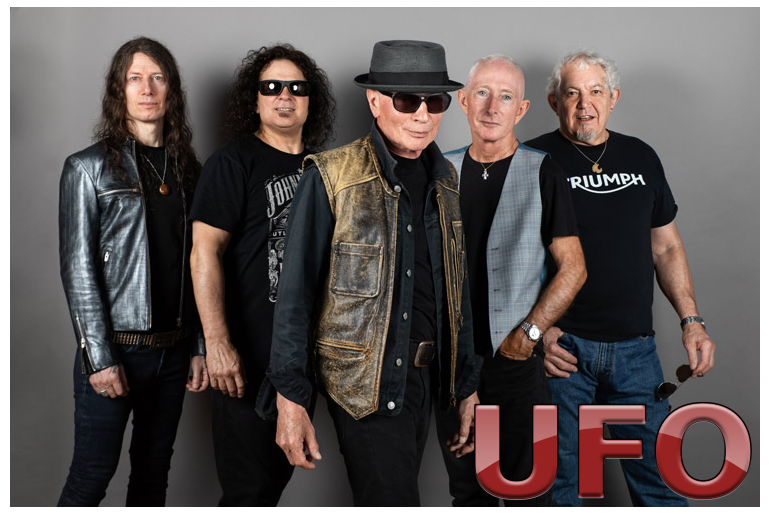
Assembled in London toward the close of the 60s, the group spent its first two records adrift in a spacey, boogie haze. Enormous in Japan, oddly beloved across Germany, largely ignored on home soil. The whole thing turned in 1973. Michael Schenker was still a teenager when he showed up from the Scorpions, Flying V in hand, hauling a temper that could clear a room. Suddenly this shaggy London band nobody took seriously had a gun on the table. And here’s the part that never made it into the official write-ups.
Cue up “Phenomenon” from ’74. “Doctor Doctor” and “Rock Bottom” rest on that album like a pair of loaded pistols. The riffing bites hard, yet the deeper marvel is how the melodies breathe. Schenker was never merely quick. His phrasing carried genuine grief inside it, a singing quality most technicians chase across an entire career and never once grasp.
Here the account grows stubborn.
Convention hands Randy Rhoads and Eddie Van Halen plenty of credit for teaching a generation how a lead could soar. Reasonable enough. Rarely does anyone state the quiet truth underneath, which is that the young German had already reached much of that territory years earlier, and guitarists who followed have openly acknowledged the debt. Kirk Hammett certainly has. That vibrato, the classical elegance wrapped around blues muscle, seeped into nearly everything that followed. Decades on, a virtuoso named Vinnie Moore would join the very outfit that raised the standard, a small detail that says plenty about the debt still owed.
Then came the stretch that ought to have made them permanent.
“Force It” in ’75. “No Heavy Petting” the following year. “Lights Out” hit in ’77, then “Obsession” the year after. Run those four albums back to back and you can hear the writing getting meaner even as it got prettier. No drop-off. No soft patch where they lost the plot. Phil Mogg fronted the whole affair like a man who meant every syllable and refused to oversell a single one. Pete Way slung his bass around the stage as though posing a dangerous question. Andy Parker held the engine honest. Paul Raymond fused the seams together with keyboards and second guitar. Formidable unit. Lethal in a live room.
That reputation produced the crown jewel.
“Strangers in the Night,” issued at the dawn of ’79. Poll any gathering of committed listeners for the greatest concert recording ever pressed to vinyl and this double album surfaces on virtually every list worth reading. The performances crackle with menace. Mogg commands the crowd, the fretwork burns like the venue itself caught fire, and the entire document freezes a group at the exact instant before it fractured. There lies the cruel irony. Almost the moment they peaked, Schenker was gone. Alcohol, exhaustion, that notorious volatility. Away he went to build his own enterprise, and the classic chapter sealed shut behind him.
Collapse never followed, to be fair. Paul Chapman assumed the chair and the band kept producing respectable work into the early 80s. “No Place to Run,” their 1980 effort, arrived with former Beatles producer George Martin at the console, and it stands among the sturdier examples. Michael returned for a spell, departed again, drifted back once more, in the manner of gifted and difficult men everywhere. Reunions accumulated over the years, several ragged, a handful genuinely electric. Even so, the wider narrative had already hardened like concrete, and concrete declines to rewrite itself for a crew that refused to choose a costume.
Now the question that lingers. Why has the culture persisted in strolling past? Timing accounts for some of it. Sabbath invented the storm cloud. Purple furnished the template for speed and organ fury. Priest riveted on the studs and the harmonized attack. Maiden rendered the entire form operatic. Each of those acts owns a clean, quotable headline. What Mogg’s people perfected was subtler, and subtlety seldom trends. Their real gift was the union of brawn and hook, evidence that a punishing song could ache and still strike like freight.
Play “Love to Love” and try to deny you’re hearing the genetic material of every power ballad that later cluttered MTV. Spin “Only You Can Rock Me” or “Too Hot to Handle” and you’re absorbing the precise formula a thousand imitators would photocopy without ever posting a note of gratitude.
Their fingerprints sit in plain view, provided one bothers to search. Iron Maiden has taken the stage to “Doctor Doctor” for decades. No accident there. It amounts to a love letter broadcast through a PA every single evening. Way’s approach also left a clear mark on Steve Harris, who has openly acknowledged looking up to him and absorbing elements of his style. Def Leppard, Tesla, an entire swell of melodic hard rock, all drawing from one shared well.
So where does the amnesia come from? Perhaps because they never resembled legends. No corpse paint, no dungeon mythology, no image fit for a lunchbox. Working musicians instead, penning devastating material and scorching stages across decade upon decade, absent any gimmick to compress them into the myth. History adores a symbol. These men offered substance in its place, and substance gets skipped whenever somebody sketches a hasty timeline.
A quiet sorrow threads beneath all of it. Paul Raymond went first, a heart attack taking him in the spring of 2019. Pete Way, that gloriously reckless anchor, followed in 2020 after suffering life-threatening injuries in an accident two months earlier. The old guard thinned, the farewell shows came and dissolved, and the broader world continued treating a foundational act as a footnote to a story it helped author.
Do yourself a genuine favor. Bypass the greatest hits shortcut and sit with “Lights Out” from opening bar to final fade. Feel the title cut detonate. Sink into the mournful expanse of “Love to Love.” Let “Rock Bottom” unspool through that extended solo and recognize you’re witnessing the missing link between bluesy hard rock and the melodic metal that would devour the 80s. Everything rests right there, obvious as sunrise, waiting on anyone willing to press play.
The bloodline everyone recites is real. Sabbath, Purple, Priest, Maiden, every one of them earned their thrones honestly. A single chair at that table simply keeps sitting empty, reserved for a band that handed the genre its beating heart and received a shrug in exchange.
They deserved far better. Still do. Go discover why for yourself.
Staff Writer; Terry Poole
This brother brings sharp ears, deep respect, and real passion to every heavy metal riff, rock record, and overlooked gem he covers for TheBRHM… He writes for fans who still believe loud music should have soul, history, and meaning…
One may contact him at TerryP@TheBRHM.com.