
(TheBRHM.com) Forty years is a long time for anything to stay dangerous. Most records that old have softened into nostalgia by now, the kind of thing you nod along to at a cookout while somebody younger asks who these guys even are. Then there’s the heavy metal monster Slayer let loose in October of 1986, and watching Araya, King, Holt and Bostaph tear through it front to back on this anniversary run, you realize not one degree of heat has leaked out.
They kicked off their first show of 2026 by dusting off six Reign in Blood cuts that had gone unplayed since 2014, 2015 or 2019, then dropped the entire sequence in order, the way it was always meant to hit. It marked the first time Slayer had performed the full album live since 2014. No warmup. Zero mercy. Just the thing itself, start to finish, in roughly the time it takes to microwave a frozen dinner and eat it.
That’s the wild part almost nobody dwells on. Reign in Blood clocks in at just under 29 minutes. Ten cuts, in and out before most modern acts have even finished their intro. Yet if you polled a room full of lifers about the single most important document thrash ever coughed up, this half hour of violence wins going away, no argument, everybody home before dark.
How does something so brief throw such a long shadow? A big chunk of the answer sits behind the mixing board. Rick Rubin, already making noise with Run DMC and the Beastie Boys, had never produced a metal LP before, and that outsider ear turned into the secret weapon. So he yanked out nearly all that reverb. Where a lot of that decade buried its guitars in echo chasing something huge, he flipped it and pulled the whole mix tight against your skull. No unnecessary air, no gloss, nothing sitting between you and the riff. Sounds like the amps got dragged into your lap, and I mean that as praise.
Behind the kit sat Dave Lombardo, playing like a man trying to punch straight through the floorboards. His performance on the opener alone rewrote what folks believed two feet and two hands could pull off at that tempo. King and Hanneman didn’t so much trade solos as claw at each other, two guitars snarling and diving like they had a score to settle. Araya up front didn’t oversing a single line. He carried the ugliest lyrics anybody had written with the flat calm of somebody reading you the evening news, and that restraint made them scarier.
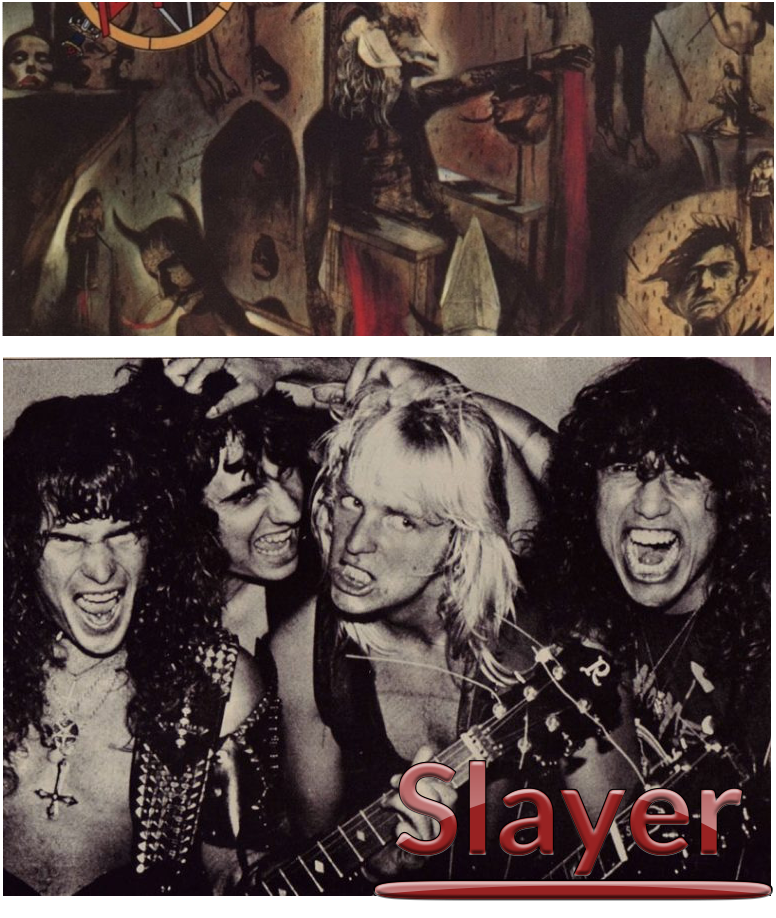
Speaking of grim. The opening salvo, Hanneman’s Angel of Death, dragged Josef Mengele and the horrors of Auschwitz into nearly five unblinking minutes, and the controversy started before plenty of listeners ever heard a note. Def Jam’s distributor, Columbia/CBS, refused to handle the record because of Angel of Death and its subject matter. Rick Rubin ultimately found another route through Geffen. Loud voices cried Nazi sympathy, missing the plain truth that describing evil and endorsing it are two very different acts. Controversy did what controversy always does, of course, turning a troubled thrash release into required listening.
Here’s where I plant my flag in the dirt. The reason this beast still lands harder than records three times its size is the exact quality some critics once used to dismiss it. There’s no fat on the bone. None whatsoever. Each of those ten pieces shows up, handles its brutal business, and clears the room. Most run under three. A couple barely crack two. You never hit that soggy midsection where a band obviously ran dry and decided a sprawling doom crawl might fill the gap. Nobody sneaks in a ballad to catch their breath. Slayer never learned how to waste your time. From the first shriek of Angel of Death to the thunderclap that kicks open Raining Blood, the whole ride is one clenched fist.
Stack that against what gets sold as a major statement today. Plenty of newer outfits drop 70 minutes across 14 songs and dare you to survive the whole slog. Technically jaw dropping, no question. Polished within an inch of its life, sure. Somewhere around the ninth track, though, your focus wanders, because not every idea earned its spot and deep down the writer knew it and kept the thing anyway. Bloat wearing ambition as a costume. More is not heavier. It’s just longer.
These four understood a lesson that keeps getting lost in the streaming era, where the temptation to pad a lineup for playlist math is real. A knockout works because it arrives clean and it arrives once. Nobody needs 15 rounds to remember getting dropped. Reign in Blood is the genre’s equivalent of a right hand you never saw coming, and your jaw still throbs at the memory.
The ripple spread everywhere you look. Death metal swiped the tempo and the darkness. Grindcore grabbed the brevity and shoved it to an absurd extreme. Damn near every extreme act since has traced a strand of its DNA back to that furious half hour, which is a strange fate for a heavy metal record barely longer than a sitcom. Rolling Stone eventually parked the LP at number 6 on its rundown of the 100 greatest metal albums ever made. Kerrang! went even further, once naming it the “Heaviest Album Ever Made.” Neither distinction reads like hype once the needle drops.
Which carries us back to right now, and the strange weight of these commemorative Slayer gigs. Hanneman passed in 2013, and Gary Holt shoulders his parts with the reverence of somebody fully aware he’s filling boots that can’t really be filled. Lombardo’s out of the picture too, so Paul Bostaph takes on that impossible drum assignment. Araya and King soldier on, grayer now and four decades removed from the young men who recorded the thing, still conjuring the old fury on command. Something close to sacred hums underneath the sight of aging men honoring a piece of their youth this fiercely, flatly refusing to let time sand it down.
I caught myself choking up a little over clips from these performances, and trust me, that doesn’t happen often. It’s the sound of guys who could coast on the catalog forever choosing instead to prove the case one more time. Play it. All of it. Let the kids in the pit and the veterans in the back settle the whole debate together.
Forty candles, 28 minutes, not a wasted second among them. They carved out something lean and vicious and permanent while a fair share of their peers busied themselves padding twin LPs that history already forgot. That gospel still runs through heavy metal today, and it’s a simple one. Hit the stage, do maximum damage, then clear out before they’re ready for you to go. Nobody has to sit through your filler because there isn’t any. Slayer figured that out four decades ago, and I’ll just say it: no heavy metal act since has left a bigger stain on the floor.
Staff Writer; Terry Poole
This brother brings sharp ears, deep respect, and real passion to every heavy metal riff, rock record, and overlooked gem he covers for TheBRHM… He writes for fans who still believe loud music should have soul, history, and meaning…
One may contact him at TerryP@TheBRHM.com.