(TheBRHM.com) Newcastle in the late seventies ran cold and broke, its bedrooms crammed with teenagers chasing Judas Priest riffs a notch beyond their reach. Most kept grinding at the scales regardless. A handful learned proper twin harmonies. Then there were the few who decided all that discipline got in the way of the actual point, which was volume, danger, and scaring the neighbors. From that stubborn little corner crawled the filthiest thing the entire scene ever coughed up.
In May 1979, Sounds editor Alan Lewis coined the phrase New Wave of British Heavy Metal for a Geoff Barton report on Iron Maiden, Samson, and Angel Witch. The unwieldy label stuck to just about anything loud coming out of England over the next four years. Iron Maiden had the rotting mascot up front and those charging bass lines underneath. Saxon delivered blue collar anthems about wheels and steel and the highway. Diamond Head wrote riffs so massive that a young California outfit called Metallica would eventually build part of its early legacy covering them. These groups worked the same national underground circuit, depended on fanzines and independent promotion, and fought for time in whatever affordable studios they could find.
Swimming in that identical water, though, sat a trio who made the rest resemble altar boys. Their name was Venom, and they arrived to ruin the party on purpose.
Cronos, Mantas, and Abaddon adopted stage names designed to sound as ominous as the music they intended to make. The real fellows underneath were Conrad, Jeff, and Tony. Cronos worked at Impulse Studios in Wallsend as an assistant engineer and tape operator, watching local musicians pass through while learning how recordings were assembled. What he carried back to the group had less to do with polished technique than raw attitude. When their turn behind the glass finally arrived, the guitars came out blown to bits. Drums rattled around like somebody had booted a stack of trash cans down a stairwell. As for the vocals, they sat in an ugly middle ground, half growl and half warning.
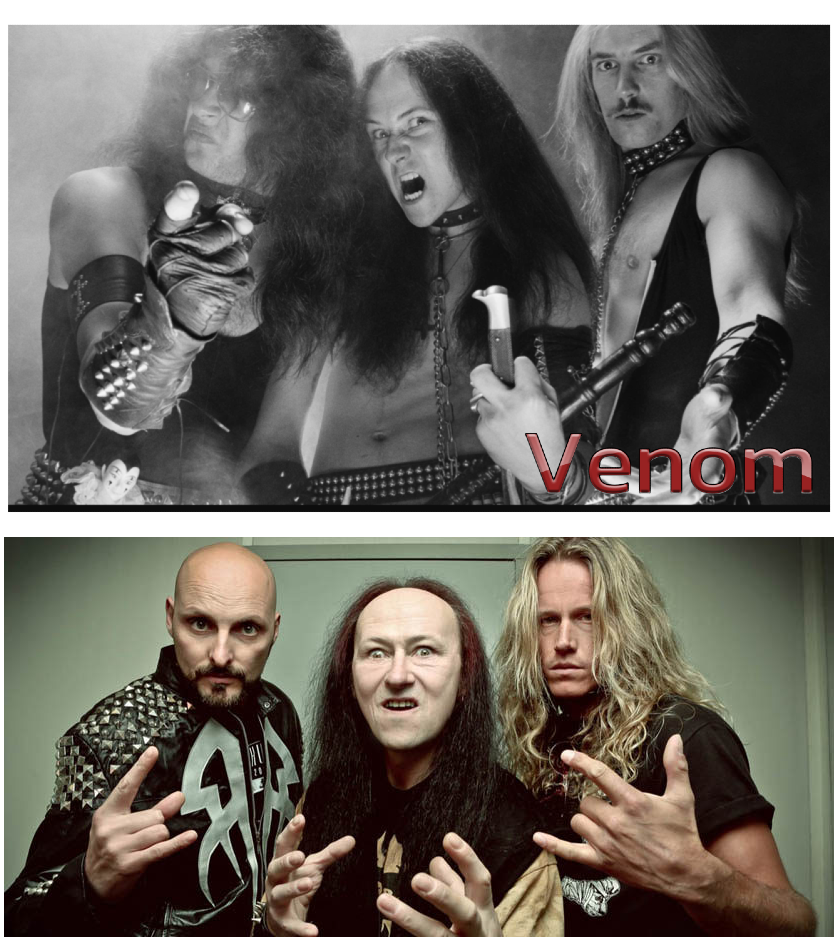
Venom’s Welcome to Hell landed in December 1981 and left many of the people who heard it baffled. The reason it sounded like a demo was simple. It essentially was one. The group recorded the songs in three days expecting that the label might later let them make a proper album. Instead, Neat Records decided to release those recordings as they were. Notes bent wrong. Timing wandered off. The whole thing felt like a rehearsal tape that had escaped into the shops. Yet buried under all that grime lived a genuine menace nobody else on the island dared to touch.
Then came November 1982 and an album that gave an emerging form of extreme music its lasting name. Black Metal was more than a title on a sleeve. Youngsters across Europe read those words and treated them as a mission statement. In Sweden, Bathory soon carried that raw extremity into colder territory, although Quorthon gave contradictory accounts of how directly Venom influenced him. Over in Switzerland, Hellhammer and later Celtic Frost pushed the developing sound into something darker still. Members of Norway’s emerging second wave eventually looked back to Venom, Bathory, Hellhammer, and Celtic Frost as first-generation foundations.
Here is what separated these Geordies from many of their neighbors. Other bands pursued cleaner production, major-label backing, and wider audiences. Saxon reached the British charts. Def Leppard eventually conquered America by polishing its sound into a form millions could embrace. Venom wanted success too, but they refused to soften the core of their attack to obtain it. They wanted your parents terrified, your priest nervous, and your speakers reduced to rubble.
The lyrics went places their peers avoided entirely. Maiden might reach for a history book or a Coleridge poem when they needed a lyric. This bunch went the opposite direction, howling about legions and blood sacrifice and the kind of filth you would never let slip near your grandmother. Part of it got right under your skin. The rest was flat cartoon, so far over the top you could not help laughing, since there was no way on earth anybody meant every word of it straight. That blend of real threat and knowing wink became a template for a thousand acts who followed.
Live, the spectacle turned absurd in the best possible way. While tidier outfits hit their marks and ran the set clean, this lot built a production around smoke, fire, smashed equipment, and overwhelming volume. At their June 1, 1984 Hammersmith Odeon show, the final stop of the Seven Dates of Hell tour, Venom unleashed enough pyrotechnics to make the entire affair feel dangerously oversized. Smoke hung over everything. Flames kept climbing, and that bass tone dug low enough to rearrange your insides. Precision was never the goal. Overwhelming force was.
You have to grasp the money situation to understand why any of this happened. The East End giants had a shrewd manager and a major label pushing chips onto the table. These three cut their tracks on limited budgets at Impulse Studios, the small Wallsend facility connected to the independent Neat Records label. The restrictions were not part of some grand studio plan, but that thin, nasty, distorted texture became the group’s signature anyway. Later generations chasing raw production would spend fortunes trying to sound as broke as these fellows had been by necessity.
Ask a purist and they might tell you the playing was awful. In strict terms they have a case. Mantas could riff, sure, but next to the fluid leads pouring out of the wider genre his solos came off closer to a chainsaw fight. Abaddon behind the kit was famously loose. Cronos sang like a man gargling gravel. None of that stopped Venom from becoming arguably the most consequential name the movement produced, because influence has never equaled raw skill.
Trace the family tree and it gets ridiculous. Metallica, Slayer, Anthrax, and Megadeth all absorbed something from the path Venom helped clear. Death metal grew from much of the same extreme soil. Sepultura in Brazil, Mayhem in Norway, and countless underground legions worldwide treated those opening two LPs as essential documents. The flagship acts sold more units and headlined bigger sheds, no argument there. But when you talk about who cracked the door open for everything nastier and heavier that arrived later, the answer keeps circling back to three working-class lads from the Tyne.
The tragedy, or maybe the punchline, is that half the establishment treated them as a joke for years. Serious critics rolled their eyes. Some of their peers kept a careful distance, a little embarrassed to be lumped in with any of it. It took the wider world ages to admit what had actually gone down, that this cheap and sloppy racket, the kind everybody assumed could not play a note, had reshaped an entire art form on the sly.
So the era gave us the polish of the East End flagship, the swagger of Saxon, and the doomed brilliance of Diamond Head. All of it mattered. Yet buried in that same bloodline sat something feral that broke every rule the rest of them lived by. The tastemakers wrote it off as noise. Radio would not come near the stuff, and most respectable folks could not tell you what they were looking at. None of that mattered a lick in the end. It stayed ugly and stubborn on purpose, the loudest embarrassment in a scene increasingly drawn toward cleaner production and bigger stages, and that refusal to behave is exactly what left a deeper mark than almost anything standing beside it.
Play those opening Venom LPs loud tonight. Not clean. Loud, and slightly broken, precisely the way they were built to arrive.
Staff Writer; Bobby Jackson
This brother is dedicated to covering heavy metal and rock music with depth, respect, and cultural awareness. His writing highlights Black heavy metal and rock artists while also celebrating the genre’s broader legacy, influence, and artistic power.
Contact him at: BobbyJ@TheBRHM.com.