
(TheBRHM.com) In the 1970s, rock music grew too restless to stay inside a three-minute song. Studios turned into cathedrals. Amplifiers got louder, lyrics got stranger, ambition swelled past anything the previous generation dared attempt. Six legendary bands helped shape that decade, each leaving its own mark on rock history.
Led Zeppelin stood at the front of the line, though the four of them would have laughed at any tidy ranking. Jimmy Page built riffs like a man laying brick, heavy at the bottom, delicate at the top. Robert Plant wailed over everything with a voice piped straight from some older, hungrier world. John Bonham hit the drums the way a blacksmith hits an anvil. Underneath it all, John Paul Jones held the whole cathedral together on bass and keys, the quiet genius nobody talked about enough. Their fourth record, the untitled one fans call IV, gave the planet “Stairway to Heaven” in 1971, a track so overplayed that we forget how radical its slow climb really felt.
Deep Purple came at the same mountain from a different face. Where Page chased mystery, Ian Gillan chased velocity. “Machine Head” in 1972 reads like a manual for everything metal would become, while “Smoke on the Water” carries a riff so simple that every beginner learns it first. Ritchie Blackmore’s fingers moved like a swordsman’s. Jon Lord pushed his Hammond organ through distortion, creating a sound unlike anything heard before. Classical thunder met blues filth. Few outfits fused brains with brute force so cleanly.
Queen took the opposite path entirely, which is exactly why the comparison matters. Freddie Mercury treated the stage like opera, the recording booth like a laboratory. “A Night at the Opera” from 1975 cost a fortune, broke studio rules, birthed “Bohemian Rhapsody,” a song with no business succeeding that conquered the world anyway. Brian May built his famous guitar with his father, Harold, as a teenager, then used it to stack harmonies into walls of sound. Roger Taylor drummed hard enough to anchor all that theatrical flight. Behind them, John Deacon wrote some of the funkiest bass lines in the catalog without ever raising his voice.
Aerosmith flew the flag for American grit while the British acts chased grandeur. These five came out of Boston steeped in blues, swagger, and trouble. “Toys in the Attic” in 1975 gave us “Walk This Way,” a strut so greasy that a hip hop act would resurrect it a decade later. Steven Tyler sang like a rooster possessed. Joe Perry answered every line with guitar that oozed menace. Dirty, loose, utterly alive, that early catalog smells like a club thick with smoke at 2 a.m.
Pink Floyd operated on a wavelength the others never visited. Speed and swagger took a back seat to atmosphere. “The Dark Side of the Moon” arrived in 1973 and spent an extraordinary 741 nonconsecutive weeks on the Billboard 200 through 1988. Across forty patient minutes, the album explored madness, money, and mortality. David Gilmour bent single notes until they wept. Roger Waters wrote concept pieces that felt like novels. Nick Mason held time steady under the chaos. Richard Wright poured keyboard washes that drift like weather. No group did more to prove an LP could be art rather than a pile of singles.
Fleetwood Mac closed the circle by turning private wreckage into gold. “Rumours” in 1977 got written while two couples inside the lineup fell apart, and you can hear every wound. Stevie Nicks spun heartbreak into mysticism. Lindsey Buckingham answered with guitar arrangements of almost cruel precision. Christine McVie supplied the warmth, the melodies that glued the whole bruised thing together. Mick Fleetwood plus John McVie, the rhythm engine that gave the band its name, stopped the project from splintering. More than forty million copies sold, and the heartbreak still sounds real.
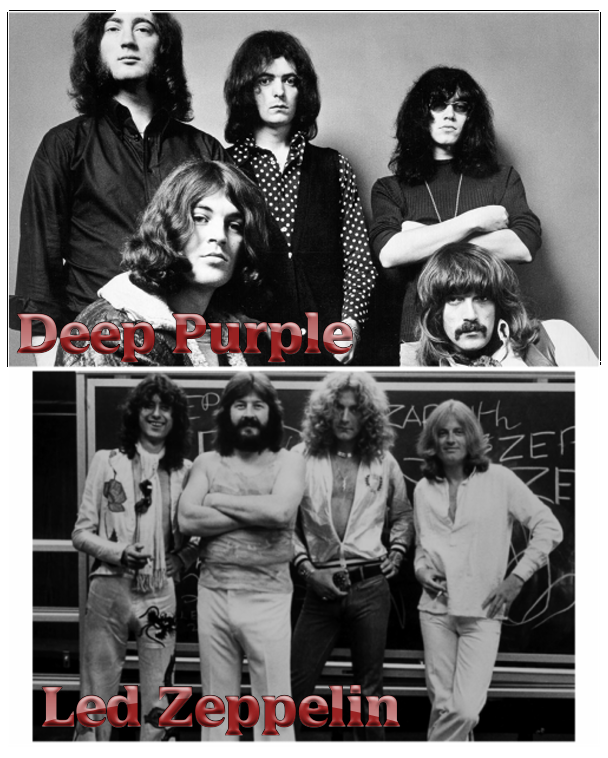
Why did this flood of masterworks pour out across one decade? Partly money. Labels threw cash at artists, bought studio time by the month, let geniuses chase whims that would get vetoed inside an afternoon today. Partly technology. Multitrack boards, bigger amps, better rooms handed musicians a palette their heroes never owned. Partly hunger. These were working people who had clawed up from clubs, pubs, bars, and that climb left them with something to prove. Freedom met tools met desperation, so the collision produced thunder.
Some of those stages still shake in 2026. Others have fallen silent, though the music refuses to fade.
Zeppelin never truly came back. Bonham’s death in 1980 closed that book, although the surviving members reunited for a single concert in 2007. Plant continues performing with his folk project Saving Grace, with more shows announced for 2027. Jones remains busy composing, including a classical song cycle that premiered in January 2026. The documentary “Becoming Led Zeppelin” reached theaters in February 2025, feeding the legend without reviving the beast.
Deep Purple, remarkably, refuses to quit. A new release called “SPLAT!” arrived July 3, produced by Bob Ezrin and described as the band’s heaviest album in years. An ambitious 2026 touring schedule included 86 shows across 28 countries. Gillan, Roger Glover, Ian Paice, longtime keyboardist Don Airey and guitarist Simon McBride continue carrying the band’s legacy forward.
Queen made headlines of a different kind. Sony acquired the catalog and related rights for a reported $1.27 billion in 2024, one of the largest music catalog deals ever recorded. May and Taylor spent years performing alongside Adam Lambert, honoring Freddie without pretending to replace what cannot be replaced. That touring chapter ended in 2024, although May has not closed the door on another return. For now, the guitarist is enjoying a break from the road.
Aerosmith reached a harder ending. Tyler fractured his larynx, and after a lengthy struggle the outfit retired from the road in 2024. A collaboration with young star Yungblud, an EP called “One More Time,” surfaced in 2025, proof the fire still flickers even when the touring stops.
Pink Floyd sold too, handing Sony its recordings and related rights in 2024 for roughly $400 million. Gilmour continues making solo music and performing occasionally. Waters stays loud, political, divisive as ever. Mason has kept the flame alive through his own group, Saucerful of Secrets, bringing the band’s early psychedelic gems back to the stage.
Fleetwood Mac went quiet after Christine McVie passed in 2022, a loss Nicks has called unfillable. Yet something stirs. Buckingham and Nicks, estranged for ages, have started talking again, raising hopes for a possible collaboration. Buckingham has suggested that 2027, the 50th anniversary of “Rumours,” could bring interesting developments, although a full Fleetwood Mac reunion remains unconfirmed. Hope, that stubborn thing, refuses to die.
Six acts, one decade, a mountain of sound that still shapes rock music today. The volume has faded in places, the lineups thinned by time, but the records keep spinning. That is the real victory. Press play on any of those classics tonight, so the 1970s roar back to life like they never left.
Staff Writer; Jerry Powell
JP is into heavy metal, rock, blues and just about anything old school… Most days, he would rather talk about a great album than whatever is trending… Hit him up at JPowell@ThyBRHM.com.