
(TheBRHM.com) Some singers step to a microphone and you believe them. That was the whole trick with Ronnie James Dio, except it wasn’t a trick at all. When he sang about a rider crossing a burning desert, you saw the horse. When he warned you about the thing waiting in the dark, your neck got cold. His voice was bigger than the body it came out of, and the strange part is that the fantasy he sang felt truer than half the so called real life songs crowding the radio back then. Sixteen years gone now and it’s 2026, yet the horns still go up like the man might stroll back in and count off one more.
Folks want to file his lyrics under wizards and swords, as if he just made an album cover breathe. Go back and sit with the words. When Dio put a dragon in a song it was carrying more than scales and fire. Half the time the beast was whatever you crave bad enough to wreck yourself over, power of the sort that chews up whoever grabs for it. The demons weren’t cheap Halloween props either. Give a fear a face and a name and suddenly you can look right at it, which is step one to beating it. Here’s what escapes most writers. Make believe lets you tell the truth from an angle. Wrap greed or cowardice or plain nerve inside a tale about some silver mountain and it lands, where the same idea in a love song would just nag at people.
Take “Holy Diver,” the song everybody thinks they get and mostly don’t. Dio explained it as a religious tale about a Christ figure on another world who had already sacrificed himself for its people and was preparing to leave so he could save another place. The people wanted him to stay, though others still needed him. That was Dio’s frame. What I hear inside it is a warning against letting fear, obligation, or somebody else’s need hold you in the darkness after your work there is done. Keep moving even when the light stings on the way out. Nothing about that is decoration. That is a voice coming through the speaker to shake you by the shoulders.
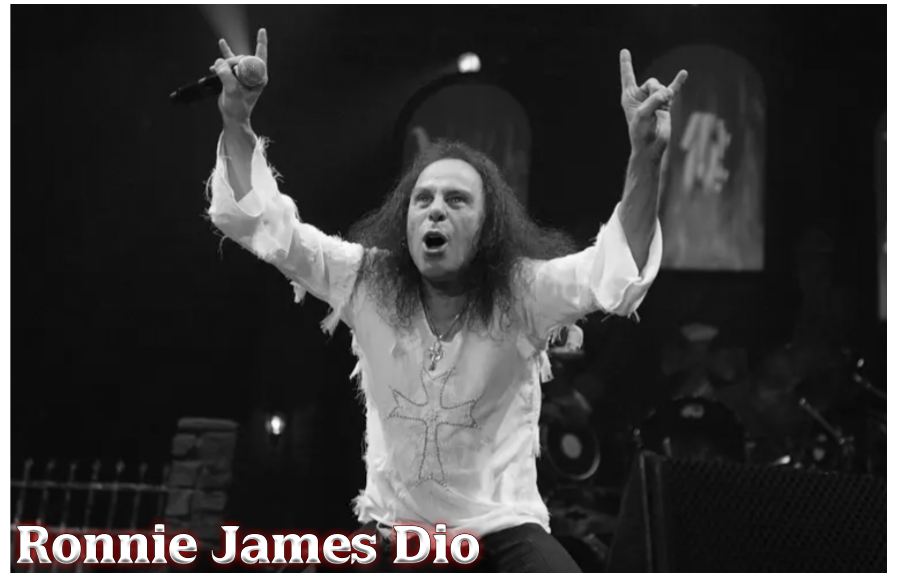
His path to that point ran through a strange, winding road. Long before the mystic robes and the raised fist, there was Ronald James Padavona, born in Portsmouth, New Hampshire, and raised in Cortland, New York, a kid who studied trumpet before spending years singing in doo wop and rock groups. Elf became a regular opening act for Deep Purple. Then Ritchie Blackmore recruited Dio and several of his Elf bandmates into Rainbow, and suddenly the pieces clicked into a form nobody had quite seen. “Stargazer” from that era remains one of the towering achievements in the whole genre, an epic of enslaved people and a madman’s tower that manages to be about hubris and false gods without ever once feeling like a lecture. You feel the exhaustion of the people building the tower. You feel the madness of the wizard who promised them flight.
Ozzy’s first run with Black Sabbath ended in 1979 and the smart money said the band was cooked. Then in came Dio and pulled off something nobody saw coming. No mimicry, no impression of the guy before him. “Heaven and Hell” handed those legends a whole second act and showed heavy metal a fresh way to sound enormous. “Fool, fool,” he sang on that title track, and if you were paying attention you knew he meant you too, right along with everybody who ever mistook a shortcut for something smart. That kind of dignity is what set him apart from the pack of screamers who came up behind him. His people were hardly ever just victims soaking in their own misery.
His characters carried themselves upright. Take the lonely voice inside “Rainbow in the Dark,” a man who cops to feeling empty and thrown away, and even he won’t lie down and give up. Sorrow and backbone at the same time. Even when he is down and feels counted out, the narrator all but dares the world to come try him. You hear that stance in song after song, that stubborn faith that the small guy, the reject, the one nobody put a dime on, still had a spine and a vote in how the last page read. If you ever felt shaped wrong for the world around you, that hit somewhere a breakup ballad never reaches.
The man handed you moral weather. Right and wrong in his songs never split into neat little teams. The battle happened inside one skull, and whatever you chose cost you a piece of something. There’s “Don’t Talk to Strangers,” which comes off like a bedtime warning until the real weight of it settles on you. The song is about every honeyed voice that swears it’ll hand you the world if you close the distance, then hollows you out once you do. Dio circled that theme his whole career. Power tempts you every time. And fear will lie right to your face if you let it. The road splits and you have to pick, and nobody picks for you. That is the actual furniture of a grown person’s inner life, dressed up in leather and thunder so it goes down easier.
And then there is the hand. Index finger and little finger raised, the middle two folded down, the sign Dio remembered from his Italian grandmother, who used it to ward off the evil eye. He adopted it onstage, partly because Ozzy had been known for flashing peace signs and Dio wanted a gesture of his own. He never claimed to have invented it, but he popularized it so thoroughly within heavy metal that it became the culture’s universal salute. Think about that. A gesture meant to protect against curses turned into a symbol of belonging for millions of kids who felt cursed by loneliness or difference. There is something almost holy in that transformation, a private family charm becoming a shared banner, and it fits the man perfectly. Taking the small and personal and swelling it up to the size of a myth, until total strangers caught their own reflection in it, that was the whole gift.
Ronnie voice carried the load. It climbed over a wall of guitars and never once sounded like it was reaching, big and clear and loaded with a belief that pinned you where you stood. Kids still try to match it and mostly can’t get close, and the reason is that the trick was never in the throat. Belief was the engine. Dragons, knights, some doomed hill where the last men make their stand, he sang all of it like the story would die if he got it wrong.
Stomach cancer took him in 2010 and the tributes rolled in from every stripe of hard rock and heavy metal, headliners on down to teenagers who stumbled onto “The Last in Line” years too late. Legacies like his don’t fade the way you’d expect. Duck into some bar on any given night in 2026 and a cover band will still mangle “Holy Diver” while the whole room bellows every word anyway, since the song holds something that outlived the man behind it. The pictures aren’t what stay with you, wild as they were. What stays is the feeling he pressed into your chest, that being small was never the same as being weak, that squaring up to the monster was worth it even in a loss, that your choices carried real freight in a universe that mostly shrugs. He made heavy metal heroic because he treated the crowd like heroes who’d been waiting on a reason to rise. Plenty of artists hand you sound and leave it there. Dio slipped you a code to live by, wrapped in fire, and that is why the horns still go up whenever his name gets spoken.
Staff Writer; Terry Poole
This brother brings sharp ears, deep respect, and real passion to every heavy metal riff, rock record, and overlooked gem he covers for TheBRHM… He writes for fans who still believe loud music should have soul, history, and meaning…
One may contact him at TerryP@TheBRHM.com.