(TheBRHM.com) Kurdt Vanderhoof already knew what he wanted his band to sound like while most everybody else was still fumbling toward it. Metal Church had begun in San Francisco, but after Vanderhoof returned to his hometown of Aberdeen, Washington, the lineup that became the classic Metal Church took shape. This was the Pacific Northwest, mind you, way ahead of the whole Seattle flannel thing. Aberdeen. Nobody expects heavy from a place like that. What he built with Metal Church deserved arena-level fame. It got cult worship instead. Sitting here in 2026, that mismatch still stings.
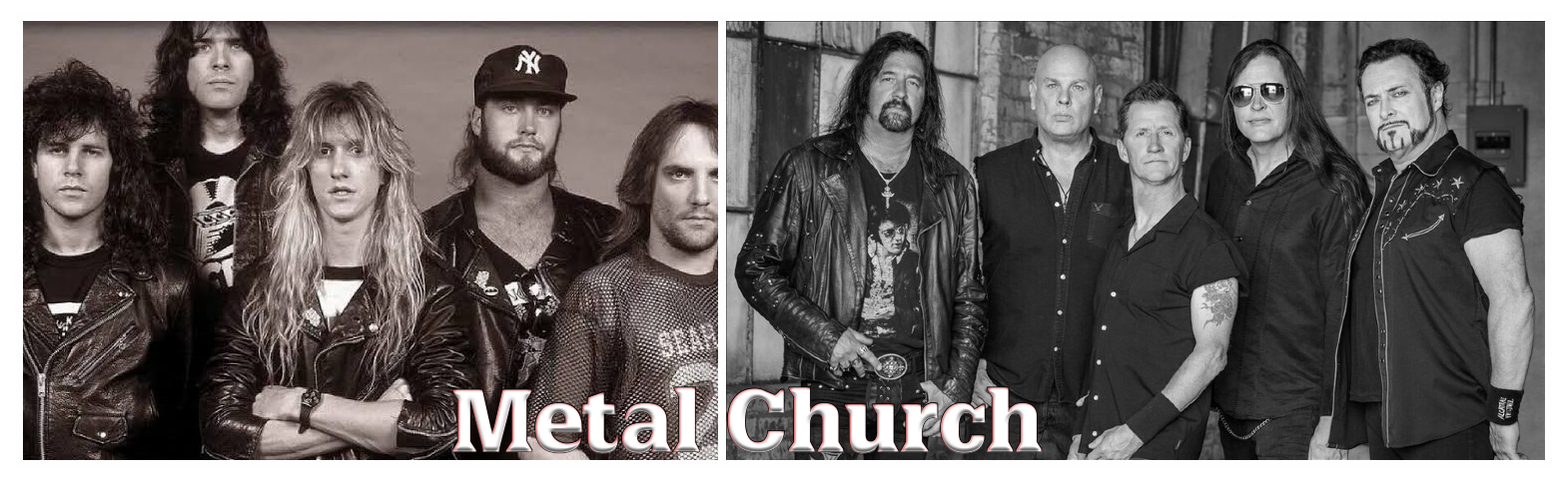
Go back to that first record from 1984. Independently released on the band’s own Ground Zero label, raw, and absolutely unhinged in the best possible way. The title track alone should have kicked down doors. Those guitars arrive like a warning shot, then Kirk Arrington’s kick drum starts stomping and you realize these dudes were playing thrash before half the scene had a word for it. Craig Wells and Vanderhoof traded lines that felt surgical yet furious at once. Precision without stiffness. That’s a hard trick to pull, and they made it look effortless.
Then you’ve got David Wayne. Man, that voice. He didn’t really sing so much as declare open war. A wail that could strip paint off a wall, but with actual pitch under it, actual menace. Rob Halford territory, no exaggeration, except Wayne carried a gutter snarl that felt rougher, more blue collar, less operatic. When he tears into “Gods of Wrath,” it stops sounding like a performance. Feels more like possession. Few frontmen in that era matched what he brought to a track, and fewer still ever got credit for it.
The writing held up too, which is the part folks conveniently forget. Anybody can stack riffs until the tape runs out. Building an honest song around them, giving it dynamics, letting the thing breathe before it detonates, that’s what separates pretenders from the real deal. “Beyond the Black” does exactly that. So does their reading of Deep Purple’s “Highway Star,” somehow heavier than the original without losing the swing. These weren’t kids bashing power chords in a garage. They understood structure. Hooks buried down inside the aggression. Tension, then release.
So what went wrong? How does a five piece this loaded wind up a footnote while Metallica, Megadeth, and Anthrax rode the wave into stadiums and platinum plaques?
Timing, mostly. Cruel, dumb timing.
The major label came knocking, and on paper that’s the whole dream. Elektra scooped up the independently released debut and pushed it out wide in 1985. Momentum, at last. The follow up, “The Dark,” landed in 1986 carrying “Watch the Children Pray,” a genuinely haunting piece that showed range nobody expected from a supposedly one lane thrash crew. They were positioned. The pieces sat right there for the taking.
And that’s precisely when everything started to wobble.
Vanderhoof, the architect, the mind that birthed this entire thing, had grown tired of life on the road. He stepped away from performing live in 1986, exactly when a young band needed its identity out there night after night. Think about a guy opening the hottest restaurant in town and then not showing up to cook once the place fills. His writing kept flowing, and interestingly the guy who eventually filled his live slot, John Marshall, had worked as Kirk Hammett’s guitar tech for Metallica. Metal Church kept touring, but losing Vanderhoof’s presence onstage still altered the chemistry of a band trying to climb.
Then, by 1988, Wayne was gone. The pipes that defined those first two records were suddenly out of the picture. You cannot overstate what that does to a rising name. Fans bond hard with a singer. Lose him mid climb and you’re basically asking people to fall in love a second time, on command.
Credit where it’s owed, the replacement wasn’t a step down. Mike Howe came aboard for 1989’s “Blessing in Disguise” and, real talk, the man could flat out sing. Smoother than Wayne, more controlled, yet still packing plenty of steel. “Badlands” and “Fake Healer” prove that second era had its own fire burning. The trouble was, by 1989 the ground had already shifted under everybody’s boots.
Here’s the ugly math. When the debut dropped, the thrash gold rush hadn’t fully hit yet, so the Church read as ahead of the curve, almost too early for a mainstream that wasn’t ready to listen. By the time the machine caught up and labels were signing anything fast and loud, they’d already burned through their original singer and lost one of their defining figures from the stage. Early to the party, then somehow late to the payout. Brutal.
There’s also this matter of identity. The crew lived in a strange no man’s land. Too polished and melodic for the underground purists who wanted nothing but velocity. Too heavy and unpretty for radio and MTV, which by the late eighties craved hair, hooks, and lip gloss. Poison ruled the charts. Sit with that a second. A group holding chops like these, watching Poison move units by the truckload. That’s the kind of thing that makes you side eye the entire industry.
Anthrax had the New York attitude and the rap crossover. Megadeth had Mustaine’s origin story and that poison pen of his. Metallica had, well, damn near everything, plus the head start and the relentless miles. Each of them owned a distinct lane. The Church? They just had the material. Turns out great writing on its own won’t carry you unless the timing and the story fall into place right behind it.
Then comes the ultimate gut punch, the geography itself. These guys sprang from the same soil that was about to become ground zero for grunge. As that movement exploded out of the Pacific Northwest, traditional heavy metal found itself pushed farther from the mainstream spotlight. By the early nineties, the very region that helped shape Vanderhoof had become synonymous with a movement that made bands like Metal Church seem suddenly out of step with the moment. You couldn’t write a crueler punchline if you tried.
The human cost lands harder than any chart position, honestly. David Wayne is gone. Died in 2005, following complications connected to injuries from a car wreck. Mike Howe hung on longer, but 2021 took him too. Two remarkable voices, both gone, neither one handed the flowers they earned while the wider world was still paying attention.
Here’s what I keep circling back to. Set that first album beside “Kill ‘Em All.” Set “Beyond the Black” beside anything from its year. The quality gap? It isn’t there. The fame gap is a canyon. And that distance owes nothing to talent, everything to luck, lineup chaos, and a calendar that flat refused to cooperate.
Metal Church nailed the hard part. Wrote the riffs, delivered the howls, built the tunes, landed the deal. What they never got was a clean shot at the summit that softer acts kept tripping into. Go dig up “Gods of Wrath” tonight. Crank it loud. Then try telling me these dudes belonged anywhere but the front. Somebody owes them a reckoning, and history’s been mighty slow to settle the tab.
Staff Writer; Terry Poole
This brother brings sharp ears, deep respect, and real passion to every heavy metal riff, rock record, and overlooked gem he covers for TheBRHM… He writes for fans who still believe loud music should have soul, history, and meaning…
One may contact him at TerryP@TheBRHM.com.