
(TheBRHM.com) Some careers burn bright and vanish fast. Two strong records, a couple of tours, then the slow slide into nostalgia bookings and reunion paydays. Mille Petrozza never signed up for that ending, and these days he is still very much on the attack, not resting on a plaque.
He picked up a guitar in Essen as a teenager, back when the country’s underground was mostly kids swapping demos on cassette and dreaming loud. That was the early Eighties. More than forty years later, the man still writes each song like the planet just did something unforgivable and he has until nightfall to answer for it.
Consider how rare that is. Most players who came up beside him either quit, went soft, or turned into a tribute act of their younger selves. Petrozza kept his blade sharpened the entire way. Spin Pleasure to Kill from 1986, then Krushers of the World from 2026, and the Kreator through line hits you square in the chest. Same rage. Same refusal to blink.
Think about how backwards that is next to how the industry hands out its trophies. Some guy coasts for twenty years on two good albums and gets a lifetime plaque. This dude kept raising his own bar the whole way and mostly gets a shrug.
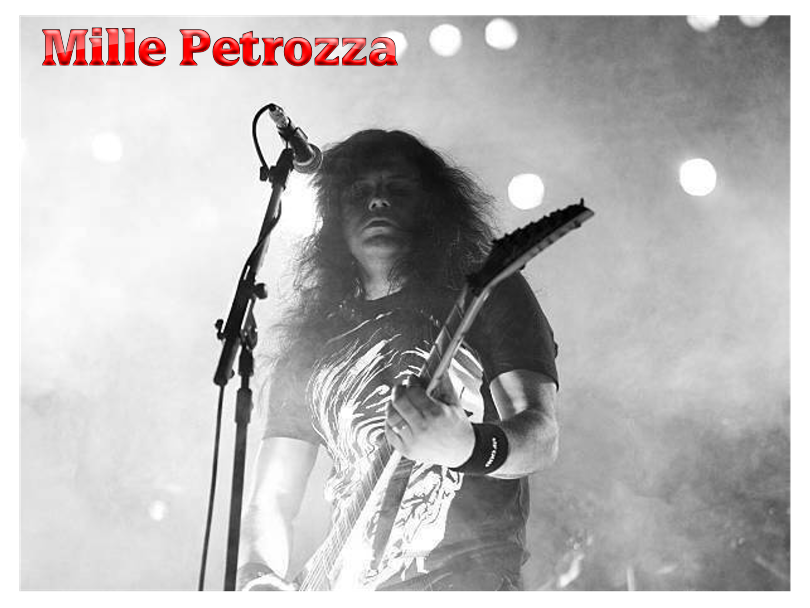
Now, the political thing. A lot of aggressive music hides behind fantasy and gore because taking a real stance is hard and it costs you fans. Not him. As Kreator grew, those lyrics increasingly went straight at power, war, religious control, environmental ruin, and the machinery that grinds regular folks into dust. Enemy of God confronted terrorism and religious extremism head-on. Phantom Antichrist wrestled with manipulation, injustice, war, and oppression. And Hate Über Alles was no empty shock move either. Petrozza said the title reflected a world growing louder, more aggressive, and increasingly out of balance. No hedging.
You can feel where the man stands without ever getting a lecture. The anger has a target. That matters. There is a difference between yelling because yelling sells and yelling because something is genuinely wrong, and he has spent a whole life on the correct side of that line.
Then you get to the guitar work, which is honestly where the conversation should start anyway. His right hand is a machine. Those downpicked passages come at you in sheets, tight and mean, never sloppy, never flexing for the sake of it. The rhythm style he built feels like getting jumped in an alley. No studio smoke, no trickery propping it up. Way back the recordings sounded rough, almost bleeding, and somehow the picking still came through the mess sharp enough to shave with.
What separates him from the pure speed merchants is melody. Buried inside all that violence sits a real sense of song. Listen to how a lead will suddenly open into something almost mournful before the whole thing crashes back down. He understood, way ahead of a lot of his peers, that aggression means more when it carries light and shadow, when a hook can gut you emotionally right after a passage tried to remove your head.
Here is the part that seals it. Somewhere in the late Nineties, plenty of the old guard hit a wall. The scene had moved on, grunge had rewritten the rules, and that whole first wave of extreme German aggression looked like a museum piece. Petrozza experimented, wandered a little, even flirted with gothic textures on Endorama that split the faithful right down the middle. Some people never forgave those detours.
But watch what came next. Violent Revolution landed in 2001 and it played like a statement of purpose, a man planting his flag back in the dirt and saying this is who I am, this is what I do, and I will do it better than the imitators ever could. From there the run has been ridiculous. Enemy of God, Hordes of Chaos, Gods of Violence, each one bigger and cleaner and more anthemic than the last, without ever betraying the snarl at the core.
That is the trick almost nobody manages. Going modern is simple if you are willing to gut what made you special. Preserving your identity is simple too, if you are content to fossilize. Doing both at once, sounding huge and current on a festival stage while still delivering the exact knife to the gut you delivered in a sweaty club in 1987, is a needle almost no veteran threads. Mille threads it every single cycle.
The choruses got massive. The production grew enormous. Melodic leads started soaring up over the top, big and cinematic. Underneath, though, the same German thrash engine kept grinding. It never bowed. Nobody was going to mistake it for anyone else’s. He never traded the fury for accessibility. He just figured out how to keep both in the same fist.
Younger heavy bands owe him a debt they probably do not even clock. That whole modern blueprint for how an extreme act ages with dignity, stays relevant, headlines gigantic stages, and can still terrify the front row? He drew up a big chunk of it himself. Not through interviews about legacy. By showing up and delivering, year after brutal year.
There is a lesson buried in that catalog for anybody who makes things. Talent gets you noticed. Staying power builds the monument, though, and conviction is the piece that makes folks believe you actually meant every word. Essen’s most relentless export has all of it, and has carried the load the whole time, which is why Krushers of the World stands proud beside the classics rather than begging for comparison.
Deep into his fifth decade, most legends settle for playing the hits and counting receipts. Not this one. Walking through 2026 he is still writing songs that sound genuinely furious about the state of the world, peeling paint off the walls with that right hand, dead set against letting the flame he lit as a kid gutter into something safe and gray.
Kreator’s fury stays alive because the man never let it die. Simple as that. The fire keeps burning because it never stopped getting fed, and the entire genre came out louder and braver for the example. Long may he keep swinging.
Staff Writer; Terry Poole
This brother brings sharp ears, deep respect, and real passion to every heavy metal riff, rock record, and overlooked gem he covers for TheBRHM… He writes for fans who still believe loud music should have soul, history, and meaning…
One may contact him at TerryP@TheBRHM.com.