(TheBRHM.com) Bring up Hendrix and folks reach for the tie-dye first. The scarves. That burning guitar at Monterey. Flowers in the hair, incense curling through some California afternoon in 1967. That picture stuck, and it flattened him. What got buried underneath all the soft-focus mythology was the pure menace in his attack, the way he bent electricity into something that snarled and lunged.
Put on “Voodoo Child (Slight Return)” and skip the patchouli. The wah pedal opens like a throat clearing before a brawl. Then the riff lands. Dirty, swaggering, built on a groove that stomps instead of floating. Nothing gentle about it. He isn’t painting a dreamscape. What he’s pouring instead is a foundation that Tony Iommi, Jimmy Page, and half of the Sunset Strip would spend careers building on. And the tone. Thick, fuzzed up, downright nasty. It sounds less like a song starting and more like somebody kicking in a door.
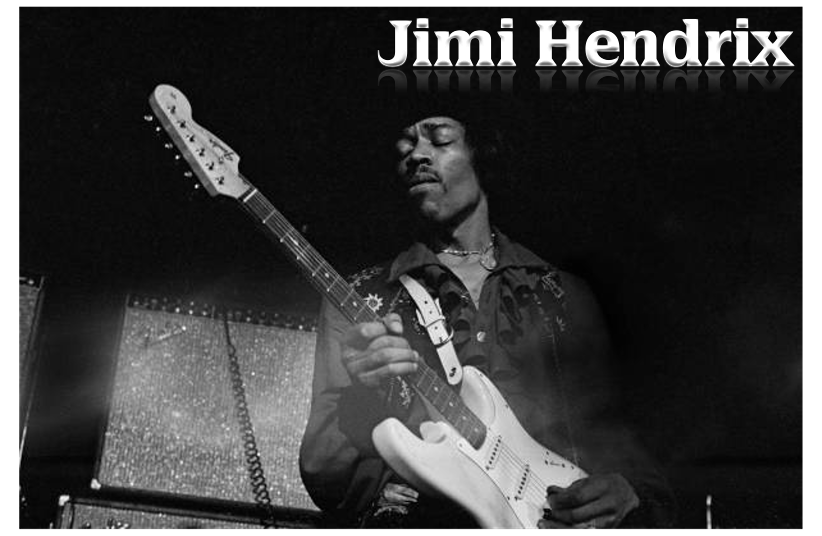
Then there’s “Machine Gun.” Band of Gypsys cut its legendary version live at the Fillmore East on New Year’s Day 1970. Billy Cox worked the bottom end. Buddy Miles beat the kit half to death. Twelve minutes of controlled devastation. The man made his instrument scream like ordnance falling on a village. He wasn’t quoting war. Instead he scored it in real time, using feedback and dive bombs and howls that hang in the smoke. No solo before it had ever carried that much dread. Metallica fans who worship the anti-war heft of “One” owe a debt they might not even clock. That agony, that sense of a weapon wailing on its own, started right here.
“Spanish Castle Magic” gets slept on constantly. Huge mistake. That opening figure chugs. The thing swings, and it crunches. Both at once. That rhythm showed up more than a decade before thrash emerged. Listen to how it drives. Palm-muted weight sits under a vocal barely hanging on. You can trace a straight line from that churn to the grind of “Symptom of the Universe.” He was already thinking in low-end shove while his peers chased prettiness.
Everybody thinks they’ve got “Purple Haze” figured. They don’t. That famous opening leans hard on a tritone, the flatted fifth. The interval later picked up the nickname “the devil’s interval,” though the old story that medieval churches banned it has no solid historical basis. Black Sabbath gets crowned for weaponizing that dissonance on their first record. Look closer. Jimi got there ahead of them, in 1967, with that ugly-beautiful stab. Then the main riff kicks in, all octaves and filth, a blueprint so foundational that thousands of acts cribbed from it without ever learning where it originated.
The studio cuts only tell part of the story. Onstage is where he pushed past what tape could hold. He ran Marshall stacks at punishing volume, often cranking the controls all the way up until the amps became collaborators. Feedback wasn’t an error to squash. So he shaped it. Coaxed it. Bent that howling sustain into whatever he wanted, the way a sculptor leans on stone. Pull up footage from Winterland or the Isle of Wight and watch him drag shrieks off the fretboard. That’s no flower child. That’s someone having a violent, gorgeous argument with physics.
One detail metalheads appreciate: he often tuned that Strat down a half step. Everything sat lower, fatter, closer to the ground. That sag in pitch gave his rhythm work a thickness his cleaner peers never touched. Small choice. Massive consequence.
Consider what he did to the national anthem at Woodstock. He took a patriotic melody and detonated it. Rockets, sirens, the whole sonic wreckage of a country tearing itself apart, all of it summoned from six strings and a wall of amplification pushed deep into the red. No overdubs. Zero orchestra. Just Hendrix at dawn making his rig weep and shriek and explode. That performance sits closer in spirit to noise rock and industrial extremity than to anything on Top 40 radio at the time. He arrived decades early to a party nobody had thought to throw yet.
His gear mattered as much as his hands. Fuzz Face pedals, the Octavia doubling pitches an octave up into something alien, the Uni-Vibe swirling underneath all of it. He stacked these tools into a churn nobody in rock had assembled before. Eddie Van Halen studied Hendrix’s technique. Stevie Ray Vaughan built a temple around it. Every kid who ever cranked a half-stack in a garage and felt the floorboards rattle is chasing a sensation this pioneer bottled six decades back.
Think about who claims him now. Zakk Wylde has talked openly about what he took from Hendrix. Kirk Hammett has argued that Hendrix’s influence on heavy metal remains underappreciated. Prince, Lenny Kravitz, John Frusciante, damn near every serious six-stringer since eventually kneels at the same altar. The man minted a whole vocabulary. Whammy dives. Feedback swells. The trick of letting one held note carry a mountain of feeling. That toolkit turned into standard issue for the heaviest bands going. Doom, sludge, stoner rock. Walk that whole low-and-slow family tree backward through Sabbath and you wind up standing right at his feet.
The soft version sticks around partly because of when he left. Dead in 1970, way too soon, just as the genre he helped plant was beginning to take recognizable shape. Black Sabbath had released their debut that February, and Deep Purple had unleashed In Rock that June. Heavy metal was only starting to solidify into the genre it would become. Nobody snapped a photo of him next to the leather-clad hordes who ran with his ideas later, so the history books shoved him into the 60s counterculture bin and slammed the lid. The costume smothered the content.
Comfort factors in too. Easier to recall a talent as a whimsical shaman than as a genuine architect of aggression. The first version asks nothing of you. The second forces a reckoning: this quiet, polite, generous soul channeled something ferocious, and he managed it years ahead of nearly everyone credited with inventing that ferocity.
Go back and really listen. Crank “Voodoo Child” loud enough that the neighbors start pounding on the wall. “Machine Gun” hits hardest with the lights off, the dread settling in over you. And “Spanish Castle Magic” you feel down in your chest. Notice how much of what you love about the punishing music in your collection was already there, fully formed, in the fingers of a player everyone insists on filing under gentle. Yes, he was gentle. He was also loud as hell. Ugly when the moment called for it. Flat out brutal in a way almost nobody who plugged in ever matched. Both things live in the same guy at once. The heavier one just never fit on a poster.
Staff Writer; Terry Poole
This brother brings sharp ears, deep respect, and real passion to every heavy metal riff, rock record, and overlooked gem he covers for TheBRHM… He writes for fans who still believe loud music should have soul, history, and meaning…
One may contact him at TerryP@TheBRHM.com.