
(TheBRHM.com) Word reached the Legions on October 1st, and the floor shifted under everyone who ever worshipped at the altar of distortion. Conrad Lant, the Newcastle force the planet knew as Cronos, was gone at 63. No cause has been named. His son Nathan spoke for family and faithful at once, thanking the fans and vowing that a legend like his father never truly fades. That kind of farewell suits a man who treated raw noise as gospel for better than four decades.
Plenty of sites will post the obituary and leave it right there. Better to do the harder thing and reckon with what the bassist actually built, because the reach of it dwarfs whatever most casual listeners assume.
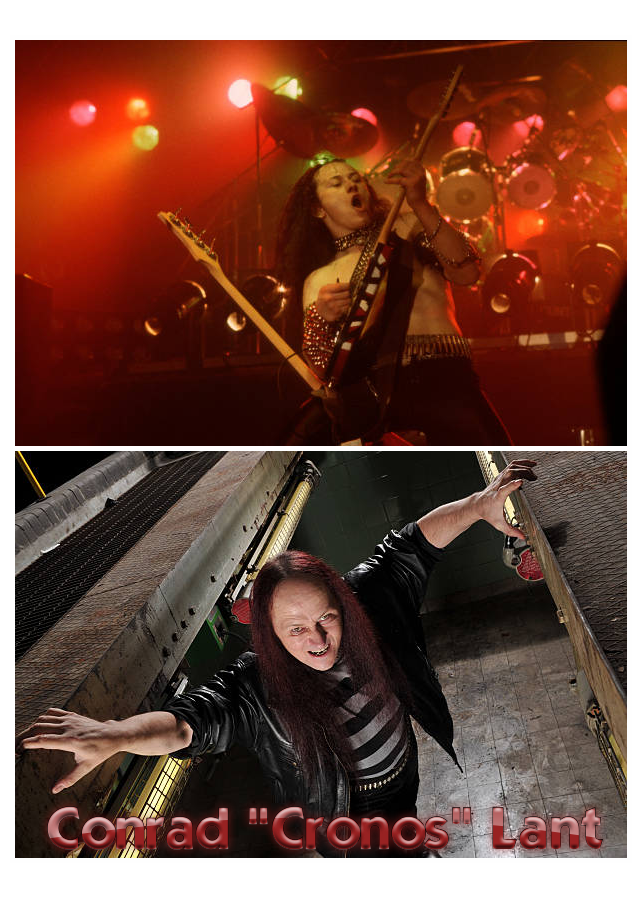
In late 1979, a skinny kid from the North East joined the Newcastle outfit as a rhythm guitarist and soon found himself grabbing four strings almost by accident. When the group’s bassist disappeared shortly before a church hall gig, Lant borrowed a bass, seized the low end and never really looked back. According to Cronos’s version of the band’s early history, a roadie suggested the name Venom, and the teenager eventually rechristened himself for Cronus, the Greek Titan associated with Saturn, the planet traditionally linked to his Capricorn birth sign. Ambition on that scale, from a lad barely clear of school, tells you plenty.
What arrived next broke every rule the genre had quietly agreed to obey. Neat Records owner David Wood kept getting pestered to capture the young trio, finally relented, and out came the 1981 single In League With Satan paired with Live Like an Angel (Die Like a Devil). Crude as a brick to the skull, and proudly so. Clean technique meant nothing against the sheer malice of the attack.
Listen to those early tracks and the detail that leaps out is the four strings cranked past sanity, fuzzed into a buzzsaw snarl that hauled the whole racket on its spine. Guitar handled the riffs, sure, yet the engine room was that filthy low frequency roar, a move almost nobody had tried as the lead voice of a heavy outfit. Over the top sat a delivery that spat rather than crooned, abrasive and sneering, a blueprint later borrowed by thousands of growlers and shriekers across death metal and the wider extreme metal world.
Welcome to Hell landed in 1981 and functioned like a dare thrown in the face of the whole establishment. Here was living proof that you needed neither conservatory chops nor a fat studio budget to conjure something terrifying and alive. Teenagers hunched over cheap turntables from the California suburbs to the cold edges of Scandinavia heard it, and something just clicked. Early Metallica openly displayed its Venom fandom, with James Hetfield and Dave Mustaine among the musicians photographed wearing Venom shirts before Metallica became a global name. Across in Switzerland, Tom Gabriel Warrior took that same filth and bent it into Hellhammer, then Celtic Frost. Years later, Norwegian bands including Mayhem and Darkthrone would help carry that raw, hostile spirit into a new generation of black metal.
The year 1982 brought the album that accidentally handed a genre its name. Black Metal, the cover read, and a whole scene eventually grabbed the phrase and rode it for the next forty years. Letting two words name a movement with no such plan in mind is its own kind of legend. At War With Satan arrived in 1984 and stretched its title cut to nearly 20 minutes, a sign the trio could reach for something bigger than pure bludgeon whenever the itch struck. Possessed hit in 1985, and the occult imagery, influenced in part by Anton LaVey’s writings, hardened into pure theater.
Beyond the racket itself, Cronos helped shape the visual identity surrounding the band, contributing artwork, sleeve concepts and later logo designs that became inseparable from Venom’s image. That total vision, roar and symbol and stagecraft welded into one, handed the project a mythology most acts would murder for. Mantas and Abaddon even pulled their stage names from the pages of The Satanic Bible, rounding out a universe engineered to unsettle.
After the classic lineup fractured late in the 1980s, the singer struck out solo. A fresh unit bearing his nickname cut Dancing in the Fire in 1990 and Rock ‘n’ Roll Disease three years on, both leaning toward straight ahead rock while a serious bodybuilding habit competed for his time. Reconciliation came in 1995, when the original three reunited for Wâldrock in the Netherlands. The following year they returned for a massive appearance at Dynamo Open Air before a heaving European crowd.
Decades rolled past and the founder kept the fire lit, issuing Metal Black in 2006, Storm the Gates in 2018, and grinding through tours with younger hands Rage and Dante locked in alongside him. His closing statement reached shelves this past May, a 16th studio album named Into Oblivion, released through Noise and BMG and marking Venom’s first new studio album in eight years. Nobody spinning it realized a goodbye sat buried in the grooves. Bitter disputes had also divided the old camp, with Cronos continuing Venom, Mantas and Abaddon later reuniting for their own performances, and Tony Dolan carrying on with Venom Inc. A 2024 lawsuit involving disputed Venom merchandise designs added another layer to an already complicated history. According to Mantas, Cronos was also invited to take part in 45th anniversary performances celebrating Welcome to Hell in 2026 but declined.
Strip away the corpse paint and the courtroom drama and one fact stands clean: without that blasphemous din out of Newcastle, a huge portion of the acts packing extreme metal festival stages today would sound very different. Thrash is in Venom’s debt. Death metal, likewise. The black metal movement took its very name from their 1982 album and absorbed plenty of the ugliness, atmosphere and defiance the trio threw into the world. Conrad Lant helped lay that first stone and dared the rest of the underground to build on it.
So let’s hear from you. What are your fondest memories of this artist, the album that cracked your skull wide or the show that left your ears ringing for days after? And with the architect gone, do you believe Venom ought to carry on as a working band, or should the name be buried beside the man who helped forge it? Sound off in the comments and keep the conversation burning.
Rest easy, Cronos. The Legions hold the watch now, and that glorious, ugly roar is never going quiet. May he rest in peace.
Staff Writer; Kirk Robinson
This man is a Rockhead with a deep appreciation for rock, country, folk, blues, heavy metal and the musical traditions that connect them. He writes about artists, albums, music history and the sounds that continue to shape generations. Feel free to contact him at KirkR@TheBRHM.com.