
(TheBRHM.com) Somewhere past the six minute stretch of Sleep‘s “Dopesmoker,” a track that rolls on for over an hour, the whole idea reveals itself. Almost nothing has shifted. That is the design. A riff loops, sags, bends, and breathes, and if you can settle into that groove without your thumb drifting toward the skip button, the thing gives back something no bite sized single ever managed.
We live inside a culture engineered to bail. You give a track fifteen seconds, sometimes fewer, then your thumb is already moving. The business knows it too. Spotify will not even log a play until somebody hangs on for at least 30 seconds, one more incentive in a streaming ecosystem that rewards getting to the point quickly. Why bury a hook when burying it costs you rent money? I get the logic. People are busy. Nobody ever signed a contract promising a recording their whole evening.
And yet here sits a genre that refuses to play along, holding that line for more than half a century, and somehow keeps winning converts who did not know they had the capacity to wait.
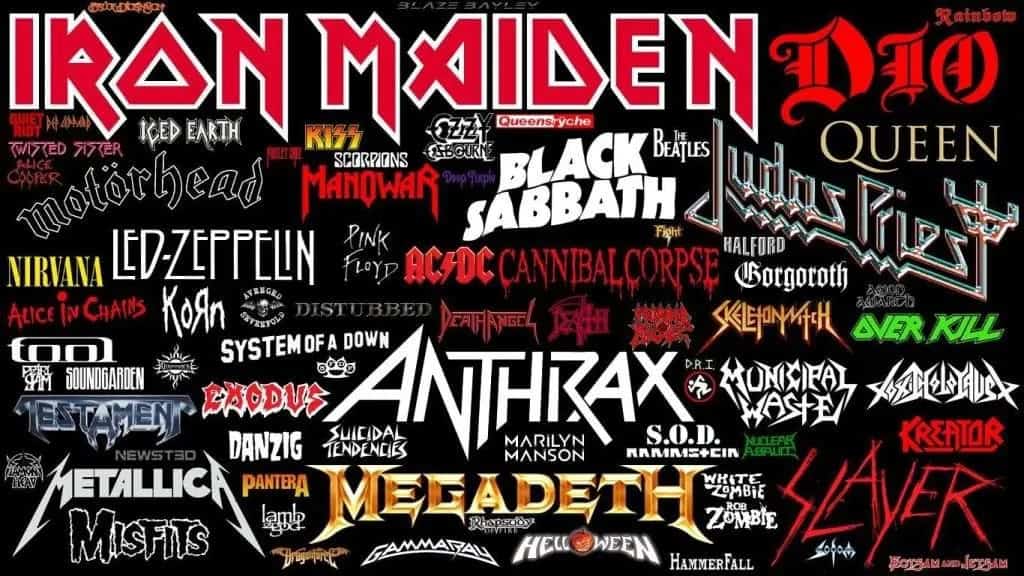
Consider doom. Black Sabbath opened their debut with rain, a distant bell, and a tritone that crawled rather than sprinted, and the tempo alone told you this was not built for a quick dopamine hit. Descendants took the lesson further. Electric Wizard buries you under sludge so thick that motion feels optional. Pallbearer lets grief unspool across nine, ten, eleven minutes because sorrow does not resolve on a schedule. YOB writes cathedrals. Bell Witch once released an 83 minute funeral dirge as one unbroken piece, daring anybody to treat mourning as a playlist purge. None of it works if you keep checking the clock. All of it lands like a freight train once you surrender.
The long intro belongs in this same conversation. “Master of Puppets” spends real estate coiling tension before James Hetfield says a word, and the payoff hits harder precisely because you earned it.Iron Maiden loved a slow fuse. Dream Theater treats a two minute buildup as an appetizer. There is craft in the delay, an understanding that anticipation is itself a feeling, arguably the richest sensation guitar music can offer, and you cannot manufacture it in a hurry.
Then you get the concept album, that gloriously unfashionable beast. Take “2112.” Rush meant side one to play as a whole arc, top to bottom, and shuffling it or grabbing your favorite chunk just snaps the spine of the thing. Queensrÿche pulled the same move on “Operation: Mindcrime,” writing an entire story into the grooves, brainwashing and a hitman and betrayal, so lifting a lone cut out of it lands about as well as opening a novel to page 90 and calling yourself finished. And what Mastodon did on “Crack the Skye” still stops me cold. Astral travel, Tsarist Russia, the memory of their drummer’s late sister, all of it stacked so thick you keep unearthing corners on the tenth spin. Then there is Opeth, dropping you from a blast of brutality into a hushed acoustic stretch inside the same piece, betting you trust them enough to hang on for the turn. That trust is the whole deal.
Post metal took the philosophy and stretched it to a logical edge. Neurosis, Isis, Cult of Luna, these outfits build the way weather builds. Quiet, quieter, a tremor, then a wall of sound that would mean nothing without the restraint stacked underneath it. Tool made a career from exactly this. “Lateralus” famously folds Fibonacci inspired patterns into its syllable counts and shifting meter, “10,000 Days” asks for your evening rather than your commute, and the faithful have zero problem handing it over. Watch a Tool crowd hold perfectly still through a swelling passage that refuses to hurry. That hush is the applause.
What all of this shares, from the crustiest sludge to the most polished prog, is a bet against the reflex to move on. The greatest weapon in this arsenal was never the seven string guitar or the double kick pedal or the growl that peels paint. It is the demand that you stay. Endurance, cultivated on both sides of the speaker. The willingness to let a groove sit until it turns hypnotic. The nerve to make an audience wait, and the odd gift of a crowd glad to.
I think about this a lot watching how kids consume everything now. Clips inside clips. A film distilled to a 45 second recap. A ten hour saga boiled down to highlights. Nothing is wrong with any of that on its own, but a diet built entirely from peaks leaves the palate unable to taste anything subtle. You lose the muscle. Once it atrophies, a piece like Green Carnation‘s “Light of Day, Day of Night,” one composition running a full 60 minutes, reads less as an invitation and more as a threat.
Here is the part the skip culture never advertises. The reward for staying scales with the cost. A brief jolt gives you a brief jolt, nothing more. A record you sat with across an hour, the kind that made you uncomfortable in the dead zones and then detonated when you finally stopped bracing for the drop, that experience rewires you a little. It follows you home. You hear it in traffic weeks later. Sabbath had this figured out back in 1970. Every doom outfit since is basically running the same dare. Stretch the tension, hold it past the point of comfort, then turn it loose, and the payoff hits harder than any quick fix could ever manage.
And this is not some greybeard clinging to the good old days. The kids are proving the appetite is alive and well. Decades after “Dopesmoker” was recorded, listeners are still willing to give Sleep that kind of time. Pallbearer draws people who were toddlers when Neurosis peaked. Somewhere a teenager is discovering that handing a heavy album forty uninterrupted minutes feels closer to meditation than entertainment, and that the fidgeting stops if you let it.
So call it the quietest weapon in an aggressively loud form. Beneath the distortion and the darkness and the sheer volume runs a philosophy almost monastic in its patience, an insistence that certain pleasures cannot be downloaded in fragments, grabbed on the run, or truly known in a rush. The riff is the body. The wait is the soul.
Put the phone face down. Let the bell ring. Let the rain pour a while before the thunder shows up. This music has been waiting for you the entire time. Turns out it is far better at that than we are.
Staff Writer; Terry Poole
This brother brings sharp ears, deep respect, and real passion to every heavy metal riff, rock record, and overlooked gem he covers for TheBRHM… He writes for fans who still believe loud music should have soul, history, and meaning…
One may contact him at TerryP@TheBRHM.com.