
(TheBRHM.com) Somebody always ends up holding the short straw. In every gang of legends there’s the name spoken last, with a touch less reverence, the one folks nod at politely before circling right back to the heavy hitters. For the better part of forty years that role landed on five guys from New York who gave this music more than most of their peers ever bothered to attempt.
Metallica sold the planet. Slayer scared your mother half to death. Megadeth had the man with the vendetta and a fretboard that flat refused to quit. Then, off to the side in skate shorts, grinning like they were in on a joke the rest of us missed, stood the outfit everybody loves to file fourth. Anthrax.
Now, deep into a new century, that same crew is about to hand us Cursum Perficio, arriving September 18, their first full studio effort since 2016. Ten years between studio albums, then this. The timing plays like a dare: keep sleeping if you want.
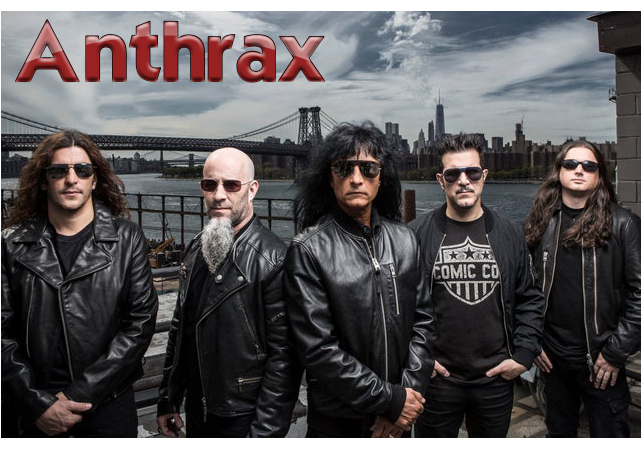
Let me back up a minute.
The “Big Four” tag was never a ranking of who mattered most. It grew out of the 1980s as shorthand for the four thrash bands that became the era’s biggest commercial forces. Sales mattered enormously, which is why those four names got carved into the tablet. Purists have argued ever since that Overkill or Exodus or Testament earned that fourth seat instead. Fine debate for a barstool. It also misses what actually happened.
Because while three of those groups came up on the West Coast breathing California smog, Scott Ian and company were a New York animal, born in Queens and shaped by the city’s hardcore pulse. You could hear the city in them. That East Coast blood gave the songs a bounce the others never had. And here’s the part the doubters always skip: these guys wrote hooks. Real ones. Joey Belladonna sang, actually sang, soaring clean over the riffs while his rivals barked and snarled. Melody folded inside all that speed made them a strange, singular proposition, and strange rarely gets its due while it’s happening.
Then there’s the stuff that had nothing to do with riffs.
Back in 1987, long before anybody slapped a genre label on the fusion, these New Yorkers dropped “I’m the Man” and welded rap to distorted guitar for laughs and for keeps. By 1991 they’d cut a fresh “Bring the Noise” with Public Enemy, then hauled Chuck D and Flavor Flav out on the road right beside them. Picture that bill for a second. Kids who’d never once cross paths, jammed shoulder to shoulder, hollering the same hook back at the stage. Nobody was writing papers on crossover yet. They just went and did it, loud, and left the room to sort itself out. It made heavy music feel bigger, curious, unafraid of the world outside its own moshpit.
They read, too. “I Am the Law” pulled Judge Dredd straight off the page and into the pit. Stephen King bled through plenty of their work, from the very name of that 1987 landmark set to horror nods buried down in the lyrics. Nerd culture worn as a badge of honor, decades before that became somebody’s marketing plan. When comic shops and record stores finally merged in the public imagination, these five had already been living there for ages.
So why the eternal shrug?
Some of it comes down to bad luck and worse timing. Then grunge showed up and ate everybody’s lunch. Belladonna was out, John Bush of Armored Saint was in, and the sound turned thicker and meaner, less sprint and more grind. Stuff like Stomp 442 held up fine, still does. Trouble was, the crowd that fell hard for that clear high tenor checked out the second a different guy grabbed the mic. The press moved on. Radio moved on. For a long stretch the whole genre got treated like a fossil, and this outfit took the brunt of the neglect even as it kept swinging hard.
What people forget is how many times these players got written off and simply refused to stay buried. Belladonna returned in 2010. Worship Music landed twelve months later and reminded everyone the fire never went out. For All Kings in 2016 proved it wasn’t a fluke. Through all of it, Charlie Benante sat behind the kit as one of the most underappreciated drummers in the history of aggressive music, a true architect of the double bass gallop. Ian’s right hand stayed the metronome of a whole movement, tight enough that folks have called him downpicking’s answer to Angus Young. Frank Bello brought the swagger. This was never a weak link. It was a machine that outlasted its critics.
Which brings us to the strange, perfect poetry of the fresh one.
Cursum Perficio is Latin, and Benante spotted the phrase on a tile at the entrance of Marilyn Monroe’s final home while watching a documentary. It reads, depending on your translator, as “my journey has come to an end” or “I complete my course.” Weighty words for guys who spent four decades being told their journey should have wrapped up long ago. They insist it isn’t a goodbye. Given who we’re talking about, I believe them. Persistence has always been the entire point. Their 1990 release, the one that earned a first Grammy nod, was literally titled for the passage of time. Full circle stuff.
The record got cut at Dave Grohl’s Studio 606 with Jay Ruston helping shape the sound, and for once the roster held steady, same five faces as last go-round, no drama, nobody replaced. The early singles back up the noise. “It’s For the Kids” swings with that classic gang vocal snarl. “The Edge of Perfection” and “Everybody’s Got a Plan” show veterans with nothing left to prove and everything to enjoy. There’s a looseness in it, the sound of players who lasted long enough to have fun again.
And that’s the whole argument, really. You want to know who got shortchanged in that famous quartet? It was always the crew dismissed for being too fun, too melodic, too willing to hug a hip hop icon or quote a comic book. The seriousness police docked them points for smiling. Meanwhile they quietly built one of the deepest, most human catalogs in the entire style, and pulled it off while the culture kept declaring them finished.
Time is the cruelest judge any artist ever faces. Reviews fade. Reunion checks clear and get forgotten. Whatever slot you drew on somebody’s ranked list stops mattering the day it prints. All time ever really asks is whether you’re still standing. Forty plus years on, this crew is preparing to answer again on September 18, with a batch of songs that swing like men who’ve got something to prove all over again. The last laugh belongs to the guys in the skate shorts. Turns out the joke was on everybody who counted them out.
Staff Writer; Kirk Robinson
This man is a Rockhead with a deep appreciation for rock, country, folk, blues, heavy metal and the musical traditions that connect them. He writes about artists, albums, music history and the sounds that continue to shape generations. Feel free to contact him at KirkR@TheBRHM.com.