
(TheBRHM.com) Most of us shelve AC/DC under hard rock, and the purists have a strong case for keeping them there. Walk into any shop that still sells the physical stuff and you’ll likely find the Youngs tucked into hard rock, exactly where Angus wanted them. He didn’t reach for a grander word. Rock and roll, he’d say, and he’d get prickly if you tried to dress it up. Yet follow the bloodline of the heavy back far enough and you keep tripping over these fellas from Sydney, standing there in short pants and a grin, having quietly poured some of the concrete while everyone else watched Sabbath light the candles.
Genres don’t arrive clean. They borrow, they steal, they mutate in the dark. Whatever separates the hard stuff from its meaner offspring was less a wall than a smudge, and this outfit lived inside that smudge for the better part of fifty years without once needing to plant a flag.
Start with tone. Malcolm Young, rest him, understood a thing most players chase their whole lives and rarely catch. He ran a Gretsch into a wall of Marshalls and added nothing. No chorus, no flange, no reverb soup. Just the bare crunch of tubes shoved past polite. Dry, thick, mean as a repo man. That texture became a blueprint. Drop the needle on almost any thrash record from the mid 80s and you can hear something of his ghost humming underneath. James Hetfield built an entire cathedral on that downstroke, and he has openly counted Malcolm among his rhythm gods. The palm muted chug driving Metallica’s early stuff carries a plain debt to the man who made three chords sound downright menacing.
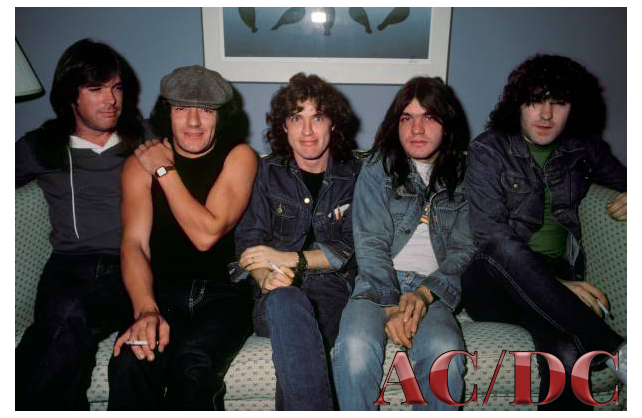
Then volume, treated as belief rather than setting. Plenty of acts got loud before them. These guys helped carry loudness into arenas as an entire argument. A show wasn’t wallpaper, it was a physical event that parked itself on your sternum and refused to leave. The heavier crowd would take that idea and drive it clean off a cliff, but the notion that raw force could be the whole point kept rattling arenas partly because a skinny kid in a schoolboy blazer kept cranking dials until promoters begged him to quit.
Attitude carried even more weight than any single riff. What these Australians brought was a sneer with zero apology stapled to it. Bon Scott sang about liquor, women, and getting into trouble he clearly enjoyed, and he did it without a flicker of shame. That flat refusal to soften, to explain himself, to make anything safe for somebody’s mother, sank straight into the bones of what came next. A whole movement would wear its raised finger like a merit badge, and plenty of that swagger got its first road test on Powerage and Let There Be Rock.
Speaking of which, put that title cut on and try telling me it isn’t ferocious. The pace, the meanness, Angus soloing like the venue’s on fire behind him. It doesn’t stomp the way Priest does, but the DNA is cousin close. Rob Halford has even acknowledged that AC/DC got into Priest’s bloodstream. After Judas Priest toured Europe with them in 1979, Halford later said some of AC/DC’s direct song structures were still ringing in the band’s ears when they went in to make British Steel. Priest sharpened everything, bolted on the leather and the twin harmony leads and the operatic scream, yet under all that polished steel sits a rhythmic spine any fan of the Youngs clocks in a heartbeat.
Now let me be straight, because pretending these blokes were a secret metal band would be a fib, and fibs about music get under my skin. They were not. None of the blast beats, extreme vocals or downtuned excess that later metal subgenres would embrace. Angus never once played faster than a song asked him to. The catalog stands on groove, on the pocket, on getting a body to move rather than leaving it scared. That is blues money, inherited straight from the Delta through Chuck Berry, and it never once left the account. Stack a Cannibal Corpse album beside Highway to Hell and you’re comparing separate planets.
But a foundation is not the house. You can raise something wild and towering on a footing that looks nothing like the tower itself. And when you ask the people who actually engineered the heavier styles who pried the door open for them, the same names keep circling back to the same schoolyard.
Zakk Wylde says it out loud. Dimebag Darrell, gone too soon, flat out loved this outfit, and Pantera hauled some of that no frills sledgehammer philosophy into the groove metal sound they helped define and popularize. Slash learned it. So did a generation of players who came after. You don’t need forty notes when six, placed exactly right, land like a punch. Economy as a weapon. That single lesson traveled to every corner of the loud world.
There’s the live ritual too. Cannons, a giant bell, the inflatable Rosie, the duckwalk performed until the little man collapses. Later heavy acts shared and expanded that same philosophy of spectacle. Rammstein turned fire into a laboratory experiment, Maiden built an entire mythology around a mascot, but AC/DC proved in its own way that a heavy show ought to be an occasion you feel in your molars. Five musicians and a wall of amps could fill a stadium and leave it steaming.
Consider staying power as its own piece of evidence. Back in Black landed in July 1980, roughly five months after Bon Scott’s death, and climbed into the thin air of the best selling records ever pressed. Brian Johnson stepped into a nightmare and howled his way clean through it. That record is a seminar on how heaviness needs neither speed nor knots of complexity. Hells Bells opens on a funeral toll and a riff so patient it borders on sadism. You can hear that patient, crushing approach echoed through doom, sludge and stoner metal. At times, a giant slice of stoner music sounds like this band slowed to a crawl and soaked in fuzz.
I keep drifting back to Malcolm, truthfully, because rhythm work hardly ever gets handed the roses it earned. Everybody wants the flashy job out front. He planted himself in the shadows and made the thing breathe as one. Ask enough rhythm players in the heavier styles who they truly studied and eventually his name surfaces, spoken with the hush you save for a founding elder. He never needed to shred. He needed the part correct, and it always, always was.
So where does that leave the label debate? Precisely where it began. Hard rock, stamp it, shelve it, move along. Labels describe the paint though, not the timber underneath, and down in the timber this band is knotted together with this loud tradition in ways that refuse to untangle no matter how neatly you sort the bins. Volume as its own gospel. That dry tone. A sneer nobody could counterfeit. Stubborn refusal to complicate what already killed. Every bit of it fed the creature growing up right next door.
Spin a fresh underground release in 2026 and that same low end menace still rattles the cones, half a century on and counting.
Some gatekeepers will keep them off the metal family tree, and on the technicality they have a point. But every family has that one uncle who shares no blood, showed up to every holiday regardless, taught the kids to swing a bat and cuss with style, and ended up shaping them more than half the actual cousins ever did. That’s AC/DC. Not the genre, not for a second. And still threaded right through the middle of it, thunderstruck and grinning, permanently.
Staff Writer; Jerry Powell
JP is into heavy metal, rock, blues and just about anything old school… Most days, he would rather talk about a great album than whatever is trending… Hit him up at JPowell@ThyBRHM.com.