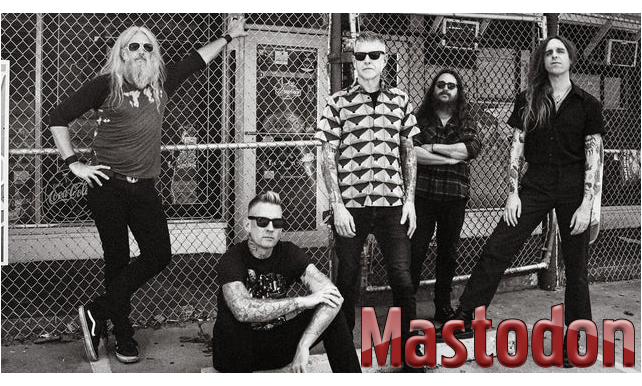
(TheBRHM.com) Most bands that chase reinvention lose the thread and come out sounding like somebody else entirely. Mastodon spent twenty odd years morphing and never once stopped sounding like Mastodon. Go back to their 2002 arrival with Remission. Nobody hearing that thing would have bet a nickel on where this Atlanta band was headed. That first full length hit like a cinder block to the sternum. Thick, ugly in the best possible way, and it did not care one bit whether you could sing along.
You can hear exactly where Remission came from. Melvins and Neurosis had been churning that thick swampy sound for a good while, and High on Fire built a whole gospel out of the down tuned crawl. Hinds and Kelliher took those riffs and hauled them straight through the mud. Sanders sang like a man locked in a shouting match with bad weather. Then you had Brann Dailor behind the kit doing something nobody in this lane was supposed to attempt. Most sludge drummers keep it simple, letting the guitars carry the load. Dailor showed up playing like a jazz cat raised on Rush, filling every gap with rolls and accents that had no business fitting over music this brutal.
Caveman weight from the guitars sat underneath drumming that moved like it had six arms, and that odd friction turned into the whole blueprint. Give “March of the Fire Ants” or “Where Strides the Behemoth” a spin and the forward push is obvious. These were players who already knew how to make a heavy song go somewhere. They weren’t merely piling on distortion. There’s a drive to it, a sense that these tracks are heading toward a destination even when the tempo sinks into that molasses churn. You could mosh to it, absolutely, but you could also get lost in it, and that dual nature set them apart from a hundred other outfits who figured loud and slow was the entire recipe.
Then came Leviathan in 2004, and this is where things got interesting. Moby Dick as a concept record. Think about the nerve that takes. They stretched Melville over music that still hit like a truck, and threaded in narrative arcs, repeating motifs, twin guitar lines that gave away a secret Iron Maiden and Thin Lizzy habit sitting right next to the Eyehategod worship. “Blood and Thunder” still knocks the wind out of you inside three seconds. Then there’s “Hearts Alive” further down the tracklist, thirteen minutes long, moving through section after section, and somehow it never feels like the band flexing for its own sake. The physical punishment stayed put. What changed was the architecture surrounding it.
Blood Mountain arrived in 2006 with an even bigger appetite. Riffs got knottier. The time signatures started tripping over themselves on purpose, and the lyrics went off into mythic weirdness that only paid off after a few listens. More guests came through. The mix got roomier. A chunk of the old guard grew twitchy, scared their favorite brutes were turning too brainy. They caught the change accurately enough. Where it was headed, though, they misread completely. This crew hadn’t swapped muscle for smarts. They were bolting smarts onto muscle, which happens to be a far rarer and harder trick.
Which carries us to 2009 and the release that rewired how people discussed this entire scene. Everything Remission had been reaching for finally surfaced on Crack the Skye, whether the band knew that was the goal or not. Out of body travel, Rasputin, tsarist Russia, wormholes, the whole mess braided into a run of songs that plays like a dream you can’t quite wake up from. The record holds genuine personal weight too. Its title and emotional core honor Dailor’s late sister, Skye, and you can feel that grief humming beneath even the trippiest passages.
Listen to “The Czar.” Eleven minutes split into named sections, and it earns every one. You get these hushed passages where clean guitar rings out, then the floor drops and the low rumble swallows it again. “Oblivion” kicks off the record with a hook so easy to sing that you almost miss how strange the bones underneath really are. The song also introduced Dailor as the band’s third lead vocalist, singing the verses while Sanders handled the pre-chorus and Hinds delivered the soaring chorus. Those three distinct voices became instruments rather than additional blunt objects, another development nobody would have predicted from the debut. Brendan O’Brien, better known for making arena rock shine, found them a cleaner sound without filing down the teeth.
Here’s the piece that gets missed in most conversations about this evolution. The Atlanta four-piece never actually abandoned the physical brutality that made them worth caring about in the first place. Crack the Skye still pounds your chest. The tones remain enormous. When these players want to bring the weight, they bring it with the same conviction that powered their earliest material. The difference is context. That crushing riff now lives inside a bigger structure, so when it finally lands, it lands harder because you’ve been carried somewhere first. Contrast makes savagery more savage. A punch means more after a beat of stillness.
That’s the entire magic, and plenty of acts failed to pull it off. Consider how many groups caught progressive ambitions and floated away into noodly irrelevance, forgetting that the reason anybody showed up was to feel their ribs rattle. Mastodon threaded the needle. They studied the prog masters, Pink Floyd, King Crimson, and Genesis, absorbing the lessons about dynamics, patience, and long form composition, then hauled all that knowledge back down into the mire they crawled out of. Rather than leaving their roots behind, they gave sludge a spine, a brain, and a sense of drama. In doing so they nudged the very notion of what heavy metal could sound like once it stopped apologizing for having ideas.
Dailor deserves particular credit because his drumming is the connective tissue across everything. From the frantic assault of the first LP to the compositional flourishes of the fourth, his playing kept the human pulse racing even as the music turned more cerebral. He’s the reason the elaborate material never feels cold. There’s a beating heart inside those complicated fills, and that warmth is what keeps the stuff from becoming an academic exercise. Progressive heavy metal too often forgets to have a heartbeat. This outfit never did.
Fast forward to today and the story turns heavy for reasons that have nothing to do with volume. The band and Hinds parted ways in March 2025, ending a lineup that had held together for 25 years. The official announcement called the split mutual, although Hinds later said he had been forced out. Worse followed. That August a motorcycle wreck claimed his life, and it landed hard on anybody who ever blasted “Blood and Thunder” while driving nowhere in particular. That blues and country streak he carried always ran sideways through the swamp in a way nobody else could copy, and his absence changed the whole shape of the thing.
Rather than fold, the ones left standing pressed on. Two new faces filled the gaps, Nick Johnston grabbing guitar duties and João Nogueira handling keys, both locked in as full members now, and the ninth record was born right in the thick of all that upheaval. Marrow Deep is the title. Loma Vista Recordings put it out on August 28th of 2026, and Patrik Berger split production duties with Kurt Ballou. Pull the concept apart and you find the Three Fates of Greek myth staring back, that ancient image of thin threads spinning out life, loss, and destiny in one breath. Given what these players had just survived, the theme lands almost too close to home. Dailor lost his mother during this stretch as well, so the grief runs deeper than any single blow.
Fans wondered whether the swamp could still churn without its departed guitarist. Early reviews say it does. As of September 1, Album of the Year carried a critic score of 78 based on 14 reviews. Consequence called the release the big bang of a third era for the group. Metal Hammer praised the way they pulled something joyful from heartbreak. Exclaim! described it as a fitting tribute to Hinds and to heavy metal itself. Geezer Butler and Josh Homme both turn up as guests, and the low end still rattles teeth. Here’s the twist worth noting. Hinds had drifted away from the loud stuff over the years, yet this album swings back toward the metallic grit of the early days rather than the artier detours, almost like those left behind wanted to plant their feet back in the mud.
There’s road work ahead too. A fall North American run is set, with Deafheaven and Alcest opening. The Poisonous Weapons Tour kicks off September 16th in Orlando, so the rebuilt version of this band is about to prove itself onstage in real time.
What Mastodon proved across that long climb is that you can get smart without going soft. Brutality and intelligence were never enemies. They simply needed somebody willing to do the hard labor of holding both in the same fists at once. This Atlanta band managed exactly that, carrying a style most people had written off as dumb noise straight into the serious discussion about the most adventurous heavy metal being made anywhere on the planet. Wounded, rebuilt, and still standing on that same muddy ground, they keep dragging the torch forward.
Staff Writer; Terry Poole
This brother brings sharp ears, deep respect, and real passion to every heavy metal riff, rock record, and overlooked gem he covers for TheBRHM… He writes for fans who still believe loud music should have soul, history, and meaning…
One may contact him at TerryP@TheBRHM.com.