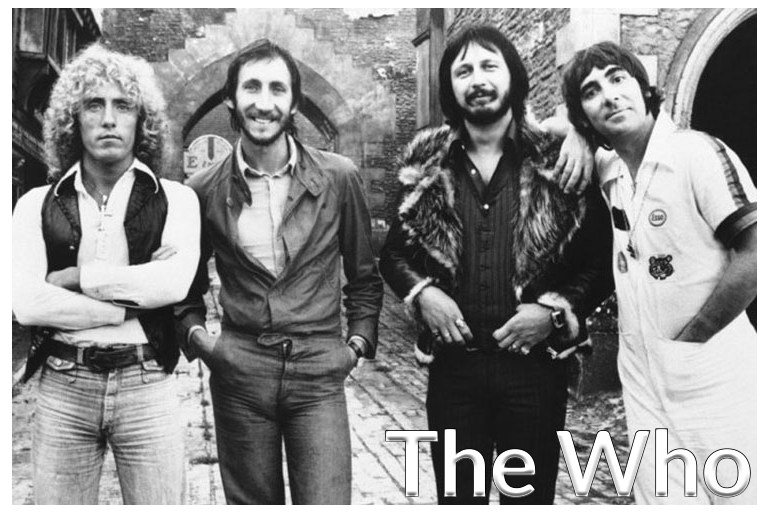
(TheBRHM.com) Every origin story wants a clean starting line, and the one heavy metal tells on itself usually points to Black Sabbath’s self-titled debut, unleashed in February 1970 with Tony Iommi’s ominous tritone announcing that something darker had arrived. Tidy tale. Also missing a chapter. Because a solid five years before those doom laden strings bent under Iommi’s fingers, four restless young men from West London had already been treating amplifiers like blunt instruments and stages like scenes of assault, cooking up something so violent and so overwhelming that the language to name it hadn’t caught up.
The Who never sat down to father anything. Pete Townshend was chasing pop art notions, art school theory, and the raw kinetic rush of breaking things in public. But listen to what fell out of all that mess. It hardened into a template. Half the bands who showed up years later in leather and studs built careers on top of it, and hardly any of them ever tipped a hat back.
Drop the needle on “My Generation” from 1965. Sure, the surface of it is a bratty mod anthem, Roger Daltrey stuttering out a middle finger at anybody past thirty. Underneath that shrug, though, sits a near riot. Focus on Entwistle for a second. He isn’t anchoring the song down at the bottom, he’s running straight over it. His bass break comes barreling up to the front of the mix, loud and nasty, and in 1965 hardly anybody stuck a bass up there. It struts around like a second guitar. Moon’s beating his kit half to death the whole time, all elbows and zero restraint. Then the finish just falls apart on purpose. Amps squealing. Feedback smeared across everything. Not one of them lifting a finger to rein it back in. That squall wasn’t a mistake. It was the point. Nobody in pop was courting ugliness like that on purpose, and ugliness on purpose is roughly half of what the harder styles would later be built on.
The destruction wasn’t confined to the tape either. Townshend had already started ramming his instrument into speaker cabinets and reducing it to splinters, Moon kicking his kit apart in sympathy. Picture what that meant in the mid sixties. Noise as physical event. Instruments were there to get beaten, not politely played. Any kid who’s ever windmilled a power chord or dragged a whammy bar into a nosedive owes something to those wrecked cabinets. Most of them have no idea they do.
Two years on you get “I Can See for Miles,” and now the case gets a lot easier to make. Townshend regarded it as the ultimate Who record, and it ate at him that the single stopped at No. 10 back home in Britain. He was sure he’d cut something vicious, and the public pretty much blinked and moved on. What sits under that track is a wall. One droning chord hums below the verses, a threat that keeps refusing to settle, winding tighter the longer you sit in it. Then the chorus goes off, and the menace of it was just not a thing pop radio bothered making back then. The lyric runs on pure paranoia, some jealous cat clocking a lover’s every move, and the music breathes that dread right back at you, grinding and low and refusing to let up. Roll the clock forward a bit and that same architecture, drone plus dread plus release, becomes the emotional spine of a hundred records to follow.
The covers matter too, maybe more than people admit. Take “Summertime Blues.” Eddie Cochran wrote it as a bright rockabilly gripe about teenage frustration, a jangly little complaint. In the band’s hands it mutated into something menacing and enormous. Entwistle drops his voice into a cavernous register for the boss and the congressman parts, and the low frequencies underneath rumble like tectonic plates grinding. The number stops being cute. It becomes a beast. That transformation, taking a lightweight rock and roll tune and dragging it down into the mud until it snarls, is precisely the move Sabbath and Deep Purple and countless others would make entire careers out of. Weight, it turns out, is partly a verb. You do it to a song.
Which brings us to the mountain everyone eventually has to climb, Live at Leeds, released in 1970. Same year as that Birmingham gospel, worth repeating. Here is the whole thesis in one document. Cut at a university refectory in February, the record captures the quartet at full berserk throttle, and even now, decades removed, the thing hits like a truck through a plate glass window. This is not tasteful. Nor is it polite. Volume becomes a texture you can almost see. Townshend’s tone is a saturated, overdriven roar, all treble and grit and controlled chaos. The extended workout on “My Generation,” stretched past fourteen minutes, wanders through passages that predict prog, punk, and doom all at once, sometimes within the same eight bars.
What stuns most is the physicality. You can hear four musicians attacking their equipment with something close to violence, feeding off each other’s aggression, daring one another to push harder. Moon in particular plays like the kit personally insulted him, cymbals crashing in waves, fills tumbling everywhere with no regard for the tidy pocket most drummers were taught to respect. Entwistle anchors the bottom end with a growl that could level a building. And Daltrey, up top, wails and screams like a man possessed. The interplay is telepathic and brutal at once. If you want a single artifact proving that overwhelming volume, distortion, aggression, and sheer bodily attack existed as a coherent statement before anyone thought to call it metal, this is exhibit A, and the defense rests.
None of this yanks the crown off Sabbath or waves away what those early seventies acts genuinely cracked open. Iommi’s dark, sludgy riffing was its own animal, shaped partly by the factory accident that damaged his fingertips and forced him to rethink the physical act of playing guitar. Purple had Blackmore’s classical fury. Zeppelin married blues to bombast in ways nobody else quite managed. All real, all essential. But the myth that these acts sprang up from nowhere, that they invented the whole language in a vacuum, does a disservice to the record. The tools were already lying around. This lot had spent half a decade sharpening them.
Think about the actual ingredients we credit to the harder styles. Cranked amplifiers pushed past their limits until the signal breaks up into fuzz and distortion. Check, and this crew was doing it in clubs when most players still prized a clean tone. A rhythm section that assaults rather than accompanies. Check, Entwistle and Moon rewrote the job description entirely. Feedback and squall deployed as expression instead of accident. Check. Menace as an aesthetic value, ugliness chosen deliberately over prettiness. Confirmed twice over. Physical wreckage as spectacle. That one they practically patented.
The debt goes largely unspoken because The Who never fit the costume. They didn’t sing about wizards or hellfire, didn’t grow their hair to their belts or lean into occult imagery. Union Jack jackets and rock operas were more their speed, plus eventual runs at football stadiums, all of which reads as the opposite of underground menace. So the lineage tends to skip them, tracing itself instead through the more obviously spooky and sludgy ancestors. Fair enough on the surface. But surfaces lie. Underneath the pop art packaging sat one of the most genuinely dangerous outfits of their era, a group that understood, earlier than almost anyone, that sound could be a form of controlled violence.
Put on Live at Leeds loud sometime, the way it demands to be heard. Feel it in your sternum. Then try to argue those four weren’t heavy before the word got attached to anything. You won’t get far. The evidence is right there, screaming through the speakers, exactly where they left it more than fifty years ago, waiting for the rest of the world to catch up.
Staff Writer; Terry Poole
This brother brings sharp ears, deep respect, and real passion to every heavy metal riff, rock record, and overlooked gem he covers for TheBRHM… He writes for fans who still believe loud music should have soul, history, and meaning…
One may contact him at TerryP@TheBRHM.com.