(TheBRHM.com) Chart position has never been an honest scorecard for what actually shapes a genre.
Ask any serious listener to name the architects of heavy music and the same handful of arena acts get recited on loop. Metallica. Iron Maiden. Sabbath, obviously. Those names deserve their pedestals. But something gets lost in that reflex. A lot of the people who did the actual inventing barely dented the charts. They gigged tiny clubs, scraped by, watched bigger names lift their ideas wholesale. The sound still ended up everywhere, credited or not.
Popularity measures reach. Influence measures inheritance. Two entirely separate rulers, and the second one rarely shows up on a Billboard readout.
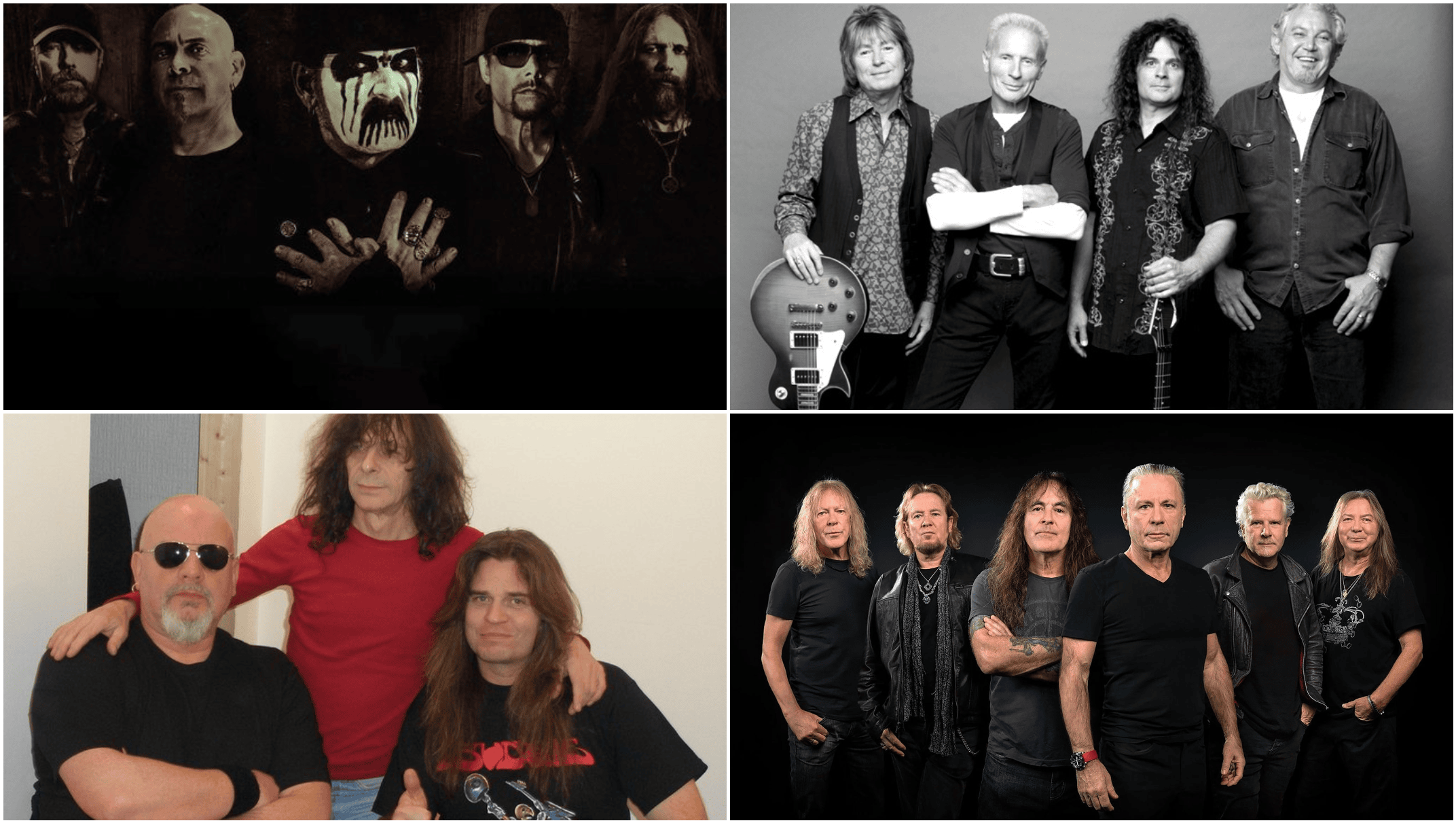
Start with Diamond Head, four kids out of Stourbridge who released “Lightning to the Nations” in 1980 with almost no label muscle behind them. Brian Tatler’s guitar parts were heavy and strange in a way nobody around him was attempting. A teenage Danish kid named Lars Ulrich got so obsessed he traveled to England and crashed with the band just to be in the room. Years later Metallica built a chunk of their early set on Tatler’s material, covering “Am I Evil?” and “Helpless.” Half of thrash basically studied under a group most casual fans have flat out missed. Tatler kept his lights on for decades as stadiums filled up on melodies he had essentially donated to the culture.
Then there is Budgie, a Welsh power trio that nobody outside the deep end talks about, yet whose DNA runs through more famous catalogs than seems fair. Burke Shelley sang high and played bass like the instrument owed him money. “Breadfan” and “Crash Course in Brain Surgery” both got resurrected by you know who, introducing millions of people to tracks they had no clue were covers. Soundgarden drew from that same well. Van Halen even played “In for the Kill” during their club days, one more household name quietly in debt to a crew most people would struggle to pick out of a lineup. Cardiff produced a monster in the early seventies, and the monster mostly stayed hungry, commercially speaking, while records that once flew under the radar later became treasures for collectors.
UFO occupies a peculiar spot in all of this. Phil Mogg could genuinely sing, Pete Way strutted around the low end, and for one glorious stretch a German prodigy named Michael Schenker made the six string do things that reorganized how younger players thought about phrasing. For years Iron Maiden walked out to “Doctor Doctor” before hitting the stage, basically telling every crowd where a piece of their DNA came from. And “Strangers in the Night,” the live record they cut at the tail end of the seventies, is still something guitar players pull apart trying to work out how Schenker did it. Schenker eventually walked, came back, walked again, and the revolving door probably cost this crew whatever shot at superstardom they had. True superstardom kept them at arm’s length. Yet plenty of the musicians who went on to sell out those same buildings absorbed what UFO was doing, and many have been happy to acknowledge the debt.
Denmark’s Mercyful Fate operated on a completely different frequency. King Diamond piled occult theater on top of a falsetto you either loved or hated, no gray area anywhere. Underneath him, Hank Shermann and Michael Denner ran twin guitar harmonies so ornate they edged toward classical. “Melissa” landed in 1983, “Don’t Break the Oath” the year after, and the pair reset the ceiling for how strange and heavy this music could climb. Slayer absorbed it. The early Norwegian black metal kids treated those two records like scripture. Even Metallica stitched a multi part medley together as tribute. Still, mention King Diamond at a normal cookout and watch the blank stares roll in.
Switzerland handed us Celtic Frost, and honestly the sheer weirdness of what Tom Warrior conjured has not been fully absorbed even now. Emerging from the primitive sludge of his old outfit Hellhammer, he grunted, layered operatic female vocals over crushing chords, and treated the studio as a private laboratory. “To Mega Therion” and the gloriously bizarre “Into the Pandemonium” pointed toward death, black, and avant garde territory before those roads carried proper names. Countless subgenres owe this trio a percentage of their existence. Commercial reward showed up as a cosmic joke by comparison.
Chicago’s Trouble caught less oxygen than they earned. Eric Wagner sang about faith and dread in the same breath while Rick Wartell and Bruce Franklin dragged Sabbath’s tempo into the mud and let it fester beautifully. Rick Rubin signed them to Def American hoping lightning would strike commercially. It refused, not in dollar terms anyway. What did occur instead: an entire wave of stoner and doom acts spent the nineties reverse engineering that slow, holy churn. Wagner’s mournful wail became a template younger singers chased for decades, most of them oblivious to where the original spark came from. Cathedral, Crowbar, and an entire generation of doom and downtuned worshippers carried pieces of that sound forward.
Los Angeles offered up Saint Vitus, a punk adjacent doom outfit who released material through SST alongside Black Flag and Sonic Youth. Dave Chandler’s solos sounded like a chainsaw arguing with a wasp nest, and once Wino stepped to the microphone the whole thing curdled into something magnificently bleak. Nobody in that lineup got rich. Every heavy, downtuned, molasses paced revival act that arrived later basically runs a franchise of what these players pioneered.
Newcastle’s Raven built a style their record label dubbed “athletic rock,” a chaotic, hyper caffeinated assault that shoved tempos into genuinely dangerous places. They hauled the young Bay Area upstarts across America on the Kill ‘Em All for One tour, essentially handing the future kings a road map. John and Mark Gallagher never cashed the stadium check. That velocity they helped legitimize became the entire engine of thrash.
Quebec’s Voivod might be the strangest and quietly most essential name on this whole list. Piggy D’Amour voiced chords nobody had thought to reach for in this arena, dissonant and jazz warped and vaguely apocalyptic, while Snake howled dystopian poetry over the top. “Killing Technology” and “Nothingface” turned progressive music inside out years before that description became a marketing category. Progressive and experimental metal borrowed plenty from that cracked blueprint. Mainstream trophies? Those never showed up either.
Notice the thread running through all of these stories. Recognition and impact refuse to travel together. The acts that pack stadiums often function as brilliant translators, taking ideas born in cramped clubs and endless van tours and making them legible to millions who never met the source. That translation is a real and valuable skill, and no shade lands on the giants for having mastered it. Even so, worshipping only the loudest room in the building means missing where the blueprints were actually drawn.
History remembers the megaphone. It tends to forget the voice that wrote the speech. If you love this stuff and only recognize the logos printed on tour merch at the mall, you are admiring the cathedral without ever meeting the masons who cut the stone. Go dig up “Lightning to the Nations.” Sit a spell with “Don’t Break the Oath.” Let “Nothingface” scramble your circuits. You will start hearing the ghosts hiding inside your favorite famous records, and once those ghosts announce themselves, they refuse to leave.
Superstardom is a spotlight. Influence is a bloodline. The silent killers understood that difference whether they wanted to or not, and the whole genre keeps living off inheritances it rarely bothers to credit.
So now it is your turn. Which buried heroes belong in this conversation? Tell me about the underrated architects who rewired your ears, the ones you keep shoving toward friends who only recognize stadium headliners. Sound off below and make the case for them.
Staff Writer; Bobby Jackson
This brother is dedicated to covering heavy metal and rock music with depth, respect, and cultural awareness. His writing highlights Black heavy metal and rock artists while also celebrating the genre’s broader legacy, influence, and artistic power.
Contact him at: BobbyJ@TheBRHM.com.