(TheBRHM.com) The argument surfaces in every rock circle sooner or later. One side insists Led Zeppelin invented heavy metal. The other pushes back, and the honest answer lives between them. That first surge of loud never had a lone architect. Black Sabbath gave doom its funeral crawl. Deep Purple married speed to classical menace. Blue Cheer buried listeners in volume years before the genre carried a proper name. Zeppelin stands close to that origin story, towering over it, casting a long shadow across everything that followed, yet never quite holding the patent alone.
Here is the odd part, though. Strip away the credit fight and you find that nearly all of what the loud tradition treasures got tried, refined, or perfected by four Englishmen whose music began in the blues but refused to remain there.
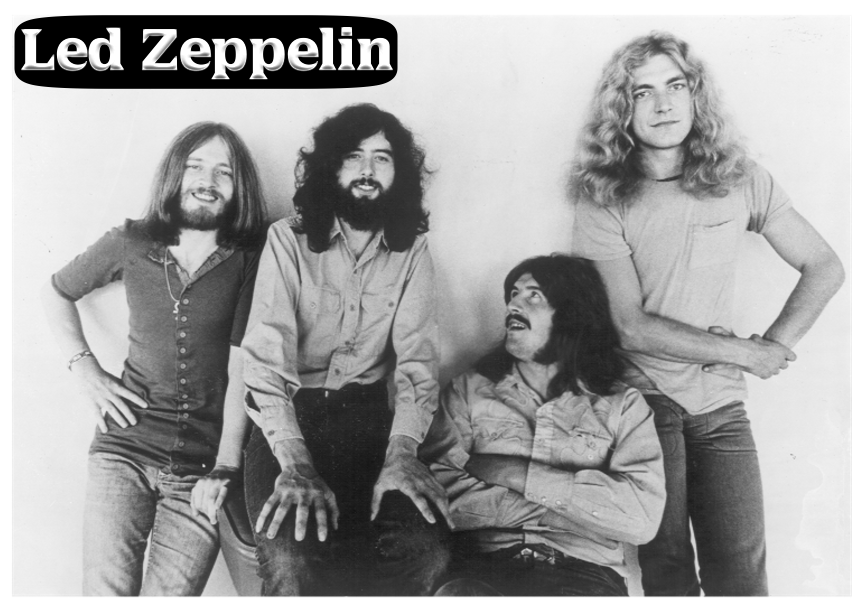
Start with the riff, because everything heavy starts with the riff. Jimmy Page did not simply write parts. He built architecture. Take “Whole Lotta Love.” The whole thing hangs off one dirty lick that keeps circling back on itself, and it lands because it refuses to resolve. It just leans on you until you give in. A thousand bands burned the next fifty years trying to write something that mean and that simple in the same breath and mostly failing. “Immigrant Song” is closer to a chant with a band behind it. Short, blunt, the same figure hammering while the vocal howls over the top. Follow that instinct across the following decades and you can hear its descendants in metal gallops, Soundgarden’s murkier corners, and the riff driven tension that later guitarists such as Tom Morello pushed in entirely new directions. Page thought like a rhythm player who happened to take solos, and that pecking order, groove on top and flash underneath, turned into scripture for harder bands that grew up studying him.
Robert Plant helped rewrite the job description for the hard rock frontman. The blues shouters before him bellowed and the pop guys crooned, and he found a third thing sitting way up high, a wail that could take some business about Tolkien or old Norse gods and make it sound like a sermon shouted off a cliff. Later generations of operatic metal singers carried that high, theatrical attack into even more extreme territory. Just about any screamer who ever pulled on a leather jacket owes something to Plant for helping turn theater into a requirement instead of a bonus. Put on “Communication Breakdown,” or catch the howl that kicks off “Immigrant Song,” and the memo to a whole room of young singers read plain enough. Lyrics came second. That voice was built to climb and to cut, to wrestle the guitar for the biggest slice of the room. Take that vocal blueprint away and you lose a large piece of what the genre sounds like today.
No one moved the earth quite like John Bonham did. Producers still hunt that tone more than fifty years later. That thunder on Zeppelin’s radical reworking of Memphis Minnie and Kansas Joe McCoy’s “When the Levee Breaks” was part natural discovery and part inspired engineering. They parked the kit in the entrance hall at Headley Grange and hung a pair of microphones high above it in the stairwell. Instead of smothering the drums the way an ordinary room might, the space fed them back twice as big. Compression, echo, and Jimmy Page’s production completed the illusion. Drop the needle on it and the thing sounds like a building coming down on top of you.
Hip hop beat makers sampled that break for decades afterward. Drummers in the loud world still argue about how to get anywhere close to it. Bonham proved that percussion did not have to sit politely under the music. It could lead, it could bully, it could become the hook itself. His single pedal kick work during “Good Times Bad Times” made drummers question what one foot could accomplish. Every later double bass assault and cavernous production trick that made a record feel enormous carried at least a little of his influence. It all points back to a big man from Redditch who struck harder and smarter, the way a heavyweight lands the perfect punch.
The stage was its own weapon. Page dragging a violin bow across his strings under green light, coaxing noises that felt summoned rather than played. Plant bare chested, hips forward, a golden god who knew exactly what he looked like. Concerts that could approach three hours because the material stretched and mutated and refused to end. The excess was the whole message. When you watch Iron Maiden build a theatrical spectacle, or Ghost turn a show into ritual, or any arena act treat the platform as sacred ground, you are watching a lesson these four helped teach the planet. Bigger. Louder. Longer. More. Half the pyro budgets and doom soaked lighting rigs of the modern touring circuit are just interest paid on a loan taken out in 1975.
And then the myth, which might be the deepest inheritance of all. Page collected Aleister Crowley memorabilia and bought the occultist’s old house on the shores of Loch Ness, and suddenly a blues based rock group had a dark rumor trailing it everywhere. Whispers of bargains made in shadow. A private plane with the name painted down the side. Hotel floors trashed and the disputed mud shark story woven into a touring mythology where fact, exaggeration, and ugliness became difficult to separate. Peter Grant standing at the door like a mountain, making promoters pay the band what it was owed or face his fury. Managers in the loud trade have chased that same aura of menace for decades. The group understood as well as anyone of its era that the music was only part of the experience. The story around it, the danger, the sense that these people lived on a stranger and darker plane, mattered nearly as much. Later performers who used occult imagery, cultivated danger, or wrapped themselves in deliberate mystery worked within a tradition Zeppelin helped make commercially irresistible. Sabbath supplied the noise of dread. These four helped supply the aura of it.
So why not just hand them the crown and be done? Because the pure strain, the relentless weight for its own sake, was never their mission. Jimmy and the guys wandered too much. A folk ballad here, a funk workout there, a reggae experiment, a tender acoustic turn, mandolins and hurdy gurdies scattered across the catalog. They were magpies, restless, always reaching for the next color. The purists who forged the genre in the years right after wanted focus, wanted the crush and nothing else, and they built something narrower and meaner than the early Zeppelin albums ever were. In that sense the students really did become their own beast.
But the shadow refuses to lift. Pick up almost any heavy record made in the last five decades and the fingerprints are right there if you know where to look. The riff as ruler. The voice as a second lead instrument. The drums as an event you feel in your chest. The concert as spectacle. The group as a legend larger than any single human inside it. John Paul Jones was the quiet machinery beneath all that thunder. His bass could lock inside Bonham’s kick, move around Page’s guitar, or become the central figure itself. His keyboards gave “No Quarter” its frozen menace, while his arranging instincts helped Zeppelin move from crushing riffs to folk, funk, and Eastern textures without sounding like several unrelated bands trapped on one record. “Achilles Last Stand” alone, ten minutes of galloping fury with Page layering guitars into a cathedral of sound, pointed toward the epic wing of the form with more force in one track than most bands find in a whole career. “Kashmir” taught everybody that weight did not require speed, that menace could crawl and still flatten you. Even “Dazed and Confused,” that murky bow scraped nightmare, handed doom acts a mood they would mine for the next half century.
Plant, Page, Jones, and Bonham never sat down to invent a category. They were chasing the blues into stranger and louder rooms, following their own restless hunger, and the thing they left behind turned out to be foundational anyway. Call them the inventors and you overstate it badly. Call them a footnote and you are simply not listening. The honest word is shadow. Decades on, the loudest and heaviest music on the planet is still, in some deep and unshakable way, playing inside it.
Staff Writer; Bobby Jackson
This brother is dedicated to covering heavy metal and rock music with depth, respect, and cultural awareness. His writing highlights Black heavy metal and rock artists while also celebrating the genre’s broader legacy, influence, and artistic power.
Contact him at: BobbyJ@TheBRHM.com.