
(TheBRHM.com) Every genre keeps a canon, and heavy metal guards its own with near religious fervor. Iron Maiden gets the arenas. Judas Priest owns the leather and the reverence. Accept earned credit for welding precision onto aggression before half the world caught up. And then there is a name that surfaces mostly in the mouths of obsessives, collectors, and the sort of fan who reads liner notes twice. Riot.
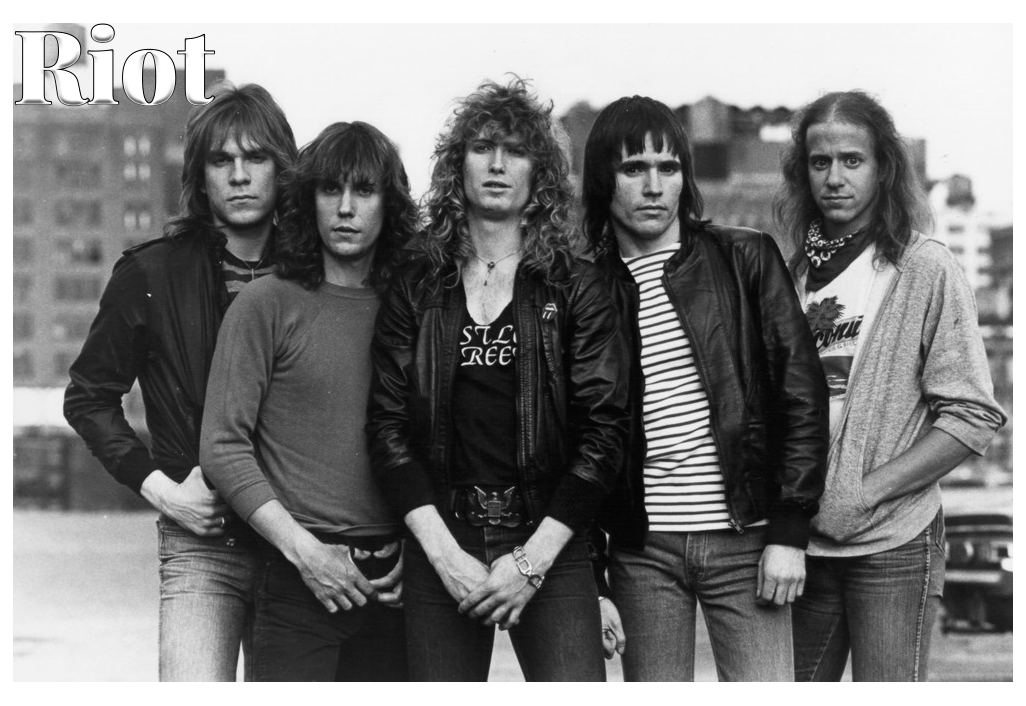
Formed in New York City back in 1975 by a guitarist named Mark Reale, this outfit spent the better part of four decades doing everything a great heavy band is supposed to do. They wrote fierce songs. Road work was relentless, night after night. When the era shifted, so did their sound. What they never managed to grab, somehow, was the spotlight that landed on lesser talents blessed with better luck.
Start at the beginning. Rock City dropped in 1977, and Narita followed in 1979, both fronted by the wonderfully underrated Guy Speranza. Those early records lived in a strange, thrilling space between American hard rock swagger and something meaner trying to claw its way out. You could hear boogie in the rhythm section. Underneath it sat a guitarist itching to play faster than the material allowed. Speranza sang like he meant it. No polish, no posing, he just hit the notes the song asked for. Critics had no tidy label ready, so most just shrugged and called it a bar band that had wandered into some new gear.
Then came the one that should have flipped the whole thing.
Fire Down Under landed in 1981. People still sleep on it, which is a crime. Meaner than the earlier records, quicker on its feet, every track wound tight. Timing helped too. Kids across the ocean were knee deep in denim and studs, cooking up a whole scene, and here was a crew from the wrong continent that fit right beside them. Riffs galloped. The solos burned bright. Guy delivered maybe the finest vocal of his short career.
So why did it stall? Label politics, mostly. Capitol Records refused to release the album and initially would not release Riot from its contract. Fans organized a campaign on the band’s behalf, and Elektra eventually helped free them from the deal before putting the record out. Momentum, that fragile commodity every rising act depends on, evaporated in boardrooms. By the time those tracks reached the people who wanted them, the window had partly shut.
There was another problem, and it sounds absurd until you actually see it. The mascot. A cartoon seal with a human face, named Johnny, plastered across the record jackets. Picture a young metalhead in 1981 flipping through bins, hunting for danger and darkness, then landing on something resembling a children’s book gone wrong. Maiden had Eddie, a rotting ghoul built for nightmares. Priest brought chrome and menace. And this poor bunch got saddled with a grinning aquatic thing. It became a punchline. Killer music, ridiculous optics.
Guy Speranza left toward the end of 1981, and the singer’s position began changing hands. Rhett Forrester grabbed it for Restless Breed and Born in America, and he brought something rawer, more blues in the throat, meaner around the edges. He howled with genuine threat. The material got tougher, more streetwise, a little wilder. Solid stuff, honestly, though the market had already begun drifting elsewhere, chasing glam and hairspray and the Sunset Strip fantasy.
Here is where most tales would end. A band fades, splinters, becomes a footnote. Reale refused that ending.
After a stretch of silence, he rebuilt from the ground up and unleashed Thundersteel in 1988, with a young powerhouse named Tony Moore behind the mic. And what a resurrection. That album stands as speed metal royalty, all soaring melody and machine gun double bass, the singing pitched somewhere in the stratosphere. Ask power metal devotees about foundational texts and this one surfaces constantly. The title track alone became a lasting model for bands that came afterward. Two years on came The Privilege of Power, a stranger beast, loaded with horns, spoken interludes, oversized arrangements, and creative swings that landed for some and lost others completely.
Talent was not the issue. Not once. The problem was everything surrounding it.
And then the losses started piling up in ways that feel almost cruel. Forrester was shot dead in Atlanta in 1994 during an attempted carjacking, gone at thirty seven, his voice silenced by random violence. Speranza succumbed to pancreatic cancer in 2003. Reale himself battled Crohn’s disease for most of his life, enduring a brutal condition whose complications contributed to a subarachnoid hemorrhage that left him in a coma before his death in 2012. The founder, the constant, the single thread stitching it all together across every roster shuffle, gone. Surviving members pressed on as Riot V beginning in 2013, honoring Reale’s catalog and refusing to let the music die quietly.
So what separates a legend from a name that history misplaced? Not skill. Anyone claiming these New Yorkers lacked chops has not listened. Bigger names knew better. Some of the acts who went on to headline big rooms had clearly done their homework on these records. You catch echoes in the phrasing, familiar bends, and cadences that Riot had already placed on record years earlier. That kind of influence does not show up in sales figures. It just quietly seeps into stuff that moved a lot more units. Respect from peers was one currency. It rarely paid the bills. Part of it was timing, always arriving a half step early or a beat too late. The mascot did damage too, a self inflicted wound that made a serious act look silly. Executives fumbled the ball at the worst possible moments. And image mattered more than anyone wanted to admit. The greats built mythologies. They handed fans a flag to wave, a look to copy, a story to believe in. Reale just wanted to play, and playing, it turns out, is not always enough.
But go put on Thundersteel right now. Crank Swords and Tequila off that 1981 gem. Sit with the way Guy phrases a line, the way those leads coil and strike. Full acclaim never arrived, sure. The plaques and the magazine covers and the arena headline slots went to others. None of that changed the fundamental truth, though, which is that the fire was real and the conviction was real and both still smolder decades later.
That is the strange mercy of recorded sound. Fame stays fickle, memory turns selective, and the industry rewards the wrong things with depressing regularity. Yet a killer riff does not care about any of that. It waits. Then it sits on a shelf or in a streaming queue until some curious kid stumbles onto it and feels the floor shift underneath them. Somewhere tonight that is happening, a first spin, a jaw hitting the floor, a fresh believer minted.
History forgot to hand these guys their due. The songs, stubborn and loud and gloriously alive, never lost a single watt of their power.
Staff Writer; Terry Poole
This brother brings sharp ears, deep respect, and real passion to every heavy metal riff, rock record, and overlooked gem he covers for TheBRHM… He writes for fans who still believe loud music should have soul, history, and meaning…
One may contact him at TerryP@TheBRHM.com.