
(TheBRHM.com) Every legendary band tends to carry two names, the face crowds scream until their throats give out, and the person quietly keeping the machine from cracking apart. Rarely are they the same.
Think about it. You can rattle off frontmen without breaking a sweat. The screamers, the poets, the maniacs who climbed lighting rigs and dared security to stop them. Their mugs sell shirts. Quotes fill the interviews. Fair enough, that job is brutal, and most of us couldn’t survive one night of it, let alone a career.
What gnaws at me, after years of wearing out records and arguing in comment sections until 3am, is how much of what made those groups feel eternal came from folks who asked for zero flashbulbs.
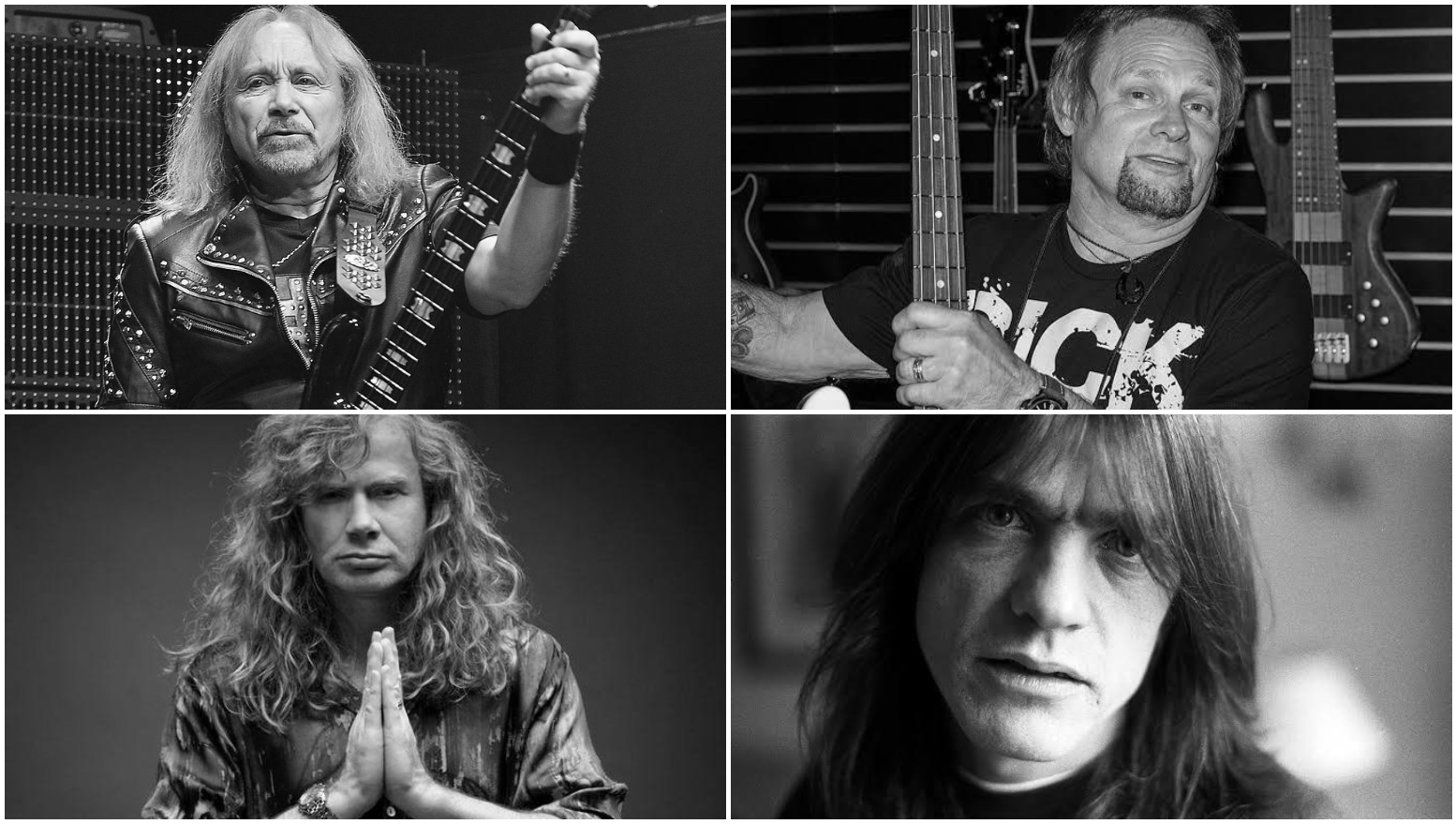
Take Malcolm Young. His brother Angus got the schoolboy shorts, the duck walk, the cameras pointed his way. And Angus earned it, no argument. Yet if you strip away the theatrics and just listen, really listen, what drove AC/DC forward was Malcolm’s right hand. That downstroke. Relentless, dry, mean as a junkyard dog. He co-wrote the riffs and songs, shaped the arrangements, and served as the driving force behind the band. The man was the architect of a house everyone assumed his little brother built. Angus himself said as much for decades, that Mal was the boss. Fans kept looking at the wrong Young.
Or consider Michael Anthony over in Van Halen. Eddie was a genuine wizard, among maybe five guitarists who rewired what the instrument could do. David Lee Roth was a circus you couldn’t look away from. Where did that leave Anthony? Holding it all together and, crucially, singing those sky high harmonies that turned party anthems into something almost churchlike. Pull his voice out of “Panama” or “Jump” and the roof caves in. When the band moved on without him and Wolfgang Van Halen took over on bass in 2006, plenty of listeners felt the absence immediately, even if they couldn’t pinpoint what went missing.
It’s everywhere once you start looking.
Ian Hill’s been in Judas Priest since 1970. Do the math on it. Every lineup shuffle, guys quitting or getting shown the door, reinvention after reinvention, and he never budged. Halford gives the group its identity, that wail is basically the logo. Tipton and Downing traded solos kids still botch in their bedrooms. And Hill? He just held the bottom down under all of it, the one thread nobody bothers to bring up.
Down in Texas, Pantera turned everything up and left scorch marks. Dimebag Darrell became a legend, deservedly, that tone alone could curdle milk. Phil Anselmo prowled the front and snarled. Rex Brown planted himself between those two and kept the pocket locked, tight enough that the whole thing held. Groove metal quits grooving without a floor under it. Rex was that floor, calm in a hurricane, and he rarely got so much as a nod outside diehard circles.
Megadeth gives us another. Dave Mustaine’s genius and his temper are equally famous, and the guy has burned through more musicians than I can count. Through the classic years, David Ellefson’s bass sat under those blistering compositions like bedrock. Somebody had to. When your leader is a lightning storm, you’d better have solid ground beneath.
I could do this all day.
Cozy Powell drummed for Rainbow, then Whitesnake, then did a stretch with Sabbath. Anywhere a band needed a heartbeat that landed like artillery, there he was. Bill Ward gets buried behind Ozzy and Iommi in most Sabbath talk, and that’s backwards, because his jazzy swing gave those early records a looseness, and the looseness is what made the heavy parts actually hit. Then there’s Rudy Sarzo. Ozzy, Quiet Riot, Whitesnake, he passed through each of them and left the room better than he found it, never once asking for the mirror.
And notice what happens when one of these anchors walks. The remaining stars keep touring, keep cashing checks, yet something subtle goes flat. Chemistry seasoned over a decade can’t be recruited off a resume. You can hire a technically superior replacement and still lose what mattered, because what mattered was never about flash. It came down to trust. Timing. A thousand tiny calls to sit back and hold when some hotshot would’ve lunged for the spotlight instead.
Nicko McBrain belongs in this too. The man drove Iron Maiden from the drum stool for 42 years before stepping away from touring in December 2024. Dickinson commanded the stage up front. Harris walked away with most of the writing credits. And Nicko’s footwork? Casual fans breezed right past it, clocking none of how absurd it really was.
Something about all this bugs me. We treat these players like furniture. Reliable, present, invisible until they’re gone. Nobody writes ten thousand word retrospectives about the steady hand. Documentaries want the meltdowns, the overdoses, the fistfights backstage. Drama sells. Consistency doesn’t trend.
Yet ask any working musician who they respect, and watch them light up talking about the pocket, the feel, the person who didn’t rush, didn’t drag, and always showed up sober enough to play. Picture the bassist locking eyes with the drummer when the singer comes in two bars early, the pair silently agreeing to stretch the turnaround and cover the mistake so nobody in the crowd ever hears it. That kind of save happens throughout a tour, and it won’t show up on any poster. That’s the real currency among people who actually know. Flash fades. The foundation stays.
There’s something almost spiritual about it once you sit with the idea long enough. A frontman burns hot and often short. The dependable ones? Monks. Show up, do the work, protect the song, vanish into the mix so completely that the whole thing sounds effortless. Effortless is the hardest trick in music, and it draws no applause, because the point is you don’t notice.
Live records fascinate me for this reason. Peel back the studio polish and you hear who’s actually holding the tent poles. Put on any classic concert album and follow the rhythm section instead of the singer for once. Notice how the bass and drums breathe together, how they leave space, how they catch each turn without a hitch. That telepathy took years to build. It’s the least glamorous skill and the most essential.
Maybe part of why this keeps happening is simple. We’re wired for main characters. Stories need a hero, so our brains hand the entire tale to whoever stands center stage under the brightest light. The guy off to the side, head down, locked in? He doesn’t fit the shape of the story we want, so we shove him in the supporting cast column and keep it moving. Which is a shame. It’s also flat wrong.
Because pull any of these steady hands out of their band and the magic evaporates. The songs you love, the ones that raised you, were built on their patience and their taste and their refusal to grandstand. They picked the song over their own shot at the light. Pull that off in a scene running on ego and pure volume, and honestly it borders on rebellious.
So let’s flip it for a second. And I need you in on this.
Who’s yours? Which unsung player do you defend when nobody else brings them up? Maybe it’s a drummer whose fills you can hum but whose name you had to look up. Some journeyman bassist who quietly saved three different outfits across two decades, perhaps. Or a rhythm guitarist buried in the mix who wrote half the parts everyone credits to the flashy lead.
Drop it below. Make the case. Tell me why that person mattered more than the liner notes ever admitted.
The loud ones already have their monuments. Let’s build a few for the quiet giants who propped up the whole thing while we looked the other way.
Staff Writer; Terry Poole
This brother brings sharp ears, deep respect, and real passion to every heavy metal riff, rock record, and overlooked gem he covers for TheBRHM… He writes for fans who still believe loud music should have soul, history, and meaning…
One may contact him at TerryP@TheBRHM.com.