
(TheBRHM.com) Sleep Token has spent the past few years steadily rearranging what heaviness is allowed to mean in this corner of music. They did it without publicly attaching their real faces or identities to the music. Strange when you sit with it.
Here’s what keeps pulling at me. You’ve got this outfit nobody can properly name, fronted by a singer who goes by Vessel and buries himself under black paint and thick cloth, and the work reaches somewhere most of the loud, chest out stuff never touches. No swagger. Nothing that reads like a gym poster. Just a voice that sounds like it’s been up all night with something it can’t say out loud.
The genre spent decades teaching guys how to be angry. That was the deal. You screamed. You stomped around. Pain got turned into a fist and that was supposed to be enough, and honestly it worked for a long stretch. Rage gives you somewhere to put the hurt. Trouble is, rage also keeps the hurt at arm’s length, and after a while plenty of us clocked the distance. Metal got real good at telling you to fight and real quiet about what happens when you’re too tired to.
Then this masked figure starts singing about wanting somebody so bad it’s embarrassing.
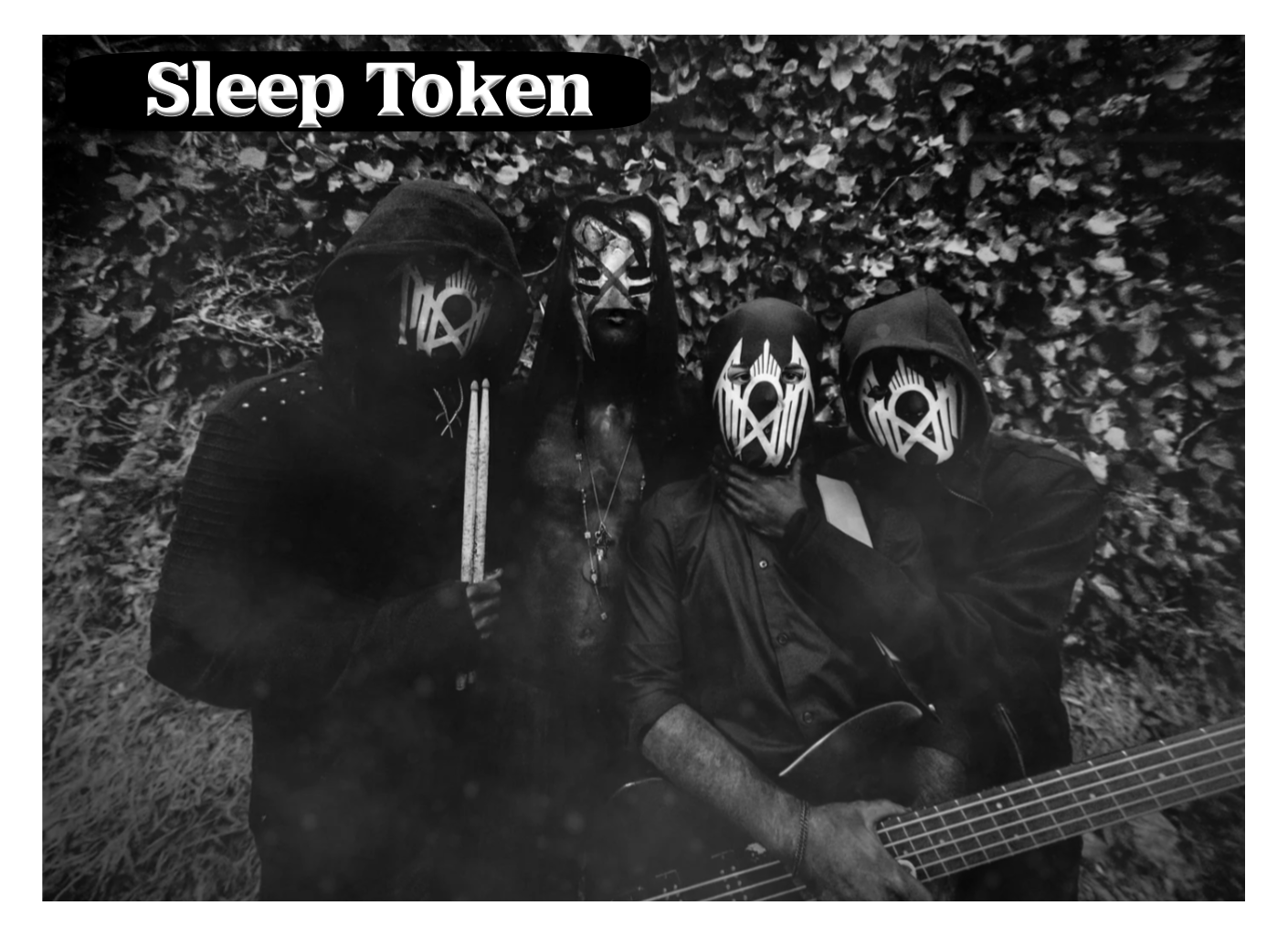
That shift is the whole story. Vessel doesn’t perform strength. He performs the collapse just before you pull yourself back together, or the part where you don’t manage it. On “Chokehold” he sounds like a man admitting he cannot function without the person holding his attention, and he refuses to frame it as romance. It plays like a confession he’d take back if he could. There’s shame stitched into how he phrases things. Not shame as a pose either. The kind you actually carry around.
Set that against the standard tough guy vocal. Most of those singers protect themselves even while screaming their lungs out. The aggression is armor. You never catch them soft because soft would break the whole act. Vessel walks in already broken and lets you watch him try to keep it together. A different game entirely.
The desire stuff is what really separates him. Heavy music has always had sex in it, sure, but usually the strutting kind, all conquest and appetite. What this guy chases is closer to need, which is far more uncomfortable to sit with. Need means you’re not in charge anymore. “Alkaline” runs on that same loss of control, reaching toward someone he cannot define, categorize, or safely understand. Anybody who’s been stuck in a bad attachment knows the loop cold. You can see the exit. You stay. And he sings it like he’s ashamed you caught him staying.
The delivery carries all of it. His voice strains in places where a more polished performance might have weakened the emotion. He drops into this hushed, almost prayerful register, then lets it fray the second the feeling outruns his control. Those frayed moments are the point. A cleaner take would kill it entirely. You believe him because he sounds like he’s barely holding the note, same way people barely hold themselves together in actual rooms.
A dependence runs through the catalog that hits harder the longer you sit with it. This band built an entire mythology around worshipping a deity called Sleep, and once you scratch the surface, that worship reads like every unhealthy crutch we lean on to get through the dark hours. Could be somebody. Might be a substance too, or the phone you scroll until 3am so you don’t have to be alone with yourself. He sings devotion and desperation like they’re one thing, because for a lot of folks they are.
That’s why the ordinary macho material started feeling far away to certain listeners. Not bad. Just distant. When your real problem is that you feel too much and can’t tell a soul, a track about crushing your enemies doesn’t land. It’s speaking a language you stopped believing in. You need something that admits the floor gave out from under you. “The Summoning” does the loud, triumphant number for a stretch, then breaks into that slinky, wounded outro where the persona drops off completely and he’s just a man aching in the open. People lost their minds over that switch, and I doubt it’s an accident. There’s the mask slipping.
Emotional collapse is murder to pull off in this style without it curdling into melodrama. Handle it wrong and you get whining dressed up as depth. What keeps this honest is restraint. Vessel underplays the biggest wounds. He’ll deliver the most devastated line half swallowed, almost buried, instead of belting it for the cheap seats. That choice respects whoever’s listening. It trusts you to lean in rather than getting clubbed over the head. Grief in actual life tends to be quiet like that. You don’t scream at the funeral. You go numb in the car afterward.
I keep circling back to how the anonymity feeds everything. There’s no name, no backstory, no face to pin a personality to, so there’s nobody to admire and nobody to envy. You cannot reduce him to a familiar public biography or ordinary celebrity personality. That absence hands the emotion straight over to you. It becomes your shame he’s singing, your fixation instead of his, your 3am that nobody knows about but you. None of it works as a gimmick. It’s the whole delivery system.
Older heads in the scene push back, and I understand the reflex. Some of it’s the pop and R&B bleeding into the mix, which offends purists who want their heavy stuff pure and mean. Some of it is plain discomfort. A grown man singing about weakness, about wanting things he shouldn’t, that rattles listeners raised on the notion that this music means never showing the underside. But that reaction kind of proves the case. There was a hole in the genre. A big one. For every kid who found catharsis in aggression, there was another quietly needing permission to fall apart who never got it. This band handed out that permission at scale.
You can already hear why other acts would be tempted to follow. Tender registers, open production and sudden turns from intimacy to impact now look less commercially risky than they once did. Whether other bands can pull it off is another matter. Copying the look is easy. The masks, the genre blending, the way it swings soft to loud, all learnable. Much tougher to copy the actual willingness to be seen reaching for something you know is bad for you.
That willingness is the breakthrough, and it has nothing to do with the riffs. Sleep Token made it acceptable to carry the wound back into loud music without dressing it as anger first. They made longing sound like something worth admitting out loud. For a whole lot of listeners who’d drifted off because the genre stopped speaking to their inner weather, that rewired the entire thing. What a voice carries was never really about volume anyway. It’s whether the man behind it will tell you what sits underneath, and this one does.
Staff Writer; Terry Poole
This brother brings sharp ears, deep respect, and real passion to every heavy metal riff, rock record, and overlooked gem he covers for TheBRHM… He writes for fans who still believe loud music should have soul, history, and meaning…
One may contact him at TerryP@TheBRHM.com.