
(TheBRHM.com) Few acts in rock history have blurred the border between musicianship and merchandising as completely as the four New Yorkers who turned greasepaint into a fortune.
Here’s the thing nobody wants to say at the cookout. The legend got built on lunchboxes.
Now hold on before you fire off the angry email. I grew up on this stuff. Loud guitars, platform boots, the smell of a smoke machine, that whole world raised me. So this isn’t some snob looking down his nose at KISS. It’s a fan asking a fair question after decades of listening. Does the catalog actually earn the crown, or did the crown get sold to us wholesale?
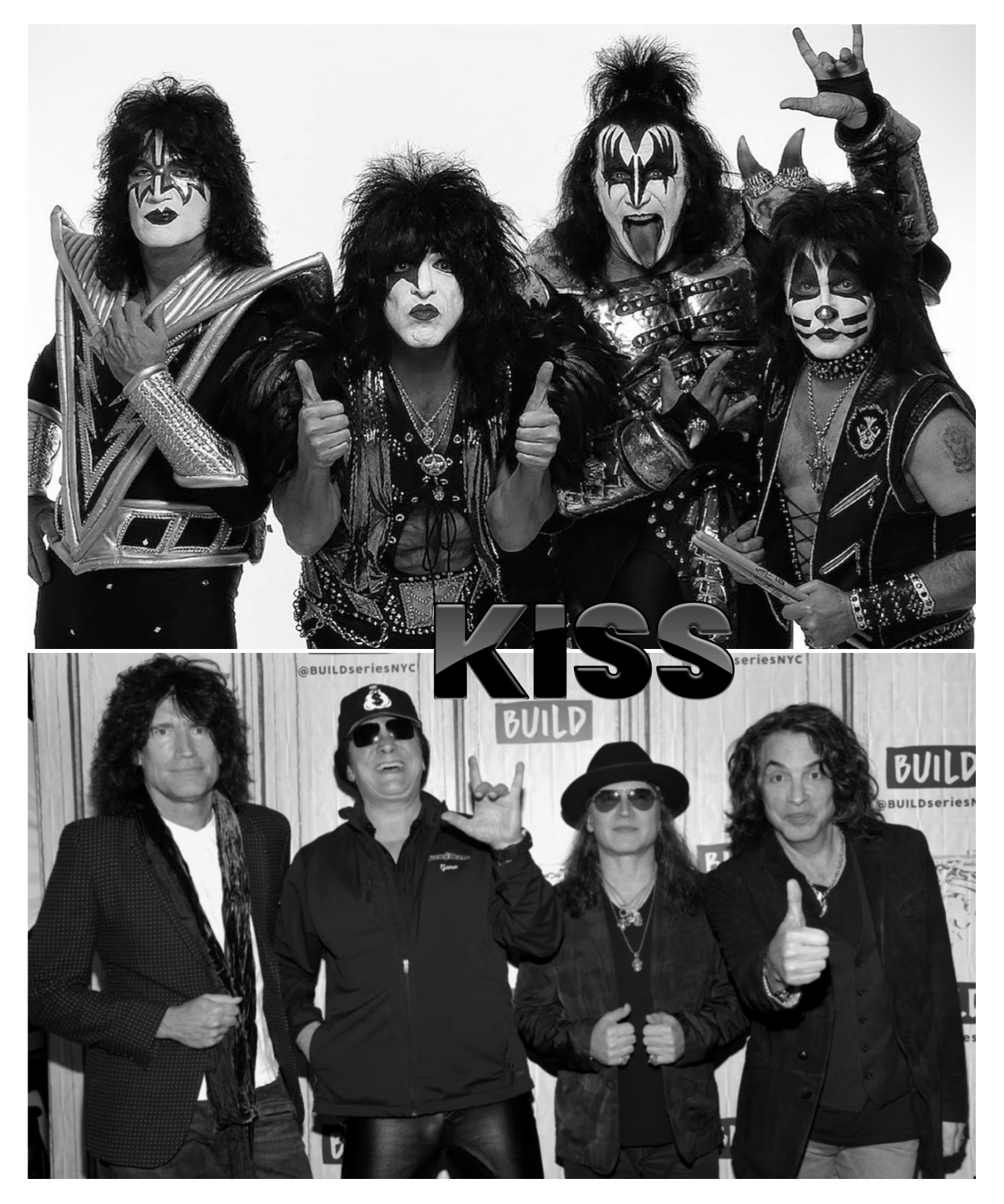
Start with what’s undeniable. As a live proposition, Simmons and company were untouchable in their prime. Fire coming off the stage. Blood dripping down a chin. A drum riser floating toward the rafters while the crowd lost its mind. Paul Stanley worked an arena like a preacher who’d found the one true chord. For a kid in the cheap seats in 1974, that wasn’t a concert. That was an event, a happening, something you’d tell your grandkids about. Credit where it’s owed, and plenty of it. Nobody staged a rock and roll circus better.
The problem starts when the lights come up and you go home and drop the needle.
Because the records, my friends, the records are wildly uneven.
Think about how the thing broke wide. Three studio releases came out to a shrug. Decent sales, nothing that paid the rent. Then a double live set arrived in 1975 and changed everything, eventually went platinum, helped pull Casablanca back from the edge, and made the foursome household names. A concert recording. Sit with that. The moment they conquered the world was the moment they stopped being a studio act and became a traveling spectacle captured on tape. And even that tape got doctored. Overdubs later, crowd noise sweetened, fixes layered over the raw performance so the experience sounded better than any real night ever did. Which tells you everything about the operation. The illusion mattered more than the document.
Bob Ezrin came aboard and gave them their finest hour on Destroyer, no argument there. Real ambition on that one, orchestration, a proper anthem in “Detroit Rock City,” and a weepy ballad sung by the drummer that somehow became their biggest U.S. single. But even a strong record like that got carried across the finish line by a tune about missing your girl, not by some crushing riff. Meanwhile the deeper cuts across their catalog blur together. Sturdy hooks, sure. Chugging rhythm, party lyrics, a solo, out. Serviceable. Rarely transcendent.
Now put that beside the acts that genuinely built heavy music. Sabbath handed us a doom-soaked debut that still sounds like the earth cracking open. Priest sharpened the whole thing into leather and steel. Maiden wrote galloping epics you could study like literature. Those outfits made full-lengths that hold from track one to the runout groove, front to back, no skipping. Can you honestly say the same about the greasepaint crew? Pick any of their seventies LPs at random and count the tracks you’d defend to a stranger. The number gets thin fast.
So where did the real genius live? Not in the amps. In the boardroom.
This is the part that deserves respect even as it explains the whole trick. Gene Simmons understood something nobody in rock had fully grasped. The music was the loss leader. The empire was everything else. A fan club that listeners themselves launched out in Indiana, then the KISS organization formalized and turned into a marketing army with membership cards and newsletters. Comic books printed with the members’ own blood stirred into the red ink, notarized for the papers, pure carnival barker brilliance. Dolls. Pinball. Halloween masks flying off shelves. Later on it got downright absurd. Coffins with the logo, one of which a metal hero got buried in for real. Branded coffee. A mini golf course. Condoms, for heaven’s sake.
You want to talk about a revolution? That was it. Not a sonic one. A commercial one. These men figured out that a face could be a trademark, that a persona could outlast a hit, that you could license a logo onto a toothbrush and the faithful would buy it and thank you. Plenty of arena acts building merchandise empires today are working inside a business model KISS helped normalize.
And when the money moved, so did they. The late seventies rolled in and disco was printing cash, so out came a shiny crossover single built for the dance floor, all kick-drum thump and falsetto, and it sold like crazy while the old guard felt something curdle. That’s not the move of purists chasing a sound. That’s the move of a business chasing a quarter. Nothing wrong with eating. Just don’t tell me it was about the art.
The mask finally came off in ’83, literally, on MTV, and the numbers reveal the entire con in a way that stings a little. Sales had sagged. The face got scrubbed. And the album tied to that reveal did fine on the strength of actual songs and heavier playing. Almost like the costume had been propping up a catalog that couldn’t always stand on its own.
I keep circling back to a simple test. Strip away the pyro, the boots, the greasepaint, the whole traveling carnival, and hand me a fan who’ll rank the recorded output against the true titans of the form. Not the hits. The deep cuts. Album after album judged on the merits alone. I’ve had that conversation a hundred times and it always stalls in the same spot, because the honest answer is that maybe five or six songs are genuinely great and the rest coasts on affection and nostalgia and the memory of a night when a giant tongue and a wall of flame made you feel ten feet tall.
None of this makes them frauds. Let me be clear. They gave millions of people joy, put on a production that redefined what a ticket could deliver, and reshaped the entire relationship between an artist and a logo. Legends of showmanship, absolutely. Titans of the hustle, no doubt. Pioneers of turning fandom into an ecosystem, first ballot.
But KISS as heavy metal masterpiece? A body of work that stands with the giants on sound alone? That crown was never really theirs. It got airbrushed on, sold at the merch table, and we all wanted it to be true so badly that we stopped asking whether the tunes held up.
Turn the lights down and the boots and the blood do their job every single time. Turn them back up, put on the vinyl with no visuals attached, and the story gets a lot quieter than the legend lets on.
Staff Writer; Kirk Robinson
This man is a Rockhead with a deep appreciation for rock, country, folk, blues, heavy metal and the musical traditions that connect them. He writes about artists, albums, music history and the sounds that continue to shape generations. Feel free to contact him at KirkR@TheBRHM.com.