
(TheBRHM.com) Iron Maiden stood at the kind of crossroads in the autumn of 1986 that has quietly ended more than a few careers in heavy metal. The World Slavery Tour had ended the previous summer, leaving the band exhausted, and now the five of them faced a hard question. Grow, or repeat yourself into a corner. Push forward and you gamble the loyalty of the crowd that hauled you up from the pubs. Their reply arrived on September 29, 1986, wrapped inside one of Derek Riggs’s busiest paintings, a neon skyline that clearly studied Blade Runner and hid dozens of private gags in the corners for anyone patient enough to squint.
Somewhere in Time was the title, sixth studio effort from the East London crew, and it showed up trailing gossip. Word had already made the rounds that Steve Harris and his mates had done the previously unthinkable for a group built on twin guitars and gallop. Synthesizers had been let through the door.
To purists back then, that rumor stung. Keyboards, in the eyes of a certain breed of fan, sat somewhere between betrayal and outright blasphemy. Anything cozy with the synth-pop flooding MTV reeked of surrender, and this outfit had earned a name over a long climb as the genre’s most stubbornly muscular act. So the risk was no small thing. Fumble it and hand your rivals a joke they’ll recycle for a decade.
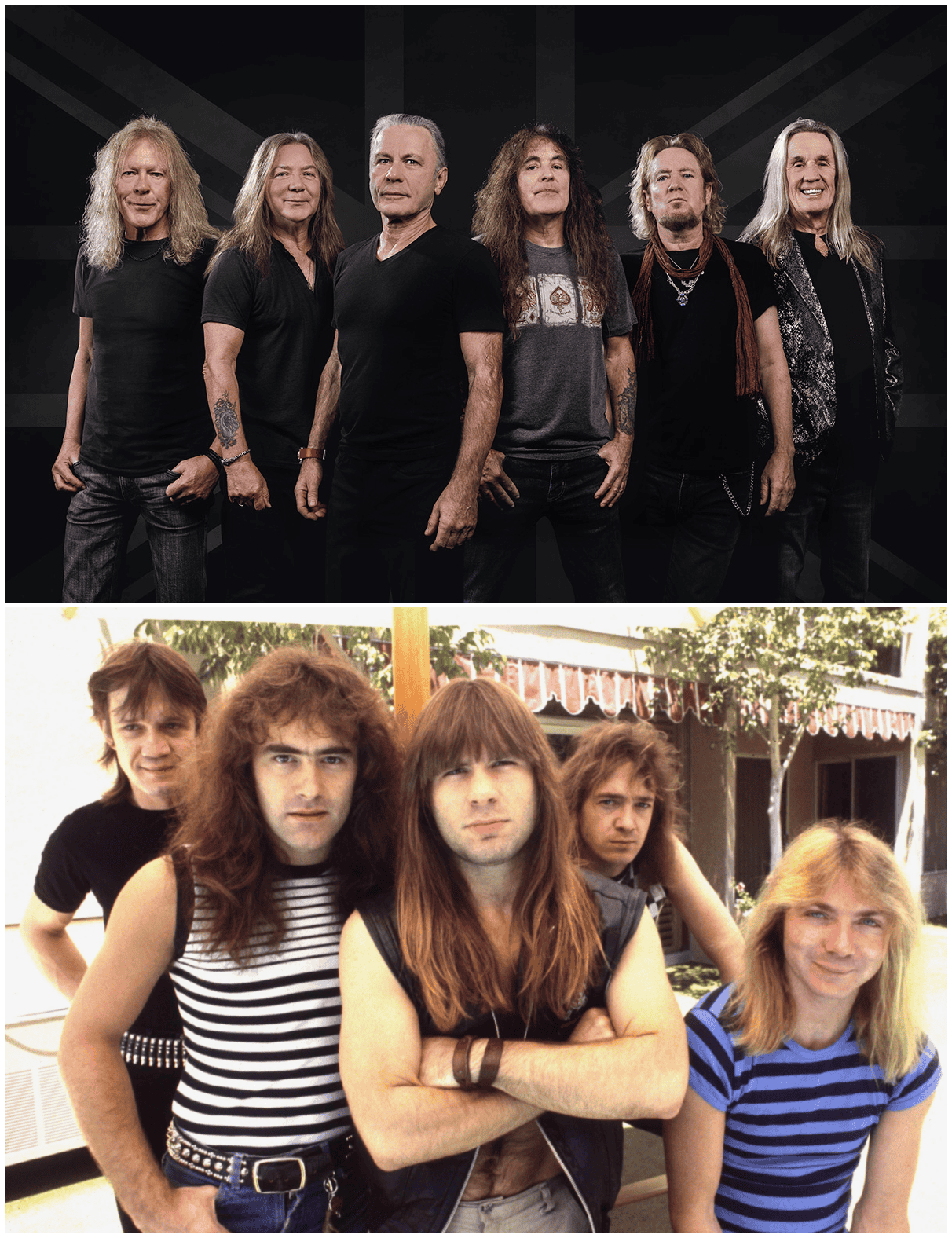
Here comes the sly part, though. Rather than bringing a conventional keyboard player into the studio, the band used guitar and bass synthesizers to create those futuristic textures. Adrian Smith’s and Dave Murray’s fretwork, along with Harris’s bass, helped produce sounds that listeners had never heard quite this way on an Iron Maiden record. The familiar strings were still there, but the musical possibilities had expanded. That distinctive twin-guitar attack remained intact, even as the music leapt somewhere it had never dared go.
Put on “Caught Somewhere in Time” and you clock the change quick. The opener runs hard the way you’d expect, but there’s this odd chrome shine sitting on top of everything, kind of like sun bouncing off a spaceship. Bruce Dickinson sings about a deal made across hundreds of years, and behind him the band sounds like it borrowed gear from a future none of those East London kids had seen yet.
What saved the whole thing from gimmickry was the writing. Adrian Smith strolled in and delivered the finest work of his life, on guitar and on the page both. Fresh off that endless road slog, Dickinson had wandered toward softer acoustic sketches that Harris mostly shrugged at, and the gap that opened let him come charging through. Charge in he did.
“Wasted Years” stays the quiet miracle of the whole set, and the irony almost tells itself. That anthem, the one every crowd bellows back syllable for syllable, carries no guitar synth whatsoever. Straight, undiluted power, born from Smith’s homesickness out on tour, its plea to treasure the present hour cuts deeper than any verse about dragons or battle ever managed. Notice you’re inside your golden stretch while it’s actually happening. Older folks feel that line down in the marrow.
Along comes “Stranger in a Strange Land,” yet another jewel from the same pen, and the backstory beats most fiction. Nothing to do with the Heinlein novel despite the borrowed name, it grew from a story an Arctic explorer told Adrian about a body discovered frozen in the ice, a man who had been dead for decades but remained remarkably preserved. Out of that bleak picture he carved a slow, creeping epic drenched in the record’s cold electronic air. A third offering, “Sea of Madness,” caps a streak that basically crowned him the group’s secret weapon.
Steve carried his share too. “The Loneliness of the Long Distance Runner” pulls its idea from the Alan Sillitoe story and turns into a long, brooding thing about solitude and refusing to bend. “Heaven Can Wait” builds into one of those chants a whole crowd throws its fists up for. “Alexander the Great” runs eight minutes and pretty much walks you through a history lesson, spoken intro and all, a big gamble that lands. Murray gets his turn on “Déjà-Vu,” and the record moves from song to song so smoothly you lose track of how much it fits in.
Give producer Martin Birch a nod as well. He wove these bold new textures together and never once let the riffs vanish under them. Getting the balance right was the whole ballgame. Shove the electronics too far up front and the faithful walk. Hide them and the experiment amounts to nothing. Birch found the sweet spot with such a light touch that somebody hearing this in 2026 might miss how daring it all felt in its moment.
Naturally, the faithful had differing opinions when it dropped. Some cheered the bold stride. Others grumbled that the mighty galloping beast had gone slick and shiny.
The commercial results told their own story. It reached number 3 in Britain, though the bigger reward took longer to land. By 1988 the follow-up arrived, Seventh Son of a Seventh Son, and it pushed that electronic glow further into a full concept album. Iron Maiden had found another direction to explore without surrendering the musical identity that brought them this far.
Nearly forty years later, the LP still tugs fresh ears toward it, for reasons stretching well past sentiment. Good science fiction ages with grace whenever the craft holding it up stays solid, and these songs were shaped by writers firing on every cylinder they owned. Kids finding it today catch a sound that saw around the corner, hearing hints of where heavy metal would eventually roam. Listen closely and you can hear ideas that would become familiar across later generations of atmospheric and progressive heavy metal. Riggs’s cyberpunk canvas somehow reads more prophetic now than it did under Reagan.
“Wasted Years” gets to anybody who’s ever looked up and asked where a big chunk of life ran off to. “Stranger in a Strange Land” can still put a chill on your neck. Play any of it closely and you’ll dig up small melodies and word choices that slipped right past you the first handful of times.
Nerve is the real story here. A comfy outfit could have knocked out Powerslave part two and pocketed the money without breaking a sweat. These five instead wagered a hard-won name on a gut feeling, the belief that muscle and imagination were never truly at odds. That fight got settled long ago. Somewhere in Time was a jump into the dark, and Iron Maiden nailed the landing so cleanly that the leap keeps heavy metal fans shaking their heads long after.
Staff Writer; Terry Poole
This brother brings sharp ears, deep respect, and real passion to every heavy metal riff, rock record, and overlooked gem he covers for TheBRHM… He writes for fans who still believe loud music should have soul, history, and meaning…
One may contact him at TerryP@TheBRHM.com.