(TheBRHM.com) Every genre keeps a few official saints, and the loud stuff runs the same way. Iron Maiden gets the theatrical operas about mummies and fighter planes. Judas Priest gets the leather and studs mythology. Sabbath, rightly, gets handled like scripture. Sitting just beneath those household names, though, was a whole layer of grafters whose music was rooted in the world around them, and their catalogs have been left to gather dust for reasons that reveal more about listeners than about the players.
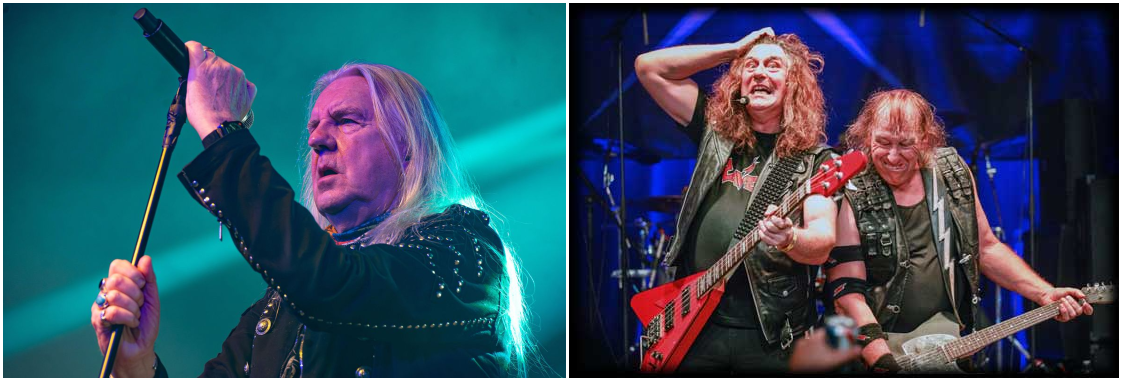
Consider Saxon first, the crew out of Barnsley. Biff Byford grew up in South Yorkshire, the son of a man who had worked in coal mining before moving into textiles. He’d done carpentry, labouring, a stint working in a coal mine’s boiler house, and by his own telling might have stayed in that world had music not offered another way forward. When his outfit finally broke through in 1980 with Wheels of Steel, the songs weren’t about sorcerers. They were about motorbikes, aircraft, the thrill of a fast machine and a night off. “747 (Strangers in the Night)” turns the real 1965 Northeast blackout and the danger faced by approaching aircraft into drama. “Denim and Leather,” a year later, aimed its chorus straight at the kids in the crowd, the ones wearing the same battered uniform as the men on stage. That was the whole point. No distance, no wizard robes, only a mirror.
Byford said it plainly once: they got where they got through hard graft and killer tunes, none of the trendy image rubbish. You can hear the truth of that. The Yorkshire men played like people who understood clocking in, and their records carry the grease of it.
Now travel up the A1 to Tyneside, where two brothers were building something even rawer. John and Mark Gallagher started Raven back in 1974 and eventually became known for a phrase their record label had coined: athletic rock. They took it literally. Onstage they strapped on hockey masks, shoulder pads, sporting gear scavenged from every corner of the changing room, then flung themselves around like the gig was a contact sport. Newcastle in those years was shipyards and coal and cold mornings, and the Gallaghers gigged the northern clubs until the region knew them cold. A scrappy local label called Neat, run on pennies out of the same city, put out their debut in 1981. Geoff Barton at Sounds handed it five stars. Rock Until You Drop even reached No. 63 on the UK Albums Chart, which for a shoestring operation from the northeast was a genuine coup.
What made that trio special wasn’t polish, because there wasn’t much. Their gift was velocity and sweat. Kids across the Atlantic were paying attention too. A young Metallica supported Raven on their 1983 Kill ‘Em All for One tour, sharing the road with those very lunatics and experiencing that speed and recklessness at close range. Raven’s influence on the emerging thrash scene deserves a larger place in the conversation. Ask any obsessive worth their patch vest where that engine came from, and plenty will point at least partway back to Tyneside.
Algy Ward came at it from a different door altogether. He’d already burned through a whole life in punk before he ever plugged into anything this heavy, holding down bass for the Saints and then the Damned on Machine Gun Etiquette. His departure from the latter freed him up, and Lemmy‘s example lit the fuse. Ward pulled in the Brabbs brothers, called the power trio Tank, and made a debut that still knocks teeth loose. Filth Hounds of Hades landed in the spring of 1982, produced by Motörhead’s own Fast Eddie Clarke. The three musicians had finished a European run supporting Lemmy’s mob on Christmas Eve 1981 and entered the studio just five days later. That relentless schedule helped give the record its rough, urgent character.
That album isn’t pretty and never tried to be. It swaggers, it slurs, it laughs at itself. Titles like “(He Fell in Love with a) Stormtrooper” tell you these were beer soaked lads having a blast, not solemn artistes. And here’s the context people forget: 1982 Britain was Thatcher, mass unemployment and dole queues stretching round the block. The Falklands War would begin that April, adding another defining event to an already troubled year. Music this blunt and this fun offered an escape for young men facing uncertain futures, whether they had jobs to go to or nowhere warm to be. The punk snarl Ward carried over gave it teeth that the fancier acts couldn’t fake.
Pull back and a pattern comes clear. All three of these acts brought the texture of ordinary life into their music. Machines you could touch. Roads you’d actually driven. The pub, the transit van, the crowd itself. They might have written about soldiers, aircraft or imaginary situations, but their attitude came from a world their audiences recognized. Fantasy has its place, and plenty of giants earned their crowns building castles in the air, but something honest gets lost when every act reaches for dragons and nobody bothers to sing about the bloke next to you at the bar.
Geography did half the work. Sheffield and Barnsley meant steel and coal. Tyneside meant ships and pits. The Midlands that birthed Sabbath and Priest was one long sprawl of foundries and forges, and Tony Iommi literally lost fingertips in a sheet metal factory before adapting his playing technique and helping create one of the darkest sounds in rock music. That’s not a cute origin story; that’s a musician finding another way to make his instrument work after an accident that could have ended his career. The heaviness in the riffs echoed the heaviness of the region, the drop forge thud of towns where people made hard things with their hands.
Touring shaped it just as much. These weren’t groups whose early careers were spent being helicoptered between stadiums. They lived in vans, played clubs and college halls, drove all night, watched the petrol money and slept where they could. That grind put a particular gristle into the playing. You can’t fake miles. Audiences knew it too, because those audiences were the same kids, the ones who’d graft all week and blow their wages on a Friday show. Saxon eventually became a major chart act in Britain, but even that success never completely separated them from the world that had produced them. Raven and Tank traveled rougher commercial roads, yet all three understood what it meant to earn a crowd’s attention one gig at a time.
So why did the story mostly forget them? The giants threw shadows long enough to swallow smaller names whole, for one. It didn’t help that America never fully embraced all three in the way Britain had embraced Saxon, and the U.S. market wrote a good chunk of the history that ended up sticking. Cruelest of all, the plainness that made these bands distinctive could be mistaken for a shortage of ambition by writers forever hunting the next clever thing. Their early records offered excitement without requiring listeners to enter some elaborate imaginary kingdom. None of which says a word about how those albums actually sound.
Do yourself a favor. Cue up Wheels of Steel, then Rock Until You Drop, then Filth Hounds of Hades back to back some evening. Listen for the sweat and the diesel and the dole queue defiance underneath the choruses. What you’ll hear isn’t nostalgia. It’s a document of real people making a joyful racket out of hard circumstances, which is about the oldest and truest reason anybody ever picked up a loud guitar in the first place. These grafters earned their second listen. Give it to them.
Staff Writer; Terry Poole
This brother brings sharp ears, deep respect, and real passion to every heavy metal riff, rock record, and overlooked gem he covers for TheBRHM… He writes for fans who still believe loud music should have soul, history, and meaning…
One may contact him at TerryP@TheBRHM.com.