
(TheBRHM.com) In a recent Drumeo clip, Ray Luzier’s drum tech Mark Bennett held up a discontinued Pearl Copper Free Floating snare and let a secret slip. That copper drum, he explained almost offhand, is what Luzier used while tracking the new Korn record. Fourteen albums in and now working on number fifteen, the band that once made suburban parents clutch their chests has grown fiercely protective of the sound it built. Munky says they wrote close to 40 songs, only to tear many of them apart and start over, determined not to lose the identity that made Korn sound like Korn in the first place.
Read that again. A band famous for chaos is now watching over its own legacy like a jeweler minding a vault.
Elsewhere, Linkin Park is filling stadiums again. Emily Armstrong stepped into an impossible chair, From Zero arrived among the loudest returns in recent memory, and a world tour has circled the planet for two years now, packing arenas and stadiums with people who howl every word back. Nobody treats a lick of it as a passing fad. It plays, instead, like the homecoming of an institution.
Which raises something worth sitting with a minute.
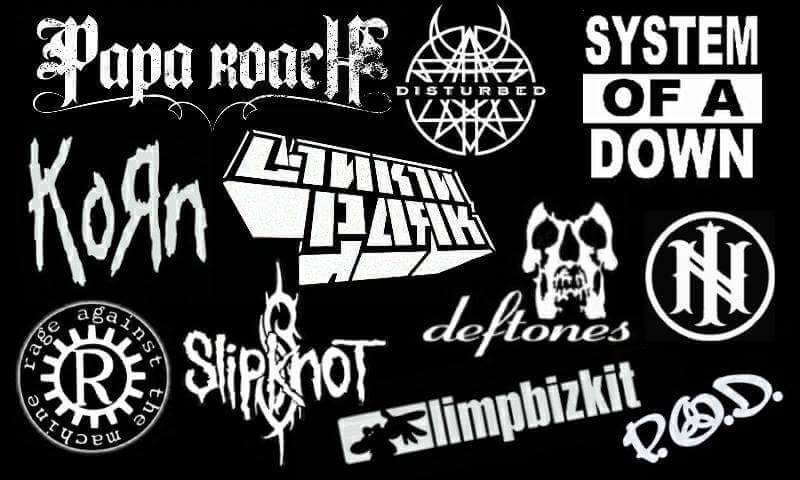
Do the arithmetic. Korn’s debut hit shelves in 1994. Life Is Peachy turns thirty next month, and sure enough it already has the anniversary treatment on colored wax, the kind of fuss labels used to save for Zeppelin IV or Paranoid. Hybrid Theory dropped in 2000. So that kid, the one who scraped together lunch money for those discs, burned copies for half his homeroom, swore up and down he had it all figured out, is pushing 45 today. Mortgage. Cranky knees. A teenager of his own who rolls both eyes when dad turns it up.
And what is that fella doing at this very moment? The same thing the Sabbath faithful did before him. What the Maiden and Zeppelin loyalists did too. He is defending the records of his youth as holy writ, squaring off with anybody who calls them dated, swearing up and down that the young ones simply do not get it.
Here is the truth nobody says out loud about “classic rock.” That tag was never a fixed list. The phrase names a moving window, and the window slides forward roughly a lifetime at a stretch. Chuck Berry and the early Stones held the title once. Later the crown passed to Zeppelin, Sabbath, and Deep Purple. By the 2010s, classic rock radio had begun folding 1990s music into the format, bringing bands such as Nirvana and Pearl Jam closer to the same oldies cycle their predecessors once entered. The canon is simply whatever a middle aged crowd decides to enshrine. Today that crowd answers to Jonathan Davis and Mike Shinoda.
At some point, with zero ceremony, “nu” quit being an honest prefix. The label turned fossil. Thirty years of dust have gathered on this stuff. Slapping “new” on it today is like carding a graying fortysomething at the door.
Reviewers missed it, naturally. They always do. Critics savaged this whole wave in its prime, sneered at the detuned riffs and the rapping and the raw confessions of damaged teenagers, filed it under noise for mall rats. Funny wrinkle: some of the era’s most influential critics hammered Sabbath in 1970 too, dismissing the band and the sound that would eventually become a foundation stone for heavy music. Time has a way of laundering a reputation, and the platters written off as juvenile racket tend to become, three decades on, the bedrock somebody else builds a career upon.
Study the marketplace and the verdict is already tallied. Deluxe reissues fat with demos. Anniversary vinyl. Tribute shows. Back catalogs surging on streaming because teenagers keep unearthing old records on their phones and passing them around. That is precisely the machinery a culture erects around art it quietly agreed to keep forever.
None of this bloomed in a vacuum, either. Heavy music has forever run like a river with deep, often ignored springs. Start with the sound itself: the distorted riff, the scream, the bottom end that rattles your sternum. Trace all of it upstream and the water turns ancient fast, running clean past the blues and the gospel shout to Sister Rosetta Tharpe, who had an electric guitar hollering a good decade before Chuck Berry cut his first sides. Bad Brains? Those cats played faster and meaner than most of the hardcore crowd bowing at their boots. Living Colour, Fishbone, Body Count, and Sevendust kept the current live through the very stretch everybody pretends belonged to other folks. That rubbery seven string groove Fieldy and Munky rode owes plenty to funk and hip hop, not just to Iommi. Anyone actually paying attention clocked that from the jump.
Then comes the part that stings. This past July of 2025, Ozzy Osbourne sat on a black throne at Villa Park, played a farewell show with the founding Sabbath lineup, and was gone 17 days later. The godfather left the building. What that exit signals, past the grief of it, is a changing of the guard. The old deities are walking offstage one by one, and the folks left holding the flame came up on Follow the Leader, Toxicity, and Hybrid Theory. Those faces are the elders now. Wild, yet plain as day.
Roll up to a festival and watch it unfold in real time. Deftones are pulling crowds that would have looked enormous even at their commercial peak. Slipknot tops some of the fattest bills on the planet. Reunion sets vanish from the box office in minutes. Better still: half the pit was not even breathing when these songs first dropped, sporting the shirts regardless, screaming lyrics penned before their birth. That is not nostalgia. Nostalgia demands you were in the room. Inheritance is the sharper word, a very different and far more permanent animal.
Those seeds scattered wider than anybody admitted back then, too. You catch the DNA in a decade of pop punk, in the emo revival, in half the rappers who grew up screaming into webcams, in the easy way heaviness and melody now share a room with no apology owed. The stuff never truly vanished. It merely swapped outfits.
So the Bakersfield veterans are parked in the studio again, sweating each note. Shinoda’s outfit is loading in across continents. And a whole cohort of grown men and women is manning the barricades for the albums that raised them, primed to scrap with anybody who dares call it a phase.
Name it whatever suits you. The prefix always carried an expiration date stamped right on the side. Anything that lasts this long, and draws defenders this fierce, earns itself a fresh word. In rock and roll we hold a special one for the music that outlives the sneers and gets handed down like heirloom silver.
We call it classic.
Staff Writer; Jerry Powell
JP is into heavy metal, rock, blues and just about anything old school… Most days, he would rather talk about a great album than whatever is trending… Hit him up at JPowell@ThyBRHM.com.