
(TheBRHM.com) Metallica’s stretch of records between 1991 and 1997 deserves a fairer hearing than the betrayal story still told in dive bars and comment sections across the internet.
Look, I came up loving this music from a spot most folks don’t picture when they imagine a headbanger. Down South where I’m from, the radio dial swung from gospel choirs to Scarface to whatever my uncle blasted out of his Cutlass. Somewhere in that beautiful mess I stumbled onto a group screaming about justice and madness, and the thing grabbed me by the collar, though good luck ever getting my cousins to understand why. Point being, whatever comes out of my mouth next, I say it as a believer. The purists got it wrong. Nobody sold out. Grown men simply grew.
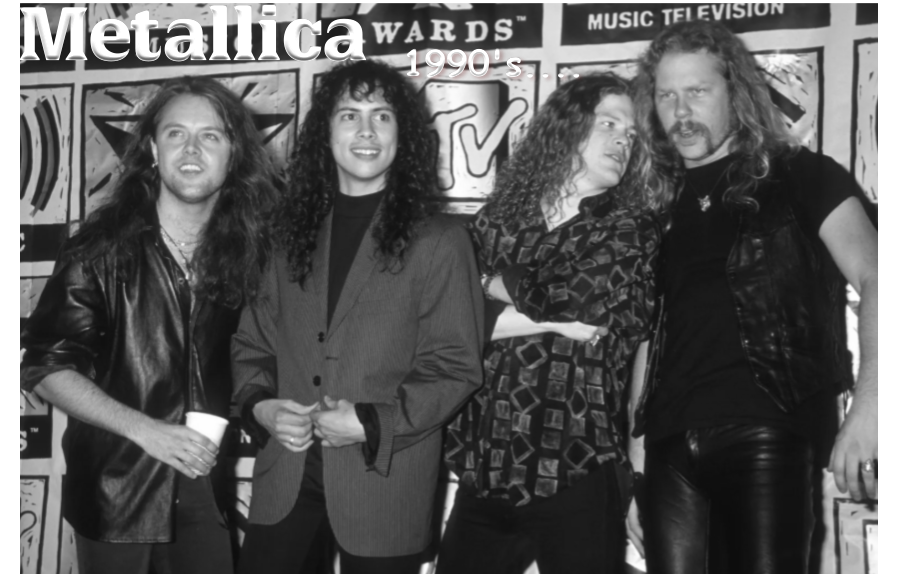
Rewind to what these guys built first. Kill ‘Em All, then Ride the Lightning, then Master of Puppets, capped off by …And Justice for All. That run didn’t just operate inside a genre, it handed everybody who showed up afterward a blueprint to crib from. Fast and tight and furious, the lyrics reading like protest poetry hollered over a chainsaw nobody bothered to switch off. By 1988 they had climbed the mountain. Justice landed so dense, so exhausting in its complexity, that you could practically hear the ceiling. Where do you go after eight-minute epics stuffed with fourteen riffs apiece? You cannot outrun yourself forever. Eventually the formula becomes a cage.
Then 1991 arrived and split everything in half.
That self-titled record, the one everybody just calls the Black Album, dropped and split the faithful clean down the middle. Bob Rock came aboard with a different production vision, pushing the band toward a fuller sound and more straightforward arrangements without stripping away their weight. So “Enter Sandman” became a thing you could barely escape at any mall or ballgame for years afterward, while “Nothing Else Matters” snuck a ballad onto rock radio and coaxed tears out of guys who swore up and down they never cried. Some longtime fans screamed treason. My ears heard something else entirely. I heard swing. That main “Sandman” riff has pocket. It breathes. There’s room between the notes where your body wants to move, the kind of space you’d find on a Parliament cut or a J Dilla loop.
Here’s the truth nobody wanted to credit back then. Groove is not weakness. Ask any drummer who cut his teeth in the church. Leaving air in the music takes more confidence than cramming every bar full of notes. James Hetfield and the crew learned to trust silence, and the reward was material that hit harder precisely because it stopped fighting itself.
“Sad But True” proves the case better than any argument I could type. That riff drags across the floor like it weighs a thousand pounds. Slowed down, detuned, mean as a junkyard dog. Nothing about it reads as soft. “Wherever I May Roam” strolls in on a sitar line and a swagger the old velocity never allowed. These were not compromises. They were choices made by writers confident enough to sit in a tempo and let it simmer.
Load and ReLoad catch even more heat, and honestly some of it lands. More than two and a half hours of material across those releases means filler exists, no denying that. But dismiss the whole thing and you skip past real treasure. “The Outlaw Torn” is a slow-burning monster of tension and release. “Bleeding Me” crawls deep into blues country the fellas had flirted with for years without fully committing. “Low Man’s Lyric” leans folk and hurdy-gurdy fragile. “Until It Sleeps” carries a dread that fast music simply cannot hold, because velocity moves too quick to sit inside a feeling.
Now here comes my read as somebody raised on Muddy Waters sides my granddad spun on Sunday afternoons. All of this traces back toward a shared root anyway. Heavy metal did not come from one band alone, but Sabbath supplied one of its clearest early blueprints, and Sabbath’s music carried deep blues DNA. Those blues traditions were created by Black musicians across the American South, with the Mississippi Delta becoming one of their most important centers. When Hetfield started bending strings and singing about heartbreak and addiction and doubt, the man wasn’t abandoning heavy music. He was walking it home toward one of its deepest sources.
None of that deeper lineage made it into the conversation at the time, though. Attention snapped instead toward something far more surface level. The haircuts got more press than the songwriting, which tells you how shallow the outrage really was. Cutting your hair does not alter your chord progressions. People behaved like a barber had robbed them of their childhood. Meanwhile the genuine musical questions went ignored. Could a speed outfit write a country-flavored tune like “Mama Said” and pull it off? Turns out yes. Could they doom-crawl and still hold your attention across five minutes? “Sad But True” already answered while everybody was busy mourning ponytails.
Plenty of the anger, I suspect, came down to ownership. Certain listeners wanted these musicians frozen in amber, replaying the same formula until arthritis finally stopped their hands. That desire says more about the fan than the artist ever could. We don’t demand a novelist rewrite their debut for thirty years. Painters get to swap their palette without anybody hollering scandal. Yet a heavy quartet reaches for new texture and suddenly it registers as a crime against the culture.
None of this means every complaint was baseless. ReLoad padded itself with cuts that should have stayed on the studio floor. A few production choices sound dated to my ears now, too glossy in spots. And I understand the ache of a teenager who found his whole identity in aggression watching that aggression relax into a groove. When something rescues your life at fifteen, any shift feels like abandonment. That grief is legitimate even when the conclusion drawn from it misses the mark.
But betrayal implies deception, a promise broken with intent. Metallica never vowed to stand still. Every previous chapter had already moved the ground beneath everyone’s feet. Ride the Lightning added melody that the debut lacked. Master brought architecture and patience. Justice went cerebral and cold and clinical. Change was the only constant these dudes ever offered. The self-titled pivot and everything after it merely continued a pattern baked in from day one.
Longevity settles the debate anyway. Buy a ticket to one of their shows now and you’ll spot grandkids, parents, and grayhairs all bellowing the same choruses at the same second. Meanwhile plenty of acts that treated repetition as principle discovered that nostalgia alone could not preserve momentum. The ones who let themselves change? Still packing stadiums and arenas basically anywhere with a working power grid. Standing pat is not loyalty to an art form. Sometimes it’s just fear wearing a battle vest.
Grown folks reassess. I circled back to Load in my forties and discovered warmth I was far too young and too rigid to catch the first time around. The songs still connect, only now they land in a different chamber of the chest. That is what maturity in art actually sounds like, and it took a little maturity in me to finally receive the signal.
So let the treason talk retire for good. Four artists outgrew a sound they had already perfected, then went hunting for blues, for swing, for a heaviness of different weight, for craft that could carry them past middle age with dignity intact. That is not surrender. It’s survival. And it happens to be the whole reason their name still sells out stadiums and arenas while purists argue online about a barbershop visit from 1997. Evolution was always the point. Some of us just needed a couple of decades to hear it right.
Staff Writer; Terry Poole
This brother brings sharp ears, deep respect, and real passion to every heavy metal riff, rock record, and overlooked gem he covers for TheBRHM… He writes for fans who still believe loud music should have soul, history, and meaning…
One may contact him at TerryP@TheBRHM.com.