(TheBRHM.com) Something cracked open in the summer of 1991, and you felt it before you could explain it. “Enter Sandman” came slinking out of car speakers with that heavy, dragging riff, and all of a sudden the guys who used to live on the fringes were sitting right there in everybody’s living room. Your cousin knew the words. The girl who only spun new jack swing knew the words. Grandmothers hummed it in the grocery line. None of it seemed normal, and none of it would ever fully reverse.
Rewind a few years and the picture looked completely different. Ride the Lightning and Master of Puppets had been savage, sprawling beasts, built on galloping riffs and arrangements that ran past the seven minute mark without so much as a shrug. …And Justice for All pushed the whole idea to a brittle, clanging edge, so dense and dry that it practically dared you to love it. The band was already headlining arenas, and “One” had brought its sound to MTV, but widespread radio domination still felt like somebody else’s game. What they chased was speed and a machined kind of precision, riffs cut tight enough to draw blood and cranked loud enough to rattle teeth loose in your skull. The indifference was not an accident. They leaned on it hard.
Then Bob Rock walked through the door, and the corners got sanded down. The eponymous release that everyone simply calls the Black Album traded fury for weight. Tracks got shorter. Grooves got fatter. The production finally breathed instead of choking. Newsted’s bass sat where you could hear it after Justice had buried him in the mix. Lars leaned into groove over speed. Kirk trimmed the fireworks so each tune could stretch its legs. Every choice served the song instead of the ego, and that discipline is a big reason the thing still hits like a truck.
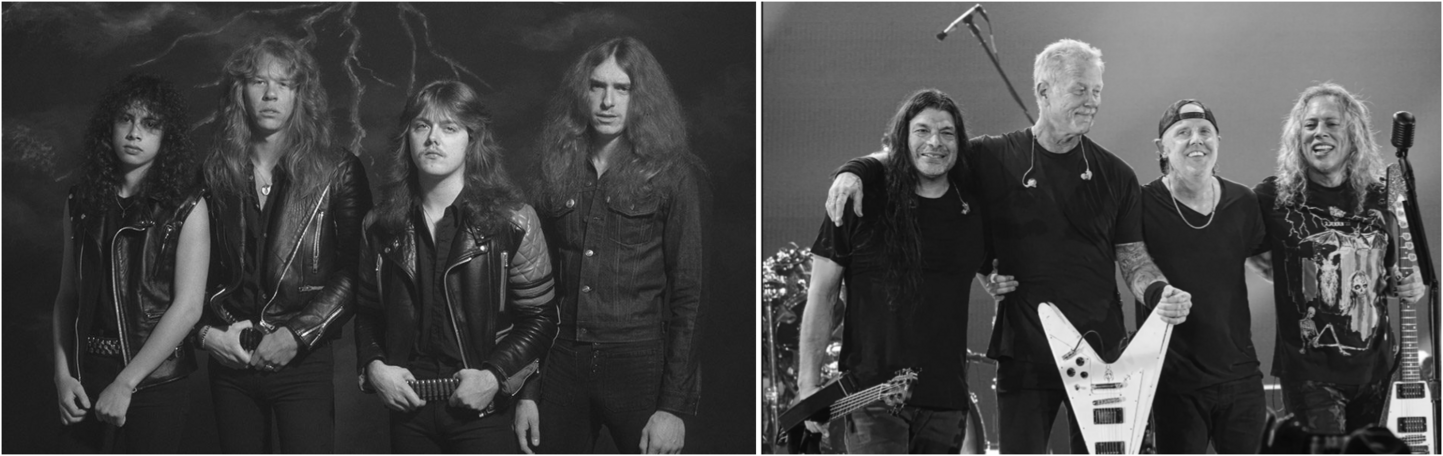
The payoff landed with the force of a meteor. Twenty times platinum in America, more than thirty five million copies scattered across the planet, and a commercial run that remains nearly untouchable more than three decades on. No band rooted in thrash had ever reached those numbers before, and arguably none since has matched what that No. 1 debut set loose. This was not a hit. It became a permanent fixture, the kind of release that stops belonging to a genre and starts belonging to everybody.
Here is where the story splits clean in two. For millions of newcomers, this was the front door into heavier music. A teenager who had never gone heavier than Guns N’ Roses could follow “Sad But True” or “Wherever I May Roam” down into a world that used to sit off the map entirely. Metallica had already conquered arenas, but the crossover pushed the band deeper into stadiums, award shows, and bedrooms out in the suburbs where plenty of listeners had never given thrash a second thought. That expansion was real, and it fed an appetite that smaller acts would live off for years. Doors that had been bolted shut swung wide, and a hundred bands crawled through them.
But the folks who had been there since Kill ‘Em All felt something twist in their gut. To them, the slower tempos read as surrender. “Nothing Else Matters” was a ballad, no hedging, strings and all, and Hetfield’s voice cracked with a tenderness the mosh pit never requested. The purists muttered about selling out. They pointed at the gloss on it, at hooks that snagged you and refrains you could shout back before a song even ended, and they grieved the breakneck thing that once sent parents lunging for the volume knob. The rough edges were sanded off. Smooth, to a crowd that fell for the danger in the first place, read a whole lot like a white flag.
And yet that betrayal narrative was always a little selective. These were the same writers who gave the world “Fade to Black” and “One,” who understood a quiet passage could gut a listener harder than any blast of speed. The seeds of tenderness were planted long before Bob Rock ever showed up. What shifted was the ratio, plus the nerve to put a slow burner front and center rather than tucking it away deep in a track list. The crime, if you want to call it that, was mostly about confidence.
What came afterward only sharpened the argument. Load and Reload arrived with short hair, eyeliner, and a bluesy swagger that felt light years from the thrash gospel. The crew chased alternative rock while the ground kept moving under everybody’s feet. Then the Napster lawsuit turned the four of them into the face of corporate greed for a generation of downloaders, fair or not. St. Anger showed up sounding like a garbage can tumbling down a staircase, and the Some Kind of Monster documentary let the entire planet watch the founders bicker their way through therapy. Every last chapter here traced back, some way or another, to the crossroads of 1991. Fame that enormous carries a bill, and it kept arriving in the mail.
So was the price too high? Depends on who is running the math. Look at it one way and you see a pack of ferocious innovators who traded their teeth for a mansion. The tape trading kids who once believed they guarded a secret watched that secret get sold to the shopping mall. There is grief in that, and it is honest grief. Pretty numbers do not buy it off.
Flip the ledger, though, and it reads completely different. Without that crossover, does heavy music ever reach the loner in the tiny town with no scene, no store, no allies? Probably not with the same punch. The eponymous juggernaut dragged a whole underground into daylight and handed countless nobodies a reason to believe they could pack a room too. Strip away the debate for a second and the songwriting on that beast is bulletproof. “The Unforgiven” still lands like a body shot. “Holier Than Thou” snarls as mean now as the day it dropped. Craft that sturdy does not happen by luck, and it does not crumble because a handful of gatekeepers felt jilted.
The truth probably lives inside the tension itself. You cannot fully pry the win apart from the wound. That batch of songs made the four of them immortal and also chained them to a version of triumph they spent the next fifteen years wrestling with, sometimes gracefully, often not. It gave the culture a bigger tent and, in the very same breath, blurred the wild identity that got the tent raised in the first place.
Well into 2026, none of the old fire has stopped paying off. The eponymous set never really left the shelves. It has logged more than 840 weeks on the Billboard 200 by now, and it was the fourth album in history to reach the 800 week milestone, an exclusive club that has since grown to six. Whenever the band tours, songs from that record remain fixtures in the setlist, with “Enter Sandman” often arriving near the end. Drop that riff in a stadium now and the place comes unglued, phones in the air, grandparents and grandkids screaming the same line back. Half the crowd was not alive when it dropped and they know it cold regardless. That kind of reach makes its own case.
So the clean verdict never shows up. Call it a cash grab and you are not wrong. Frame it as a group smashing clean through its own ceiling and you are not wrong there either. Both things happened on a single release, and that contradiction is what keeps the argument going at the bar on a Saturday night. Nobody bothers fighting this hard over a legacy with no scars on it. The scars are half the reason a heavy release from 1991 still feels alive while so much of its era quietly gathers dust.
Staff Writer; Kirk Robinson
This man is a Rockhead with a deep appreciation for rock, country, folk, blues, heavy metal and the musical traditions that connect them. He writes about artists, albums, music history and the sounds that continue to shape generations. Feel free to contact him at KirkR@TheBRHM.com.