
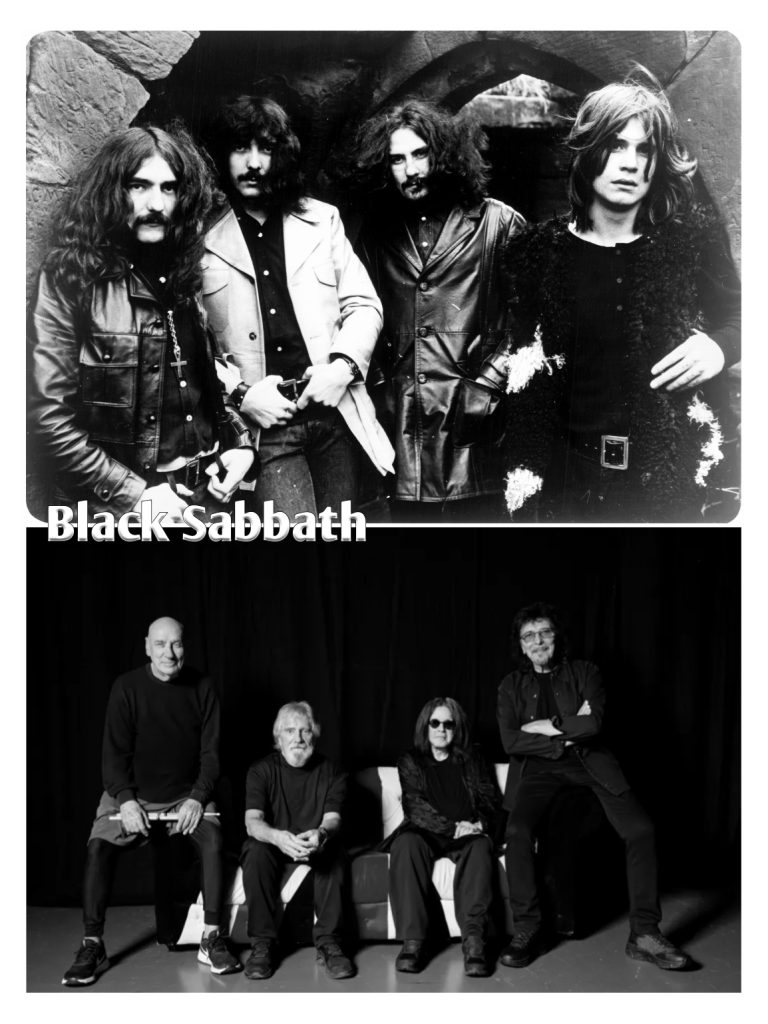
(TheBRHM.com) The origin of heavy music has no single author. Several acts on two continents were shoving toward the same loud, ugly place by the end of the sixties, blowing out speakers and scaring their own engineers. What sets Black Sabbath apart is not arriving first. It was what those four dragged in the door with them.
Now let me talk to you the way I would at the barbershop.
I have been the only brother in the pit more times than I can count. Somebody always clocks my face, then clocks my shirt, then clocks my face again like they solving a word problem. Dude at a record shop outside Charlotte once asked me, real polite, whether I was buying that vinyl for my son. Told him no, sir, this one is for me, and I have been buying for me since before your lease existed. So understand that when I speak on this subject, I did not wander in last Tuesday. I got skin in it.
Here is where I land, and it aggravates folks on both sides of the argument.
Those four did not build this thing out of nothing. Anybody telling you different is repeating a bedtime story. Go back to 1958. Link Wray punched holes in a speaker cone with a pencil, cut “Rumble,” and watched radio stations ban a song that had no words in it whatsoever. Sit with that a second. Dave Davies went at his amp with a razor blade before The Kinks tracked “You Really Got Me.” Blue Cheer hollered an old Eddie Cochran tune loud enough to sweat the studio walls. Steppenwolf said the words heavy metal thunder out loud in a hit record while our guys were still gigging under a different name. Iron Butterfly stretched one riff across an entire album side. Cream, Vanilla Fudge, MC5, Deep Purple, all of them were digging in that same dirt. Led Zeppelin dropped a debut record nearly a year ahead of the Aston boys, and if we being honest, Jimmy Page had already shown what an overdriven electric guitar through a cranked amplifier could do to a room.
Worth remembering where our four principals started. Tony Iommi and Geezer Butler were grinding out twelve bar shuffles in an outfit called Earth, studying Howlin’ Wolf and Muddy Waters sides the way seminary students study scripture. Everything they built later sat on a foundation Black musicians poured, shipped overseas, and got paid almost nothing for. That irony rides shotgun with me every single time I drop the needle on Paranoid.
Something shifted on Friday the thirteenth, February of 1970.
Rain. A distant bell. Three notes come crawling out afterward. Slow ones. Iommi had reached for the tritone, a flattened fifth long treated as an unstable and unsettling interval and later nicknamed diabolus in musica, the devil in music, and he flat refused to hurry it along. You get plenty of room to be afraid. Nobody had opened an album that way before. Zeppelin opened with swagger. Purple opened with fireworks. Aston opened with a funeral.
The story behind that title track deserves telling. Butler had been reading occult paperbacks, the pulpy kind, and Ozzy handed him a leather bound book about witchcraft that he stuck on a shelf. Geezer woke in the night convinced a dark shape stood at the foot of his bed. When the figure disappeared, he reached for the book and discovered it was gone. Rather than shake the experience off, the group wrote the fear down and pressed it to wax. That decision changed everything downstream.
Consider what Iommi carried into those sessions. Seventeen years old, last shift at a factory that pressed steel, and the machine took the tips off two fingers on his fretting hand. Doctors told him to find different work. So he improvised. He melted a plastic soap bottle into caps for the stumps. Leather peeled off an old jacket went over top of those. Lighter strings came after that because normal tension on the fretboard hurt worse than he could stand. By Master of Reality, he had also started tuning down, easing the pressure while chasing an even fatter and heavier sound. Guitars have sounded low and monstrous ever since because a kid clocking out of a factory job would not hear the word quit. That is not trivia. Call it testimony.
Aston itself deserves credit too. Bomb craters from the Blitz were still sitting open when these guys were coming up. Factories swallowed you at fifteen and spit you out at sixty five with a bad back and a smaller pension than promised. Butler grew up in a house with no bathroom. Ozzy did time in Winson Green for burglary before he ever sang a note professionally. Their misery was not costume jewelry. Compare that to the flower children singing about California sunshine and you understand why the Midlands sounded like a machine shop with a hangover.
War came next. “War Pigs” put generals in one corner and poor kids in a body bag in the other, and Butler wrote it while Vietnam was still swallowing teenagers whole. No peace sign platitudes in there, no gentle folk melody. Just an accusation set to a lurching groove, naming the men who profit while somebody else’s child bleeds. Black families in this country knew that arithmetic intimately, because our sons got drafted at rates the suburbs never had to think about.
Addiction rolled in right on its heels. “Hand of Doom” tells you about soldiers coming home with needles in their arms, and it landed years before anybody in polite society wanted to discuss that epidemic. “Sweet Leaf” literally opens with Iommi coughing his lungs out. Later on, “Snowblind” documented cocaine chewing through the group from the inside. Nobody up there was moralizing from a safe distance. Instead you get a live report from inside the wreckage, which is exactly what our best storytellers do when they rap about the price of a neighborhood.
Faith belongs in this conversation whether the church folk like it or not. Geezer came up strict Irish Catholic and never stopped wearing a cross. The very first verse Ozzy ever howled on that debut ends with a man begging God for help. Then “After Forever” arrived in 1971 asking listeners point blank what they planned to do about eternity, just as Christian rock was beginning to emerge as a recognizable genre. Preachers spent the eighties calling these men devil worshippers, and half of them could not be bothered to read a lyric sheet. The truth was messier and more human. Scared people wrestling with a God they were raised to fear.
Supernatural terror tied it all together. I am not talking cartoon spooky, none of that plastic skeleton mess from the Halloween aisle. Real article, understand. Three in the morning, eyes wide open, dead certain whatever is standing in your hallway did not come by to be friendly. Who else in 1970 wrote songs out of that?
So here is my verdict. The volume, the distortion, the power chords, the crunch, all of that was assembled by a committee nobody appointed. Multiple acts stumbled toward it at once. What those four Brummies contributed was interior life. They handed the genre grief, paranoia, poverty, faith, guilt, and fear, then dared everybody else to keep pretending rock had to be about a good time. Candlemass, Sleep, Electric Wizard, that whole slow and heavy bloodline runs the identical playbook. Metallica runs it. Slayer ran it faster. Pantera ran it meaner. Body Count, Living Colour, Bad Brains, Tetrarch, Zeal and Ardor, cats who catch the same sideways looks I catch, picked up that permission slip too and never apologized for it.
Ozzy sang his last night at Villa Park on July fifth of 2025. He performed from a throne because Parkinson’s disease and spinal problems had taken away his ability to stand through the set. Tony Iommi, Geezer Butler, and Bill Ward joined him for Black Sabbath’s final four songs. Seventeen days later he was gone. Tomorrow marks a year, and Birmingham is filling its city center with music, exhibitions, public art, and tributes for the first Ozzy Day.
Pour something out for the Prince of Darkness. He did not invent the noise by himself, but he and his crew taught it how to feel.
Staff Writer; Terry Poole
This brother brings sharp ears, deep respect, and real passion to every heavy metal riff, rock record, and overlooked gem he covers for TheBRHM… He writes for fans who still believe loud music should have soul, history, and meaning…
One may contact him at TerryP@TheBRHM.com.