(TheBRHM.com) Few acts in popular music have completed a more total reversal of identity than the London blues outfit that spent the sixties positioning itself as a threat to decent society and now operates as one of the most efficient revenue machines in live entertainment. That reversal deserves an honest accounting, because the mythology has outlived the truth by about fifty years.
Look, I love this catalog. Let me get that out front before anybody starts typing. “Gimme Shelter” sits at the top of my list and I doubt anything knocks it off. Merry Clayton got called into that session in the middle of the night, pregnant, hair still in curlers, and she tore her voice open on the word murder until it broke apart. You can hear the crack sitting right there in the mix. Nobody fixed it because you cannot manufacture that. And when Keith’s guitar comes shivering in at the top with the tremolo on it, whatever neutrality you walked in with goes out the window. I was a Black kid in the South who loved rock the same way I loved Scarface and the Geto Boys, and folks around me made that into a whole argument. That song was my evidence.
But loving something does not require lying about it.
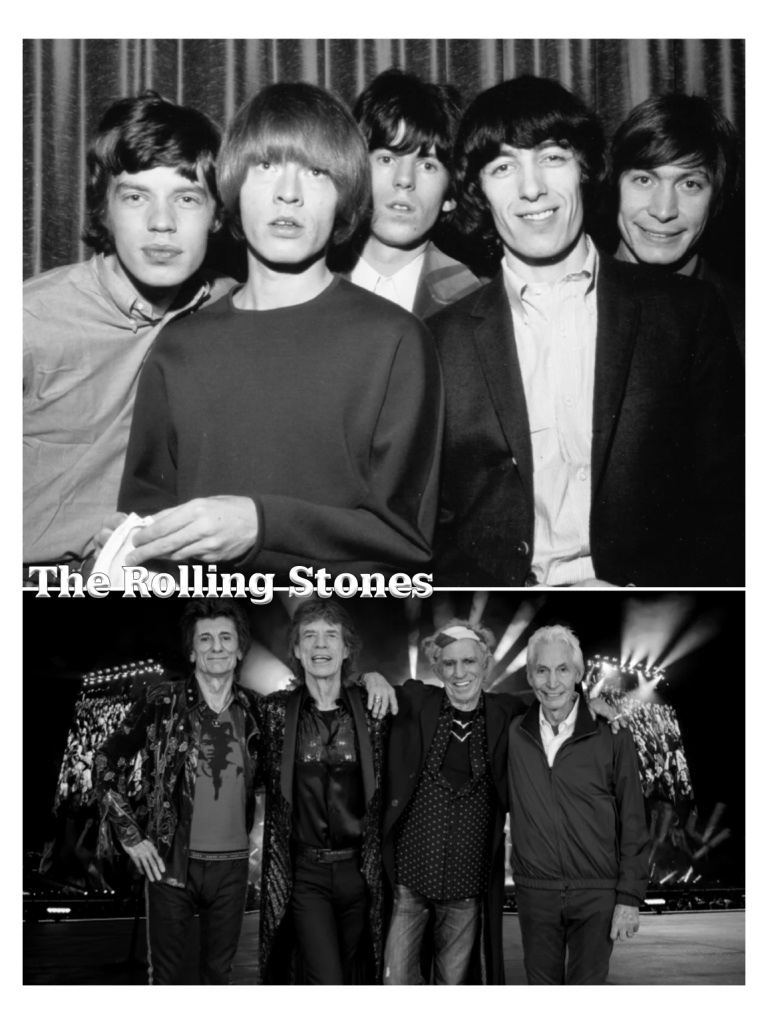
Consider where this all started. Andrew Loog Oldham, their manager, understood marketing better than most people running major labels today. He looked at the Beatles in their matching suits and clean haircuts, then made a calculated business decision to position his clients as the opposite. Would you let your sister go with a Rolling Stone? Melody Maker put that on a page in 1964, and Oldham eagerly exploited it because it fit the image he was already selling. Danger sells. Filth sells. Parents clutching pearls is the best free advertising a young act can buy.
Now for the part nobody prints on the poster. Mick studied at the London School of Economics, a school that feeds bodies straight into the City of London. He walked out because the gigs were paying, not because a door slammed on him. Brian Jones grew up in Cheltenham in a musical household. His father taught piano in addition to working as an aeronautical engineer, while his mother played piano and organ and led a church choir. Charlie designed graphics at an advertising agency before he ever sat behind Mick keeping time. Different circumstances among them, sure, but nobody here crawled out of poverty into a guitar. They were clever, they read the room correctly, and they picked out a costume.
The Redlands drug bust in 1967 gave the myth its most useful chapter. Police raided Keith’s country house, charges followed, and for a moment it looked like the empire really would crush these boys. Then something instructive happened. The Times of London ran an editorial defending them, written by William Rees-Mogg, a man about as establishment as a human being can get. Who breaks a butterfly on a wheel, he asked. Jagger’s prison sentence was reduced to a conditional discharge, while Richards’ conviction was overturned on appeal. The system that supposedly hated them turned around and protected its own.
Altamont in December of 1969 should have ended the fantasy for good. Free concert, Hells Angels brought in to help keep people away from the stage and supplied with about five hundred dollars’ worth of beer, Meredith Hunter stabbed to death within a few feet of the performers. Four people died that day, three through accidents and Hunter through violence. The Maysles brothers and Charlotte Zwerin had cameras rolling on the tour already, and the movie that came out of it took its name from the song I opened this piece with. The killing and much of the organizational collapse around it were captured on film and then absorbed into the legend. Dangerous, see. Chaos follows them. What actually happened was that a young Black man died at a badly organized event, and the business absorbed his death into its brand.
Then came the money era, and this is where the mask really slipped.
In 1971 the group relocated to the south of France after years of financial mismanagement left its members facing enormous unpaid tax obligations under Britain’s extremely high rates for top earners. Exile on Main St. came out of those sessions and it is a monster of a record, greasy and half broken and perfect. Still, the album title tells on itself. Exile from what? From a tax bill. Working people in Manchester and Birmingham could not board a plane to Villefranche when the authorities came calling.
Prince Rupert Loewenstein had entered the picture back in 1968, several years before the tax exile. A German aristocrat and merchant banker, he handled their finances for nearly four decades and by his own admission had little interest in the actual music. His job was structuring the enterprise so it kept as much as possible, and he was extraordinary at it. Corporate entities registered in the Netherlands. Careful residency planning. The whole apparatus a wealthy family office would recognize instantly. Rebellion had a chief financial officer.
By 1981 the transformation went public in a way nobody could miss. Jovan sold musk cologne. That year the company entered a reported three million dollar agreement to attach its name to the American run. The arrangement is widely cited as the first major corporate sponsorship of a rock tour, which is a polite way of saying every logo you have ever squinted at on a stadium screen owes it a royalty. So no, the sound of rebellion was never their invention. What they built was the model that turned it into product.
Steel Wheels in 1989 pushed it further with Anheuser Busch attached and a production budget that turned concerts into stadium spectacle. Sponsors kept coming. Sprint. Then Ameriquest, a subprime mortgage lender that paid $325 million to resolve predatory lending allegations, put its name on the A Bigger Bang tour as an industry that disproportionately harmed Black and Latino communities moved toward collapse. Sit with that pairing a minute. The outlaws of 1965 cashing checks from an operation accused of stripping equity from families one refinance at a time.
Mick accepted a knighthood announced in 2002 and formally received the honor in 2003. Keith reportedly hated it, calling the knighthood a paltry honor and arguing that it was not what the Stones were about, and honestly that response was the most punk thing either of them had done in decades. Sir Michael Philip Jagger. The man whose lyrics once made vicars faint now kneels for the Crown.
Super Bowl halftime followed in 2006, with the delayed broadcast muting two lyric fragments under an arrangement the band had accepted beforehand while the four of them played the biggest advertising showcase on the American calendar. Nobody walked off. Nobody refused. Halftime acts do not collect an appearance fee for that slot, which means they weighed the exposure against the principle and the exposure won easily.
Which brings us to the modern operation, and to the part that genuinely bothers me.
Hackney Diamonds landed in 2023, a solid late career album with real bite to it. The AARP sponsored road show followed in 2024, and the pricing on it was brutal. Platinum seats and premium packages reached four figures, with some VIP offerings priced above $1,500. Sponsorship for that run came from AARP. Read that again slowly. The organization for Americans over fifty paying to attach itself to the act that once represented everything their parents feared.
Charlie is gone now, having passed in 2021, and his absence changes the arithmetic of what remains. Bill Wyman officially left in 1993. Mick and Keith are the only original members still in the band, with Ronnie occupying the guitar position since touring with them in 1975 and becoming an official member the following year. That enterprise supports a vast touring workforce and generates numbers most corporations would envy. Nothing about that is criminal. It is simply not rebellion, and pretending otherwise insults everybody’s intelligence.
My problem was never the wealth. Get your money. Black artists have been robbed blind in this industry for a century, and I will never begrudge any musician a fortune. Muddy Waters, Howlin’ Wolf, Chuck Berry, the men whose music these Englishmen studied and covered, deserved riches far beyond what the industry allowed many of them to receive. That theft is a separate article and a longer one.
My problem is the pose. Sell me the concert, sell me the merch, sell me the box set with outtakes I already own on three other formats. Just quit selling me danger while a banking structure handles the receipts and an organization for people over fifty sponsors the stage.
Somewhere along the way, the threat became a heritage brand. Same as Harley Davidson. Same as leather jackets in department store windows. Capitalism does not defeat its critics through argument, it defeats them through acquisition, and there may be no cleaner example anywhere in music.
Play the records loud. Give Merry Clayton her flowers. Just know what is in the box when you hand over the card.
Staff Writer; Kirk Robinson
This man is a Rockhead with a deep appreciation for rock, country, folk, blues, heavy metal and the musical traditions that connect them. He writes about artists, albums, music history and the sounds that continue to shape generations. Feel free to contact him at KirkR@TheBRHM.com.