
(TheBRHM.com) There is a persistent myth in music writing that says loud guitars were dying in 1987 and five degenerates from Hollywood arrived to resuscitate them, which is a nice story that happens to be false in almost every detail.
Guitars were doing just fine. You could not escape them. Bon Jovi had America singing about a dockworker and a waitress. Def Leppard was about to move twelve million copies of Hysteria in this country alone. Whitesnake had a video running on MTV so often it might as well have been the station identification. Poison, Cinderella, Ratt, Mötley Crüe. Arenas were full. Nobody was passing a hat around asking for donations.
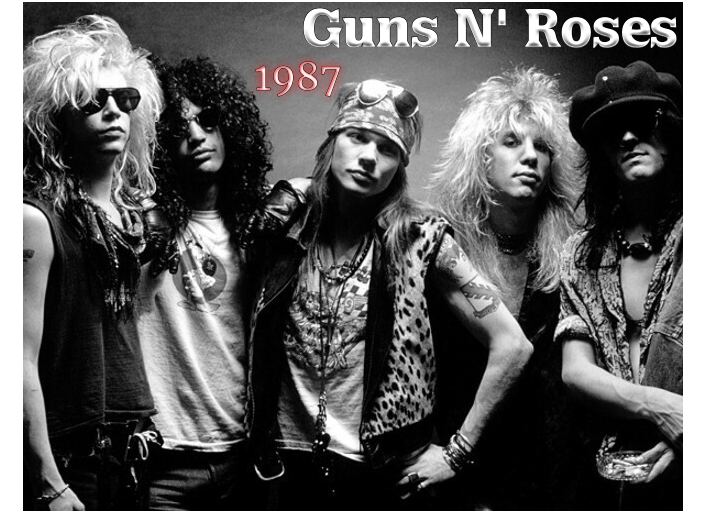
So what actually died?
Danger died. Threat died. That feeling a record might get you in trouble with somebody died. Everything sanded down into hairspray and hooks and a clip where a guy in leather pants winks at a model draped across a car hood. Some of it was genuinely great. But it stopped feeling like anything was at stake, and art without stakes turns into decoration.
Now let me tell you about the Hell Tour.
June of 1985. Five broke lunatics leave Los Angeles in borrowed vehicles headed toward Seattle for their first shows together as a unit. Their transportation dies somewhere in central California. They hitchhike the rest of the way, hundreds of miles, sleeping rough, hustling rides from strangers, and they still make the gig. That is not a promotional legend cooked up later by a publicist. That is a group of people who had absolutely nothing to lose showing you exactly who they were before anybody was watching.
Everything about the Sunset Strip years reads the same way. They lived in a storage space behind a rehearsal spot on Gardner Street, no plumbing worth mentioning, mattresses on concrete, girlfriends bringing food. Duff McKagan came down from Seattle carrying punk credentials and a bass. Izzy Stradlin came from Lafayette, Indiana, the same small city that produced the singer he grew up around. Steven Adler swung his drums like a party instead of a machine gun. Slash showed up with a top hat, a wall of curls, and a habit of playing behind the beat when every other guitarist in that zip code was trying to play faster than the last guy.
Tom Zutaut signed them to Geffen in 1986 after watching a club show and understanding immediately that he had found something the industry could not manufacture. After signing, they issued a four song EP dressed up as a live recording through Uzi Suicide, a supposedly independent imprint that was actually connected to Geffen. The crowd noise was added in the studio, but the record was still deliberately cheap, raw and nasty. Marketing departments do not usually think that way. Hungry musicians do.
Mike Clink got the producer chair after several bigger names either passed or got run off. Sessions were chaos. Guys disappeared for days. Nobody could nail down the singer’s schedule. What came out of it, though, sounds like a room full of people playing at each other rather than a computer stacking parts, and nearly thirty nine years later that is precisely why it holds up while so much of its competition sounds like a museum piece.
Appetite for Destruction hit shelves in July of 1987 and did absolutely nothing.
Sat there. Sold slowly for months while the label wondered what it had bought. Radio would not touch it. MTV would not touch it. Original artwork got pulled from retailers because a painting of a robot assaulting a woman turned out to be, unsurprisingly, a hard sell at suburban record chains, so they swapped in the cross and the five skulls that everybody has tattooed on themselves since.
No rescue mission, no coronation. Just a slow ugly crawl through club dates and word of mouth and a scene that had already written these guys off as too filthy to sell.
Then people heard it.
That opening scream on “Welcome to the Jungle” is not a hook. It is a warning shot. Axl sounds like somebody who has already been robbed twice this month and is out looking for the third guy. Slash slides in underneath with a riff that swaggers rather than sprints, and the whole arrangement keeps daring you to move first.
“Mr. Brownstone” is a heroin song written by Slash and Izzy Stradlin from inside a band already tangled up with heroin, and it never moralizes, never warns you, never cleans anything up for the listener. It simply describes the schedule. Wake up sick, go score, do it again tomorrow. Kids in the suburbs sang along without knowing what a brownstone was. Nothing on the charts that year had the nerve to be that plain about it.
“Nightrain” got named after a fortified wine that cost about a dollar a bottle and tasted like punishment. “It’s So Easy” is pure contempt, Axl snarling through a song Duff McKagan and West Arkeen wrote about the sort of people surrounding the band when everything except money seemed to come easily. Even the ballad has knives in it. Everybody remembers the melody on “Sweet Child o’ Mine,” which started life as a warm up exercise Slash considered a circus riff and actively hated, and yet listen to how that song ends. Axl asking where he is supposed to go now, over and over, the arrangement collapsing behind him. That is not romance. That is somebody who suspects the good thing is temporary.
Aerosmith took them on the road in the summer of 1988, and by then the record had begun climbing. Made it to the top of the album chart in August, thirteen months after release, which almost never happens and has essentially stopped happening entirely. Eighteen million copies eventually sold in this country. Biggest selling debut anybody has ever managed here, and it got there despite months of resistance before Geffen finally forced open a late night slot on MTV and listeners took over from there.
Fame did what fame does.
Steven Adler got fired in 1990 when the drugs took his timing. Matt Sorum came in, a heavier player, and something loose in the engine went missing with him. Keyboards arrived. Horn sections arrived. By September of 1991 the operation released two albums on the same day, thirty songs, orchestras, a nine minute epic about a woman with a video built around a ruined wedding. The era later produced another sprawling video featuring Axl swimming with dolphins. Ambition swallowed the menace whole.
Nevermind landed one week later, and every writer since has framed that timing as an execution.
Wrong again. Nothing got killed off in Seattle. This thing bloated, got expensive, and showed up late to its own concerts. St. Louis went up in flames in July of 1991 after Axl dove into the crowd chasing a camera and then walked offstage. Fans in Riverport tore the venue apart. Warrants followed. Izzy quit that November, exhausted, sober, and clearly the only member who understood the difference between rebellion and self destruction. More than two years of touring dragged the rest of them across the planet until nobody was speaking to anybody.
Danger has a shelf life once the people carrying it stop being hungry.
What lasts is that first record and what it proved.
Audiences will always pick the thing that scares them a little over the thing that flatters them. Sleaze beats polish. Five guys who genuinely did not know whether they would eat that week made music you can still feel through a phone speaker, while the professionals who had catering and career plans made product that evaporated the second the calendar flipped.
Nothing needed saving in 1987. Something needed poisoning.
A pack of broke degenerates on Sunset Boulevard handled it, and everybody has been listening to the aftermath ever since.
Staff Writer; Terry Poole
This brother brings sharp ears, deep respect, and real passion to every heavy metal riff, rock record, and overlooked gem he covers for TheBRHM… He writes for fans who still believe loud music should have soul, history, and meaning…
One may contact him at TerryP@TheBRHM.com.