
(TheBRHM.com) Metal circles have been repeating something for thirty years without checking it. Pantera invented groove metal, they say. Nah. Anybody who tells you that either was not listening close or was not listening long. Exhorder was down in New Orleans developing that slow, mean, swaggering attack on late eighties demos before Cowboys from Hell ever hit a shelf. Prong was in New York bending riffs into shapes that felt more like machinery than music. Sabbath, bless them, had been dragging tempos through mud since before most of us were born, and if you go back to “Symptom of the Universe,” you can hear one of the early blueprints sitting right there in plain sight, waiting on somebody with enough nerve to pick it up.
So no. The Abbott brothers did not create it out of nothing. What they did was louder than inventing. They took a sound that was floating around the swamp and the underground, sharpened it, tightened it and slammed it through an amplifier so hard that the whole genre had to move over and make room. That is a different kind of credit, and honestly, I think it is the harder one to earn.
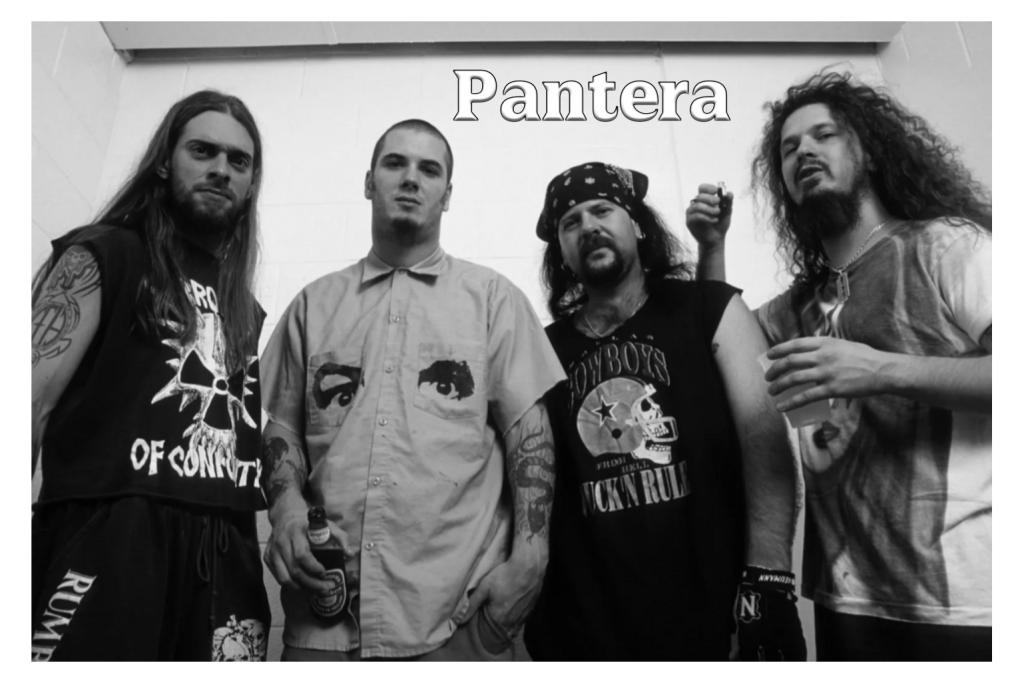
Here is what I keep coming back to. Much of thrash was built around speed. That was the flex. Slayer, Metallica, Testament, Kreator and plenty of others chased that same rush, seeing how fast a wrist could go before it caught fire. And I loved it. Still do. But speed does something strange to a body after a while. It gets abstract. You get so far up in the tempo that the music stops landing on your chest and starts living somewhere in your head instead. Your neck cannot follow it. Hips are out of the question entirely. By the tail end of the eighties, parts of the thrash scene had gotten technical to the point of weightlessness, all these guys playing like they were trying to win something.
Then Dimebag Darrell showed up and did the one thing much of that scene had stopped valuing.
He slowed down.
Not doom slow. Not sludge slow. He halved the tempo and kept the meanness completely intact, which nobody tells you is the hard part. Sounds easy on paper. Try it. Take the velocity away from most riffs and they fall over because moving was the only thing holding them up in the first place. Dime’s riffs stood up anyway.
They stood up mean.
Listen to “Walk.” You already know it. Everybody knows it, and that is half the problem. It has been in arenas, television spots and every guitar store in America since 1992. Sit with what the song is actually doing, though. That riff swings. There is a limp in it. A drag on the back end of the beat. Vinnie Paul is behind the kit sitting deep in the pocket, leaning into the backbeat instead of constantly pushing the song forward.
Chasing the riff was not his job. He made the riff come to him.
That groove is why the song lands in your chest and not only in your ears. It is not fast. The heaviness comes from a place speed cannot reach.
And I want to say something here that maybe does not get said enough in these conversations, at least not by the people usually writing them.
That backbeat is why a whole lot of us were in the room.
I grew up in a house where the stereo was moving between Parliament and Zeppelin and whatever my cousin was playing loud enough to shake the wall. My ear got trained on rhythm before it got trained on anything else. So when I was a teenager and somebody put on Vulgar Display of Power, my body understood it immediately, before my brain caught up.
That was the pocket.
It carried the same physical logic as a good drum break, the same thing that makes you nod without ever deciding to nod. Metal, for all its glory, had not always been giving us that. A lot of it was built for the head and the fist and not much else. Pantera built for the whole frame.
Bad Brains had already proved the two worlds could talk. Living Colour proved it in Technicolor. Body Count kicked the door clean off during that same era. Pantera came at it sideways, from inside the metal world, and made the rhythm the point.
Vinnie’s snare hits like a boot on a floorboard. Rex Brown’s bass is not decoration. It is structure. That band was a rhythm section that happened to have a guitar genius bolted on top, and I will argue that with anybody who wants it.
Now Phil. Complicated man, complicated conversation, and I am not about to pretend otherwise. He has said things and done things that hung a permanent asterisk on how plenty of us hear him. I am not writing around that. I am not cleaning anybody up either. But talk to me strictly about the music between 1990 and 1996, and his voice is the piece that made the whole approach click.
He never simply sang over those riffs. He rode them. He cut against them, dropped his phrasing into the holes and worked the beat the way an MC works a beat. Pull up “A New Level” and pay attention to where the words land. Nothing about that is traditional thrash vocal delivery.
That is somebody who understood the pocket.
Then Far Beyond Driven kicked the whole thing open, and it still knocks me sideways to think about it. Ugly record. Hostile record. Not one second of it built to please anybody. It debuted at number one on the Billboard 200 in 1994.
Number one.
That was no cult victory. That was a hostile takeover of the mainstream. Kids who had never heard of Exhorder heard it. Ohio, Norway, São Paulo, all of them. What got passed down after that was not thrash speed.
It was the stomp.
Look at what was happening around Pantera and what followed. Sepultura was moving in a parallel groove heavy direction on Chaos A.D. in 1993 before pushing the rhythmic experimentation even further on Roots in 1996. Machine Head made down tuned groove a major part of its early attack. Lamb of God carried similar groove heavy architecture forward and added a Southern boil to it.
A great many nu metal bands that reached MTV leaned on that half time bounce, whether they named the influence or not. The DNA spread everywhere. Groove metal stopped being a clearly marked subgenre somewhere in there and became a default setting, something bands reached for without thinking about where it came from.
Some of it turned into gold, and a whole lot of it turned into garbage. Much of the heavy music that followed still passed through Pantera’s version of the groove. Those four guys from Texas figured out that heaviness lives in the space between notes rather than in the number of them, and they delivered that lesson to an audience far beyond the underground.
That is the legacy, and it is a rhythmic one before it is anything else. Not the beard, not the beer, not the cowboy mythology that grew around them like kudzu.
The rhythm.
The physical fact of it.
Dime died on a stage in Columbus while performing with Damageplan in December of 2004, which is a sentence I still hate typing. Pantera’s classic lineup had already broken apart by then. What survived is not a sound anybody can copyright. It is a permission slip.
Slow can still be terrifying.
A band can make a room move without losing one ounce of aggression. A riff does not have to sprint to knock somebody backward. Sometimes the pause is heavier than the note. Sometimes the space is where the violence lives.
The idea was never Pantera’s alone.
They just hit it hard enough that the rest of the world finally felt it.
Staff Writer; Terry Poole
This brother brings sharp ears, deep respect, and real passion to every heavy metal riff, rock record, and overlooked gem he covers for TheBRHM… He writes for fans who still believe loud music should have soul, history, and meaning…
One may contact him at TerryP@TheBRHM.com.