(TheBRHM.com) After many years spent in the pit, I’ve earned the right to raise something most of us in this scene would rather leave unspoken. The biggest festival posters of the 2026 cycle look almost exactly like the ones I was staring at back in the nineties. Same faces. Same logos. Older knees.
Pull up Hellfest 2026. Iron Maiden sits at the very top, deep into its Run For Your Lives World Tour, a massive celebration of fifty years of heavy metal history. Limp Bizkit is up there too, which, respect, but Fred Durst was already both a punchline and a legend by the time the Bush administration got rolling. The Offspring close things out. Bring Me The Horizon is the youngest name near the summit, and even those dudes have been grinding for two full decades.
Now flip over to Download. Guns N’ Roses. Linkin Park doing their thing with a new voice out front. Bizkit again. Rock am Ring? Maiden, Linkin Park, Volbeat. Wacken went and put Def Leppard on top. Def Leppard, man. I love “Photograph” as much as the next fool, but that record dropped in 1983.
You see the pattern. Nobody in the scene wants to name it out loud, because naming it feels like an insult to people we worship. So let me be the one who says it plain. The music I love has a getting older situation, and the room keeps changing the subject every time it drifts up.
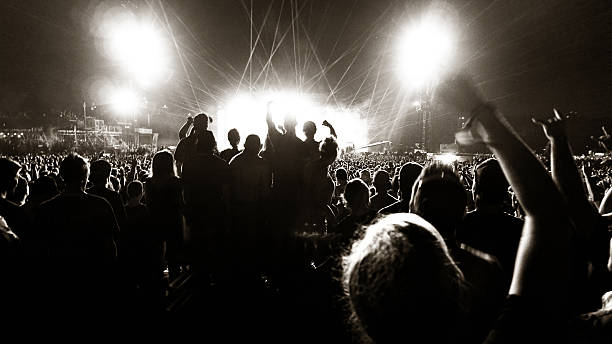
Here’s the part that stings. It isn’t that the veterans stopped being worth it. Maiden, fifty years into the journey, still runs circles around outfits that were not even born when those first records landed. Watching Bruce sprint across that stage with a Union Jack while Eddie stalks around behind him is one of the great pleasures left in live entertainment, full stop. Don’t get it twisted, I am not knocking the elders. You’ll find me right there in the crowd, screaming every word to “Hallowed Be Thy Name” with tears in my eyes and a beer I paid way too much for.
But love and worry can live in the same chest. And I worry.
Because when Maiden eventually slows down, and Ozzy is already gone, and Sabbath has taken its final bow, and Megadeth is on a farewell run while Slayer has returned for select shows, who exactly fills those slots? A festival can survive one or two legends riding off into the sunset. It cannot survive all of them leaving at roughly the same time with nobody sized up to take the throne.
The truly uncomfortable question is whether the machine ever bothered to build the next wave of real arena kings. And I don’t mean acts that are good. The scene is drowning in good. I mean names that can put fifty, sixty, eighty thousand bodies in a muddy field on their reputation alone. That is a completely different animal. Being great in a sweaty club and being able to headline Donington sit on two separate skill trees.
So let’s talk about who’s actually knocking on that door.
Sleep Token is the obvious one, and I’ll be honest with you, it took me a minute. A masked dude whispering about heartbreak over piano before the breakdown drops? My first instinct was to roll my eyes clean out of my skull. Then I watched twenty thousand people lose their minds and sing every syllable right back at him, and I shut up real quick. They sold out arenas across America while granting virtually no interviews. Two of their songs cracked the actual Billboard Hot 100, including “Caramel” all the way up at No. 34, which is still a remarkable achievement for music carrying this much weight. Whatever that magic is, it’s real, it’s enormous, and the kids own it completely.
Spiritbox is right there too. Courtney LaPlante can go from an angel’s melody to a demon’s roar inside one breath, and the internet made them famous long before radio ever got a vote. Bad Omens crossed over hard. Lorna Shore turned deathcore, of all the unlikely things, into a viral moment thanks to one scream that sounds like the crust of the earth cracking open. Knocked Loose dragged hardcore onto late night television. Turnstile went from hardcore rooms to Grammy wins while making punk that even your cousin who claims to hate punk somehow can’t stop playing.
And a rung or two below those, you’ve got the ones still climbing who feel like they’ve got the juice. Sleep Theory is the name I keep hearing more often, and their choruses are built for a stadium whether they’ve reached one yet or not. Dayseeker quietly went from tiny rooms to selling out theaters on the strength of songs that gut you, no gimmick required. And Vana, the Auckland raised young artist Revolver readers picked as one of the names most likely to break out in 2026, has already opened for Linkin Park at Spark Arena while barely out of the starting gate. Those three haven’t reached the mountaintop, but they’re the type who could, if the sport still let people climb.
So the raw talent is clearly there. That was never the problem.
The problem is the ladder. Those old steps an act used to climb, from a beat up van to theaters to arenas to the top of a poster, most of those rungs got quietly removed while nobody was paying attention. Radio is mostly a corpse for this stuff. Mainstream television barely touches anything with a distorted guitar in it anymore. The clubs where a young group used to cut their teeth for ten years keep boarding up their windows. Streaming can make a song famous overnight while leaving the musicians tangled in a royalty system where a million plays still does not guarantee the people in the van can pay their bills. So how does anybody build the sort of catalog and legend that makes a total stranger drive four hours and drop three hundred bucks to stand under a night sky and watch them?
Ghost cracked it, I’ll give Tobias that much. He built a whole theatrical universe, pope costume and skeleton faces and all, then rode it from tiny rooms straight to the top of the bill in about a decade. That’s the blueprint sitting right there in plain sight. But Ghost is the exception that proves how rare the climb has become. For every one of them, there’s fifty acts who are absolutely massive online and still can’t fill a mid sized room in Cleveland on a Tuesday.
And here’s a part the die hards don’t always want to hear. The genre talks a huge game about family, about everybody being welcome under the horns. Sometimes it even means it, and those nights are beautiful. But if this thing wants an actual future, it has to keep pulling in new blood, not just recycle the same crowd that showed up in 1985. Some of the most electric heavy music bubbling up right now is coming from kids the old guard never once pictured filling those stages, finding this world through doors that didn’t even exist when I started. That energy is the lifeline. Ignore it, snub it, gatekeep it, and the whole thing hardens into a nostalgia museum with a fog machine.
There’s a comfortable little lie the industry keeps telling itself, that some giant new name will simply appear the moment the old ones step down. Nature hates a vacuum, somebody will rise, all that cozy talk. Maybe. But arenas do not fill on maybe. They fill on twenty years of a group earning it the hard way, tour after tour, record after record, until seeing them live becomes a genuine rite of passage. You cannot microwave that kind of thing. You have to grow it on purpose, patiently, and the entire apparatus that used to grow it got dismantled while everybody stared down at a screen.
I want to be wrong about all of this. Really, truly, I do. Picture me at sixty five years old in some field in Belgium, watching a group that formed in 2024 headline the whole festival while a hundred thousand people who weren’t even alive for Master of Puppets scream every lyric into the dark. That would mean the music won. That would mean it outlived its own founders, which is the only thing a real art form is ever supposed to do.
But right now, if you put a gun to my head and told me to bet the mortgage on who’s topping these posters ten years from now, I honestly couldn’t hand you a confident answer. And that pause, that little hesitation before I open my mouth, that is the entire problem sitting there in miniature.
The elders gave us absolutely everything. They wrote the whole book, cover to cover. Now somebody with power in this business has to do the unglamorous, unprofitable work of building the ones who’ll write the sequel, before the final legend takes his last bow and the room looks around and realizes nobody bothered printing a second volume.
So turn it up while we still can. And keep half an eye on the tiny stages tucked in the back. Your next god of thunder is standing on one of them tonight, playing his heart out to forty people and a bored bartender, quietly waiting for somebody to hand him the ladder somebody else took away.
Staff Writer; Terry Poole
This brother brings sharp ears, deep respect, and real passion to every heavy metal riff, rock record, and overlooked gem he covers for TheBRHM… He writes for fans who still believe loud music should have soul, history, and meaning…
One may contact him at TerryP@TheBRHM.com.