
(TheBRHM.com) There is a habit in music writing of filing a band away the moment it becomes convenient, and few bands got filed more carelessly than the one Lemmy Kilmister ran for forty years. Say the name in most rooms and you get the same reflex answer. Heavy metal. Loud, fast, ugly, case closed, next question. It was never that simple, and the man at the center of it spent his entire career saying so.
What makes the misfiling worth arguing about is not pedantry. It is that the actual ingredients tell a bigger story than the label allows. Strip away the volume, the leather and the skull with the tusks, and what sits underneath is a shuffle. A boogie. The same rhythmic engine Chuck Berry and Little Richard built in the fifties, only somebody dragged it through a wall of distortion first. The aggression was new. The bones were old, and to my ear those bones were blues bones. I recognized them before I had the vocabulary to explain why.
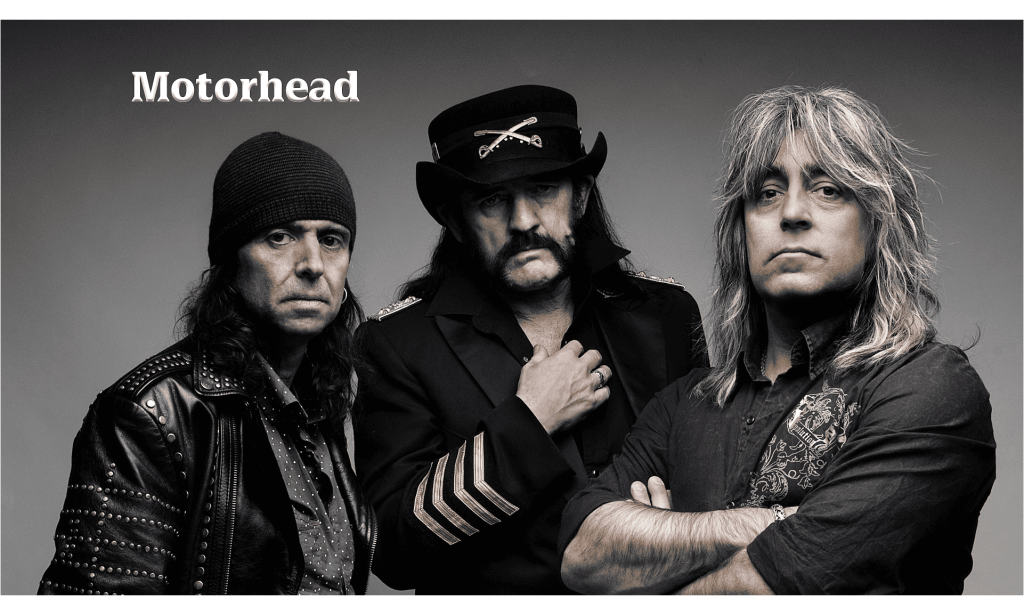
Here is the thing people either miss or refuse to say out loud. Lemmy consistently rejected the heavy metal label. Ask him what kind of band he had and you would get the same flat answer with no wink attached. We are Motörhead and we play rock and roll.
He said it from the stage. He said it to journalists who obviously wanted something else and kept fishing for it. He said it to fields full of kids in black T shirts who screamed it back at him like a slogan without hearing the argument buried inside it. Here was a man standing near the center of some of the most aggressive music of his time, and his instinct was always to point behind him. Little Richard. Chuck Berry. Eddie Cochran. The people who built the thing everybody else was busy renaming.
Metal sometimes likes to behave as though it dropped out of the sky over Birmingham in 1970 with no parents. Kilmister knew better and said so constantly, warts, Rickenbacker and all, right up until people stopped listening and simply bought the shirt. He was not posturing. It is in the music.
Start with the bass, because the bass is the whole confession. He did not really play one in any sense a traditional instructor would have signed off on. The Rickenbacker went into a roaring Marshall Super Bass stack, the mids were pushed forward, the volume was driven hard, and then he did the unforgivable thing and played chords on it. Chords on a bass. Rhythm guitar parts on four fat strings, which left the early band with very little conventional bottom end and somehow made them heavier than groups carrying twice the equipment. That is the trick everybody talks about.
The part fewer people discuss is what he was actually playing under all that ugliness. He was often walking through a distorted boogie pattern. You can hear the old blues language underneath, even when the amplifier nearly buries it. It is a jukebox in a room that smells like spilled beer, run through an amplifier that hates you. Violent tone. Blues underneath.
Now flip the other way, because the man had a second face.
The punks claimed him, and they had a case. When the London kids started smashing the furniture in 1976, many of the established acts responded by hiding or complaining in print about how nobody appreciated craft anymore. Lemmy did not have to respond because he was already in the building. He moved through the same clubs as the early punk crowd, became close to members of the Damned and even attempted, unsuccessfully, to teach Sid Vicious bass.
Punk audiences took to Lemmy because his speed, bluntness and refusal to clean up his image already matched much of their attitude. The nihilists took to him because he was never going to insult anybody by pretending everything works out in the end.
The records supported the claim. Too fast, too loud, recorded with an obvious contempt for polish. That was not merely punk influenced. That was punk in everything but membership. He could never fully join that scene either. Long hair, love of guitar solos and an obvious affection for old music were three crimes punishable by exile in that world. So it remained mutual respect from a safe distance, and Motörhead went right back to doing what it had already been doing. Adopted by everybody, belonging to nobody. That was the whole career.
The British metal kids of the early eighties swept Lemmy into their movement even though Motörhead predated many of them and shared few of their theatrical instincts. No grand fantasy mythology. No polished twin guitar identity. No elaborate world waiting behind the curtain. What the band handed them was tempo, and tempo rearranged the map.
“Overkill” opens with Philthy Animal Taylor attacking the double kick drums like he wants to break through the studio floor. Once that door swung open, thrash walked in behind it. Listen to members of Metallica and generations of thrash musicians talk about their younger years, and the same band keeps coming up. Metallica did not merely admire Motörhead politely. They treated Lemmy and his crew as proof that speed, dirt, melody and attitude could live inside the same body.
Slayer, Anthrax and Megadeth came from different personalities and musical backgrounds, but all belonged to a movement that Motörhead helped make possible. The band did not invent every sound that followed, yet it showed younger musicians how much violence could be pulled from rock and roll without losing the groove underneath. Meanwhile, hardcore kids in American basements were stealing the same trick. Same records. Different haircut. Nobody bothered to tell either camp they were drinking from the same well.
And the man himself? He just kept touring. Same three chords, same growl, same bass tone that could strip paint. He collaborated with Girlschool. He helped write songs for Ozzy Osbourne. He turned up on rockabilly albums, Ramones tributes and inside video games, and none of it ever felt like a stunt because he genuinely did not recognize the walls other people had built. To him, it was all one music. You plug in. You turn it up. You play it like you mean it. You go home. Everything else is marketing.
I think about that a lot, because those categories cost us something. We put Chuck Berry in one box and Motörhead in another, then act as though there is a gulf between them. In reality, it is the same electricity running down the same wire. The biggest difference is how many amplifiers you push it through before something catches fire.
Lemmy understood that. He said it his entire life, right up until December 2015, when the end came with shocking speed. Motörhead played its final concert in Berlin on December 11. He turned seventy on December 24, learned two days later that he had an aggressive cancer and died on December 28. His death certificate later listed prostate cancer, cardiac arrhythmia and congestive heart failure.
Motörhead had still been performing through visible health problems because stopping was never part of the identity. Even near the end, he was still the man in the band. Still Lemmy. Still standing behind that bass as if the instrument had personally offended him.
So the label is incomplete, and calling it a compliment does not make it any more accurate. What Kilmister ran was a rock and roll band that happened to play at a volume rock and roll was never designed to survive. For forty years, critics argued about which shelf to put Motörhead on, and the group never changed itself to fit any of them. Same three chords. Same ruined throat. Same brutal amplifier settings.
Put the record on. The blues is still in there, right where Lemmy left it.
Staff Writer; Bobby Jackson
This brother is dedicated to covering heavy metal and rock music with depth, respect, and cultural awareness. His writing highlights Black heavy metal and rock artists while also celebrating the genre’s broader legacy, influence, and artistic power.
Contact him at: BobbyJ@TheBRHM.com.