
(TheBRHM.com) Spend enough years as the only brother in the pit and you learn the oldest argument in metal never really ends, the one about who plays the hardest. Somebody always brings up odd time signatures like a man pulling out a receipt. Somebody else name drops a conservatory. Every time that conversation starts, my mind goes back to the first full listen of Ænima, alone, headphones on, lights off, convinced a stranger was standing behind me.
Let me be clear about something before anybody gets defensive. Technical musicianship in progressive rock and metal was not invented when Tool emerged from Los Angeles in the early nineties. Rush was doing acrobatics while my father was still in high school. Fates Warning built cathedrals out of guitar harmonies. Watchtower played like the instruments were on fire and the band was mad about it. Dream Theater could outplay almost anybody alive, and King Crimson had already dragged rock into strange mathematics decades before. Chops were never the missing ingredient. The scene had chops coming out of its ears.
What the scene mostly did not have was fear.
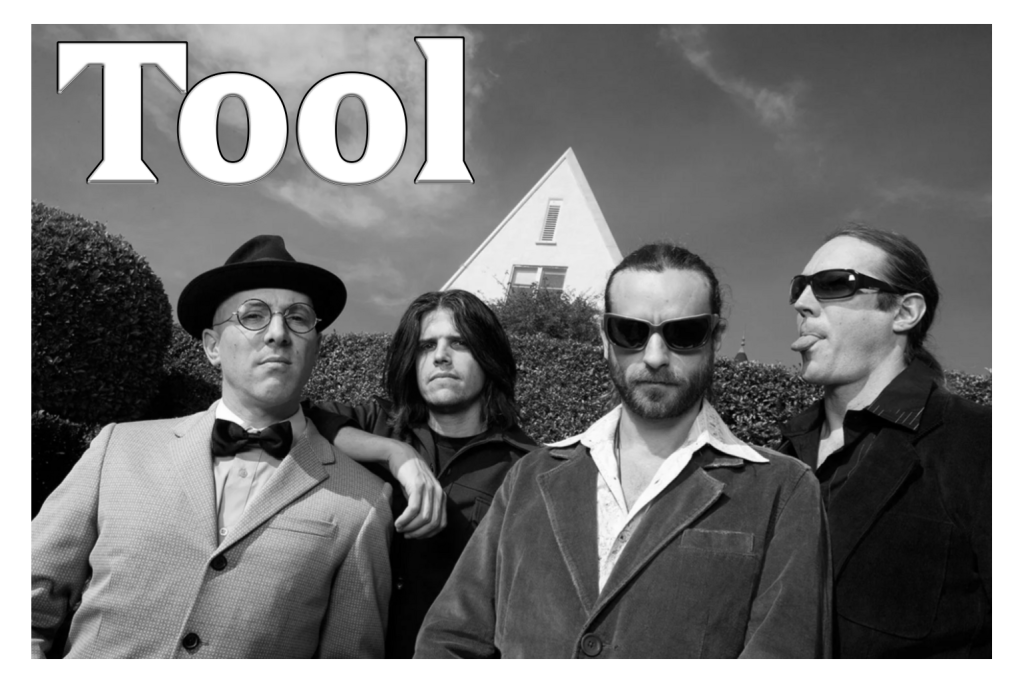
That is the whole thing right there. That is why I keep coming back to this catalog nearly thirty years after that first full listen. Nobody in that band raised the IQ of heavy music. What got raised was the stakes. A real difference exists between a musician showing you what he practiced and a musician using what he practiced to back you into a corner, and most prog acts, God bless them, spent entire careers on the first side of that line. You could hear the homework. You could hear the hours. Sometimes you could practically hear a metronome clicking behind the amps, and the whole performance collapsed into a demonstration, a very expensive way of saying look what I can do.
Maynard, Danny, Adam and Justin never sounded like men showing you anything. Four dudes found something out there that probably should have stayed buried and brought it back home anyway.
Think about how a song like “Third Eye” actually operates. Almost fourteen minutes. No resolution when you want one. The song refuses you, over and over, and the refusal is the point. The Bill Hicks samples at the beginning are not a skit. They function like a warning label. By the time that riff finally lands, impressed is not the word for what you feel. Relieved is the word, and relief only arrives after genuine unease. No band gets that reaction out of a listener by playing fast. You get it by controlling how long somebody has to wait and by making that person unsure whether waiting was wise.
Craft used as psychological pressure. Completely different animal from prog rock as a sport.
An older cat at a record store once tried to sell me some technical death album, going on about sweep picking, and I asked a simple question. Does it scare you? He laughed. Not a single answer came out of him, because nobody had ever asked him to consider that heaviness might live closer to dread than to speed. The music that man loved was athletic. Beautiful, sure. Absurdly difficult, absolutely. Never once did any of it make him feel watched.
Danny Carey is the clearest evidence I can point to. A monster behind the kit, obviously, but pay attention to what actually gets done with all that ability. Every bar is not stuffed with proof of concept. Ritual gets built instead. Those parts breathe and stalk and circle, and half the time the polyrhythms work underneath you like something moving beneath the floorboards. When the man finally goes off, it lands less like a solo and more like a summoning. Compare that with a hundred other drummers holding the same technical vocabulary who mostly use it to shout notice me. Same alphabet. Wildly different intentions.
Adam Jones is even more instructive because his approach runs almost aggressively against flash. He has enough command of the instrument to play far busier than he usually chooses. Flash simply is not the point. Texture and rot get chased instead, tone like corroded metal, riffs that lurch and repeat until repetition itself turns menacing. The same instinct shows up in the visual world Jones helped shape. Those stop motion creatures and corroded images crawled into people’s brains during the nineties and never left, and gore had nothing to do with it. Wrongness did. Bodies moving the way bodies should not move.
Justin Chancellor rewrote what a bassist in this genre is allowed to be. No sitting politely underneath the guitar. “Schism” opens on bass, and the entire song lives or dies on how uncomfortable that phrasing feels in your chest.
Maynard stands in shadow at the back of the stage, refusing the front, refusing the whole rock star contract. Abuse, addiction, grief, spiritual hunger, the collapse of ego, all of it sung without a wink. “Prison Sex” is not entertainment. That song is a wound with a melody wrapped around it. Understanding the subject matter for the first time forced me to sit with the discomfort of having nodded my head to somebody’s trauma. That is what this band does to a listener. You get implicated.
Here is where the Lateralus conversation usually goes sideways, so let me handle it carefully. Portions of the vocal syllable count trace the Fibonacci sequence, while sections of the music move through 9/8, 8/8 and 7/8. Every backpack in every dorm room has heard the lecture. But the reason that song lands has nothing to do with trivia. It lands because the structure creates a physical sensation of climbing, of spiraling outward, of a door opening that will not close again. Math functions as a delivery system for feeling. Turn the math into the point and everything gets missed, which is exactly what a whole generation of imitators did. Copy the numbers, leave the fear behind, and now we have twenty years of bands who sound like flowcharts.
Good reason exists for why none of those imitators stuck. You cannot reverse engineer menace. A riff can be transcribed, a tuning stolen, a vocal cadence mimicked, but the sensation that the people making this thing are dead serious and possibly unwell is not available for purchase. Fear Inoculum arrived thirteen years after 10,000 Days, and nothing about it sounded like a comeback. It sounded like a body slowly waking up. Patient. Coiled. Nobody in that room was worried about being current.
I have loved heavy music my whole life, through people telling me it was not mine to love, through record store dudes assuming I got lost on the way to the hip hop section, through festivals where I counted maybe four faces like mine in a crowd of thousands. Bad Brains kicked that door open. Living Colour walked through it swinging. What kept me inside the genre, though, what made all of it feel like more than loud noise for angry kids, was discovering that this music could turn genuinely dangerous in the mind and not only in the body.
Plenty of bands got smarter. That was never rare. This one took intelligence, psychological discomfort and mathematical composition and turned all three into a threat, then held a door open and dared you to walk through.
Some of us did. Some of us are still in there.
Staff Writer; Terry Poole
This brother brings sharp ears, deep respect, and real passion to every heavy metal riff, rock record, and overlooked gem he covers for TheBRHM… He writes for fans who still believe loud music should have soul, history, and meaning…
One may contact him at TerryP@TheBRHM.com.