
(TheBRHM.com) There is a conversation that never seems to die in metal circles, and it comes right back the second anybody says Big Four. For the newcomers, that title means Metallica, Slayer, Megadeth, and Anthrax. Four bands, crowned as the faces of American thrash. Should it have been the Big Five though? Where does Exodus fit? Fair questions. They come from people who love this music and want the credit spread out honest. I get it. But I keep chewing on it, and the framing itself starts to bug me the more I look. Ask whether a band earned a seat at a table the industry and metal press helped build, and you already gave them the keys. You let them decide what counts. Nah, that needs a second look. Dig into the real history here, the influence, the plain stubborn will it took to keep this thing breathing for forty years, and something jumps out at you. No marketing office ever got a vote on this legacy.
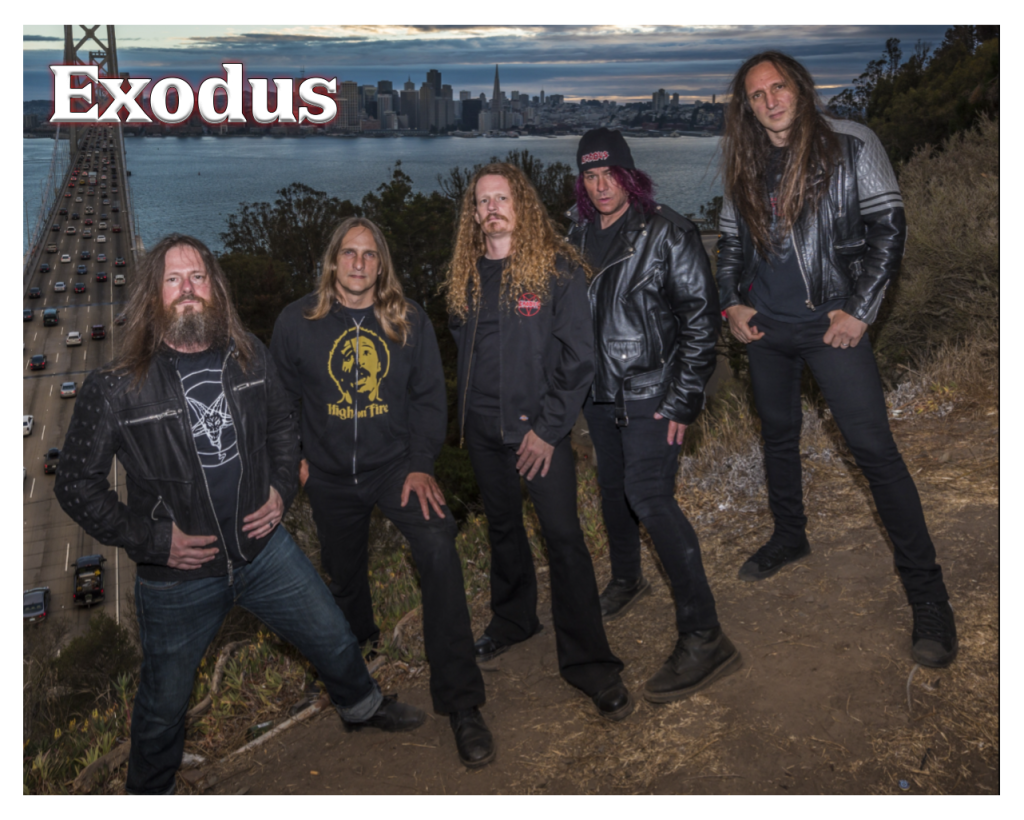
I came up as one of maybe three brothers I knew who were actually deep in this stuff. You know the look. That double take at the show. The way somebody’s face shifts when you start quoting riffs off a record half your friends never once touched. So yeah, when I say I know what it feels like to get your presence questioned in a room you helped build, I am not reaching for a metaphor. I mean it in my bones. Same energy this crew has been dragging around for four decades. Left out of the official story, standing in the foundation the whole time anyway.
Here is the thing people forget or maybe never learned. Before Metallica became the biggest metal act on the planet, Kirk Hammett was standing in a garage in the Bay Area shredding for a completely different outfit. That outfit was Exodus. Kirk left, joined the other guys down the road, and the rest went into the history books. But the riffs, the attitude, the speed, a whole lot of that DNA got cooked up in the same kitchen. So when the throne got handed out, one of the cooks got left standing by the stove. Wild when you actually stop and think about it.
Now let me talk about the album that ends every argument before it starts. Bonded by Blood. Nineteen eighty five. If you want to understand why this group deserves respect without any qualifiers, you play that record loud and you let it speak. There is a raw meanness to it that a lot of the more polished thrash of that era simply does not have. Paul Baloff sounds like a man possessed, spitting every line like the world owes him a fight. Gary Holt and the guitar work snap and slice with this urgency that feels dangerous, like the tape might catch fire. It is not clean. It is not safe. It is a knife fight in a parking lot at two in the morning, and it is glorious.
Folks love bringing up how Bonded by Blood got held back. Cut around the same stretch as a couple of the other landmark thrash records, then distribution mess shoved the release date around. By the time it actually reached the racks, everybody had already moved on to the next thing. So a record that was arguably out front got stuck wearing the latecomer tag. That paperwork headache bruised how people saw this band way worse than any shortage of talent ever could. Blame the calendar. The music was never the issue, not for one second.
What makes me love these guys even more is what happened after that debut. Because greatness is not just about one perfect moment. It is about what you do when the moment passes and life starts kicking your teeth in. And brother, did life come for them. Baloff got pushed out. Steve Souza grabbed the mic and drove the thing through Pleasures of the Flesh and Fabulous Disaster, keeping the burner lit while the ground kept shifting under everybody. Then the nineties showed up and rolled over thrash like a truck with no brakes. Grunge took the radio. The kids moved on. A lot of legendary acts either broke or bent into something unrecognizable trying to survive.
The band broke up. Straight up disbanded in 1993. And that could have been the end of the story. A footnote. A what if. A trivia answer for the guys who know their stuff.
But that is not who these people are.
They came back. Paul Baloff returned for a short reunion run in 1997, and for a brief beautiful stretch the original madness was back on stage where it belonged. A second reunion followed in 2001. Then in two thousand two, Baloff had a stroke and passed away. That gutted the community. Losing a voice like his, a personality that huge, it left a hole. And here is where you really see the character of this outfit. They did not fold. They mourned, they regrouped, and they kept moving, because the mission was bigger than any one member. Souza came back. Later Rob Dukes took the mic for a stretch that gave us some of the heaviest material in the entire catalog. Shovel Headed Kill Machine and The Atrocity Exhibition proved these veterans could still crush skulls in a modern era that had zero patience for nostalgia acts.
Think about how many bands from that first wave just coasted. Playing the same five songs on cruise ships and casino stages, cashing checks off their glory days. That is fine, everybody’s gotta eat. But that is not what we got here. We got a group that kept writing vicious, relevant, punishing records well past the point when nobody would have blamed them for phoning it in. Souza came back around again, and Blood In Blood Out landed like a hammer in twenty fourteen. Then Persona Non Grata in twenty twenty one showed the world these dudes had somehow gotten faster and angrier with age, which should be illegal. And the story did not stop there. Souza and Exodus parted ways again, Rob Dukes returned to the microphone, and Goliath arrived in 2026 sounding like another refusal to live off the past.
And I cannot skip Tom Hunting behind the kit. The man beat cancer and got right back on that stool like nothing happened. If you want to talk about the actual spirit of this whole movement, the refusal to quit, the loyalty to the sound and the crew, look no further than that. That is not a marketing story. You cannot manufacture that. That is real.
Gary Holt is the beating heart under all of it. The one guy who never left. Held this thing together through every departure, every funeral, every dumb trend that came around trying to bury the whole genre. Man even worked a second job in Slayer for years, sitting in one of the holiest guitar chairs metal has, and he pulled it off with nothing but respect, never once letting his own band go dark. Chew on that a minute. Kirk Hammett took the early spark into Metallica. Holt took his fire into Slayer. Two of those four crowned names, half the sacred list, have Exodus stitched right into their story. And the whole debate just falls apart. These guys were never outside the circle knocking to be let in. Their fingerprints were already all over the inside of it. Resume like that argues for itself. You do all of that and somebody tells you you still need a corporate acronym to be certified? Please. The work signed off on him a long, long time ago.
So let me bring it all the way back home. When somebody asks if the Big Four should have been the Big Five, I understand the instinct. It comes from a good place, a place that wants to see this crew get its flowers. But I want us to grow past needing that. Greatness that requires permission from a label was never greatness in the first place. Miles Davis did not need a poll to be Miles Davis. The influence lives in the sound, in the bands that came after and quietly stole the blueprint, in the pit that still goes off when those opening riffs kick in.
I think about my own path through this music sometimes. Being the brother in the crowd nobody expected. Learning early that you do not wait for a room to accept you before you take your place in it. You just show up, put in the work, and let the doubters catch up on their own time. That is the lesson these veterans have been teaching for forty years without ever making a speech about it. You do not chase validation. You earn respect and then you keep going long after the people handing out titles have stopped paying attention.
So here is where I land after all of it. Exodus does not belong on some list handed down by executives who were counting units instead of listening. They belong in the foundation, the layer everything else got built on top of. And a foundation has never once needed a plaque to justify holding up the house. It carries the weight in silence while the folks upstairs argue about whose name gets the fancy title on the door. That work is the credential. It always was.
So play Bonded by Blood one more time. Turn it up until the walls complain. That is the only argument I have ever needed.
Staff Writer; Terry Poole
This brother brings sharp ears, deep respect, and real passion to every heavy metal riff, rock record, and overlooked gem he covers for TheBRHM… He writes for fans who still believe loud music should have soul, history, and meaning…
One may contact him at TerryP@TheBRHM.com.