
(TheBRHM.com) Aerosmith engineered one of the strangest comebacks in American music, and hardly anybody frames it as a cautionary tale. Eleven years separate Permanent Vacation from the moment this band finally scored a number one single, and across that stretch an outfit the industry had written off became a permanent fixture of soft radio. Here is the catch. Almost none of the music responsible for that revival resembled the music that made these players worth reviving.
Consider this an argument. Not a takedown either.
Put Rocks on sometime. That album arrived in 1976 and has no business being related to a single prom dance anywhere in this country. Mean is the word. Grease under the fingernails, brakes that need attention, five guys from Boston who took the Yardbirds and the Stones and dragged all of it somewhere dirtier.
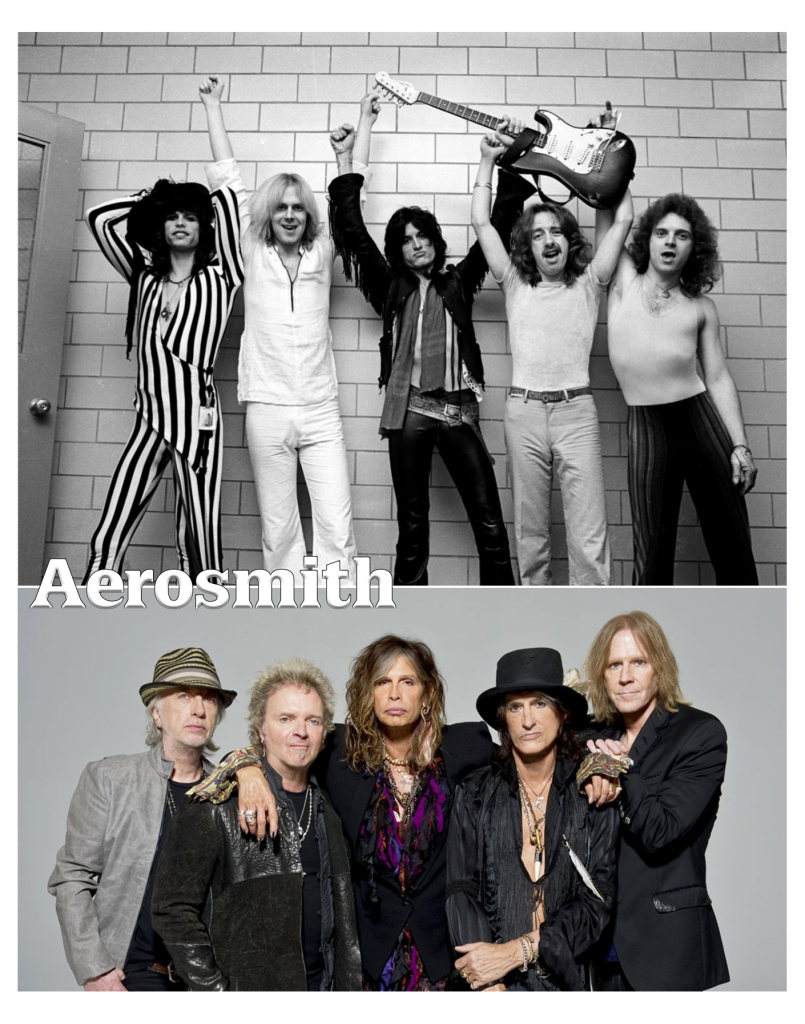
Joe Perry played guitar like a barber working fast enough to maybe nick you. Steven Tyler sang like somebody who studied old blues sides and then chased them with pills. Tom Hamilton stumbled into an entire mood writing the bass part on “Sweet Emotion,” and honestly, he can live off those bars forever. Brad Whitford handled the dirty work that nobody credits him for. Joey Kramer swung instead of stomping, which is the part most hard rock drummers get wrong and he usually got right.
That version of the group, roughly 1974 through 1977, belongs in the conversation with anybody. Toys in the Attic. Its meaner successor. Draw the Line, even if the wheels were already wobbling. Blues based hard rock with real swing in it, made by musicians who understood that groove was not a genre, it was the point.
Then everything fell apart, as everything did back then. Perry walked in 1979. Whitford followed. What remained limped through a couple of records nobody talks about anymore, and the whole operation looked cooked. Cocaine and heroin do not care about your catalog.
Here is where the story gets interesting for people who look like me.
Run DMC pulled them out of the ditch. Rick Rubin had an idea, Run and DMC resisted it at first, and 1986 delivered a video where a wall came down and two audiences stared at each other across the rubble. My generation met these guys through Queens, not Boston. That collaboration did more for the Toxic Twins than any comeback tour could have, and it happened because hip hop decided to be generous.
Once sobriety arrived and the machine came back online, a decision followed that changed everything. Management brought in professional songwriters. Desmond Child. Jim Vallance. Later Diane Warren. These are craftsmen, understand me, not hacks. Child wrote hooks the way an engineer designs bridges, with load bearing choruses and nothing wasted.
“Angel” appeared on Permanent Vacation in 1987 and became a hit single the following year, behaving exactly as designed. Radio programmers who would never touch “Back in the Saddle” happily spun a piano weeper about loneliness. Mothers liked it. Girlfriends liked it. Suddenly a band with a needle scarred reputation had a soft entrance available to any listener who wanted one.
“What It Takes” followed on Pump in 1989, sitting at the tail end of the album like a country song that got lost on its way to Nashville. Tyler sang the hell out of it, too, which is the part critics skip when they get snobby. Get a Grip showed up in 1993. Roughly twenty million copies worldwide later, the label required no further convincing. This was the model.
Alicia Silverstone carried the clips for “Cryin'” and “Amazing,” then shared “Crazy” with Liv Tyler, and MTV ran the entire trilogy into the dirt. Kids in my hallway at school recited every syllable of those choruses without owning a note of the seventies catalog. Half a decade after nearly dying in obscurity, these men were the most visible hard music act on the planet.
Then 1998 arrived and sealed the whole thing shut.
Diane Warren wrote “I Don’t Want to Miss a Thing” for an asteroid movie starring the singer’s daughter. Not one member of the lineup wrote a note of it. Perry has never sounded thrilled discussing it. That track became their only number one single in America, which means the biggest chart achievement of a fifty year career came from a song a hired writer composed for a Michael Bay picture.
Sit with that.
Nobody should pretend those singles were failures. They rescued careers, paid mortgages, funded rehab, filled arenas, and introduced the catalog to millions of listeners who might otherwise have never gone digging. Anyone who sneers at commercial success has rarely had to pay for anything.
The cost showed up later, quietly, the way real costs always do.
Casual America locked in a version of this group that has almost nothing to do with what made them great. Ask a random person under forty to describe them and you will hear about a weeper from a space movie, or a video with a young actress, or a wedding reception. You will not hear about the swing on “Last Child.” You will not hear about the nastiness of “Nobody’s Fault,” which is genuinely one of the heaviest things any American act recorded in that decade.
Setlists became hostages next. Promoters expect certain moments. Crowds expect certain moments. A band can only fight that arithmetic for so long before the deep cuts start disappearing from the running order.
Creative tension followed. Ask Perry about hired songwriters and the answers have rarely been warm. He wanted that job kept in house. You can hear the argument playing out inside Nine Lives and Just Push Play, where the players sound unsure whose outfit this is anymore. Honkin’ on Bobo turned up in 2004, almost entirely covers, mud, and harmonica, and it felt like a man finally loosening a tie he had been wearing since the Reagan administration. Sales were modest. The public had already decided who these musicians were.
That is the trap, and it is not unique to them. Metallica dealt with a version of it after the black album. Chicago fell into it so completely that most listeners forget they started as a horn driven ensemble with serious chops. Success at that altitude rewrites your identity whether you consent or not.
Steven Tyler’s fractured larynx and lasting vocal damage forced Aerosmith to retire from touring in 2024, and the announcement landed with the strange sadness of a story that never quite found its correct ending. The band later released a collaborative EP with Yungblud in 2025, but the road still appears permanently closed. More than fifty years of work, and the defining image for much of the country still involves a ballad written by somebody else.
So what do I want you to do with this?
Go backwards. Start with Rocks, all of it, in order, loud. Then Toys in the Attic. Sit inside “Sick as a Dog” and notice how much air is in the arrangement. Play “Adam’s Apple” for anybody who thinks white rock bands cannot swing. After that, go ahead and revisit the softer stuff with fresh ears, because “Cryin'” is well constructed and “What It Takes” contains real singing, and pretending otherwise makes you a snob rather than a critic.
Both truths hold. Tender material saved an operation that had run itself into the ground, and that same material eventually became the cage it performed in for the rest of its life.
My uncle used to say every deal with the devil comes with fine print, usually printed small enough that you sign anyway. These men signed. They got twenty more years, stadium money, and a legacy stitched together from the wrong material.
I still put on Rocks. Somebody has to remember what the noise sounded like before the strings showed up.
Staff Writer; Terry Poole
This brother brings sharp ears, deep respect, and real passion to every heavy metal riff, rock record, and overlooked gem he covers for TheBRHM… He writes for fans who still believe loud music should have soul, history, and meaning…
One may contact him at TerryP@TheBRHM.com.