(TheBRHM.com) Let me set the scene for you. I’m sixteen, headphones busted on one side, volume shoved way past any safe level, and the opening of Battery comes creeping out the speaker all gentle and Spanish guitar pretty. Then the riff drops and my whole spine snaps straight. I had never heard anything move that quick and stay that tight at the same time. That was the moment I understood why grown men tattoo a logo on their forearm. Those four horsemen weren’t making songs. They were declaring war on everybody’s eardrums, and I signed up on the spot.
So this one is personal. I’m not coming at it like some neutral critic with a clipboard. I’m coming at it like a fan who has carried this band’s records across half his life, which means I get to love them and side eye them in the same breath. And the question on the table is a real one. Did the biggest thrash group to ever do it lose a little of its danger once the whole planet started singing along?
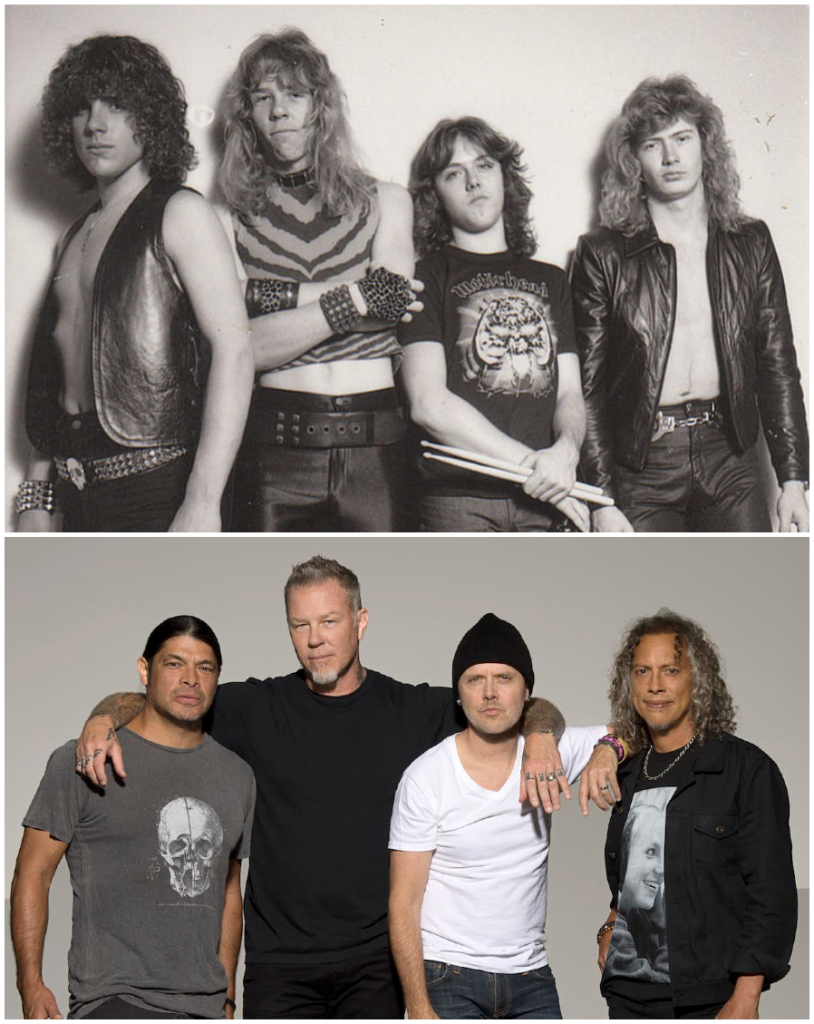
Roll it back to 1983. Kill ’Em All drops and it sounds like four broke kids who borrowed gear and recorded in a closet, because that’s basically what happened. There is dirt under every fingernail of that record. Hit the Lights, Whiplash, Seek and Destroy, all of it played like the rent was due and the only currency they had was speed. James Hetfield was barking, not crooning. Kirk Hammett was peeling off solos like he was being chased. You could practically smell the cheap beer and the sweat. Nothing about it was polished, and that was the entire point.
Then came the leap that told you these dudes had bigger plans. Ride the Lightning in 1984 took the raw thrash and added architecture. For Whom the Bell Tolls rolls in heavy as a funeral. Creeping Death stomps. And then Fade to Black showed up, a slow burning piece with actual melody, and the purists clutched their pearls like the boys had gone soft already. Funny how that conversation started so early. But that track wasn’t a surrender. It was a flex. They were showing you an outfit that could be brutal and beautiful without picking just one.
For my money though, the mountaintop is 1986. Master of Puppets is the album where every gamble paid off at once. The title cut is eight minutes of pure controlled chaos. Welcome Home Sanitarium aches. Orion is a wordless instrumental so gorgeous it makes you forget these were the same maniacs screaming about death a few tracks earlier. This record is the argument in a nutshell. Raw enough to scare your mama, smart enough to study. Nobody had married those two ideas that cleanly before, and a whole generation of bands spent the next decade chasing it.
Now I have to slow down and pour one out, because right after that peak the universe took Cliff Burton. The bus flipped over in Sweden in the fall of 1986 and the bassist who anchored all that ambition was gone at twenty four. You cannot tell this story honest without sitting in that grief for a second. The hungriest, most untouchable version of this group died on that road with him. Whatever came next, came after a loss that reshaped the entire project from the inside out.
And Justice for All in 1988 felt like the band processing that pain through sheer density. The songs are long, dry, jagged, almost cold. You can barely hear the new bass in the mix, which became its own legend. One gave them their first real video and a doorway to a wider crowd. The machine was warming up. You could feel something shifting, even if you couldn’t name it yet.
Then 1991 happened and changed the math forever. The self titled joint, the one everybody calls the Black Album, sanded the eight minute epics down into tight radio bullets. Enter Sandman, Sad But True, Nothing Else Matters. Bob Rock cleaned up the production until it gleamed. And it worked beyond anybody’s wildest dream, selling tens of millions and turning a thrash crew from the underground into stadium gods who soundtracked football games and car commercials. Here is where the central tension finally bursts wide open.
Because did that mean they sold out? My honest take is more complicated than a simple yes. Those tunes are built like tanks. Enter Sandman is a perfect piece of writing, and anybody who pretends it isn’t is letting nostalgia lie to them. But something did change in the trade. The danger got smoothed. The records before this one felt like they might leap out the speaker and rob you. This new direction felt like it wanted to be your friend, fill an arena, get the lighters up. Not worse exactly. Tamer though. The fangs were still there, just filed down a touch so they didn’t draw as much blood.
The era that follows is where I get genuinely salty, and I won’t pretend otherwise. Load and Reload in the mid nineties brought the short haircuts, the eyeliner, the bluesy alt rock cosplay. The look screamed that they were chasing whatever was charting instead of leading the charge like they used to. Then the Napster mess landed, and Lars Ulrich became the public face of a lawsuit against the very file-sharing world where many young fans were discovering music. The most rebellious group on earth was now lecturing teenagers about downloading. Read that back slow. The irony was almost too thick to breathe.
St. Anger in 2003 is its own strange beast. They tried to sound raw again, ditched the guitar solos on purpose, and recorded a snare that sounds like somebody banging a trash can lid in an empty garage. Bless the effort, because the hunger was finally back in their eyes. The execution just tripped over its own feet. You could hear a crew trying to remember who they were after a decade of being everybody’s favorite radio metal. Watch Some Kind of Monster, the documentary from that stretch, and you see millionaires in therapy trying to locate the fire they once had for free.
To their credit, they kept swinging. Death Magnetic in 2008 reached back toward the thrashy old self with real intention and mostly nailed it. Hardwired to Self Destruct kept that thread going. 72 Seasons in 2023 proved these old heads can still gallop. They never went away, and they never stopped trying to recapture lightning. That matters. A lot of legends would have coasted on the catalog and called it a career.
So let me answer the question I started with as plain as I can. Did winning the whole world soften the edge? Yeah. It did. There is simply no version of this story where a band sells out every stadium on the globe and keeps the exact feral quality of four hungry kids in a closet. Comfort changes you. Money changes you. The threat of being broke and ignored was the fuel, and once that ran out the fire had to burn on something else.
But here is the part the angry purists always skip. Changing the edge is not the same as losing the soul. The hunger of the early days is genuinely irreplaceable, and I will scream that into a microphone. And yet, writing off everything after 1986 is lazy fan behavior dressed up as taste. These men dragged an entire underground genre into the mainstream and made it impossible to ignore. They turned thrash into a global language. Kids in countries that band never even visited learned guitar because of those riffs.
My final word is this. I keep both versions in heavy rotation, and I refuse to choose. I want the broke maniacs who recorded like the rent was due, and I want the grown survivors still trying to outrun their own legend three decades later. The teeth got filed down, sure. The bite never fully disappeared. And honestly, the fact that we are still arguing about it forty years deep is the loudest proof that what they built will outlive every one of us. Now if you’ll excuse me, Battery just kicked in again, and my spine has some straightening to do.
Staff Writer; Terry Poole
This brother brings sharp ears, deep respect, and real passion to every heavy metal riff, rock record, and overlooked gem he covers for TheBRHM… He writes for fans who still believe loud music should have soul, history, and meaning…
One may contact him at TerryP@TheBRHM.com.